Courant Institute of Mathematical Sciences, New York University, New York, New York 10012, USA.
Department of Physics and Liquid Crystal Materials Research Center and Biofrontiers Institute, University of Colorado, Boulder, Colorado 80309, USA.
Phys Rev Lett. 2015 Jan 30;114(4):048101. doi: 10.1103/PhysRevLett.114.048101. Epub 2015 Jan 27.
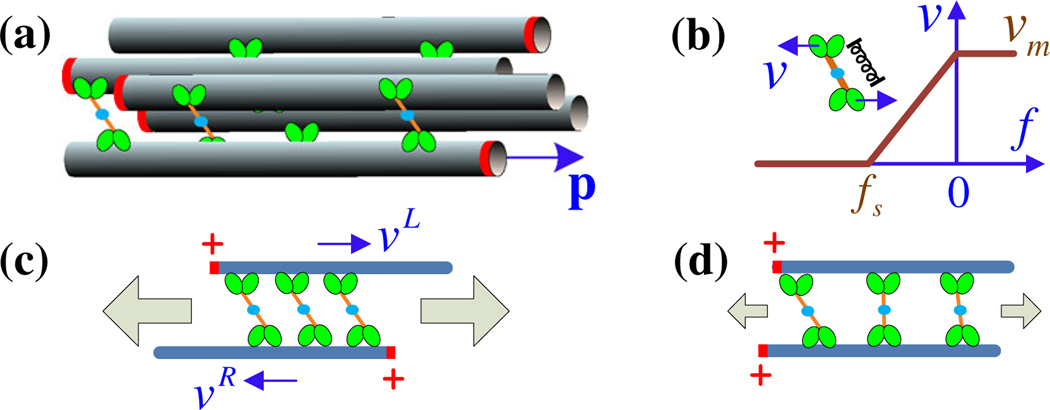
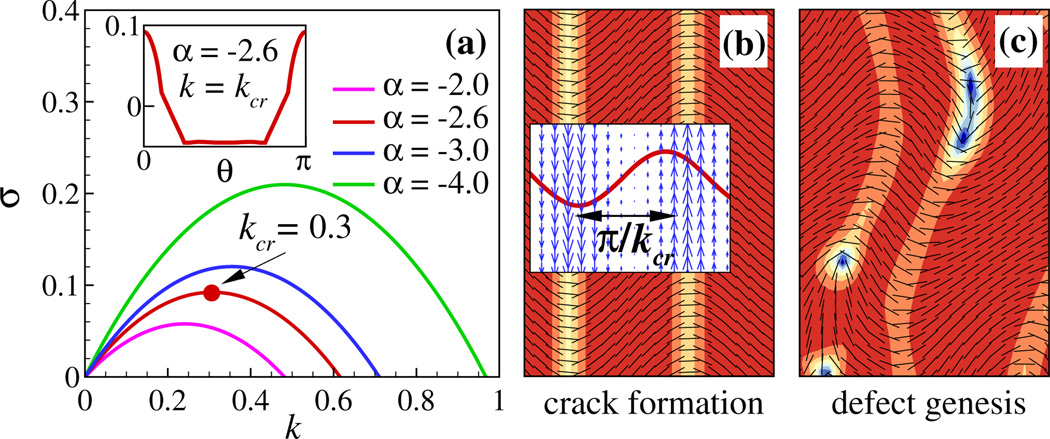
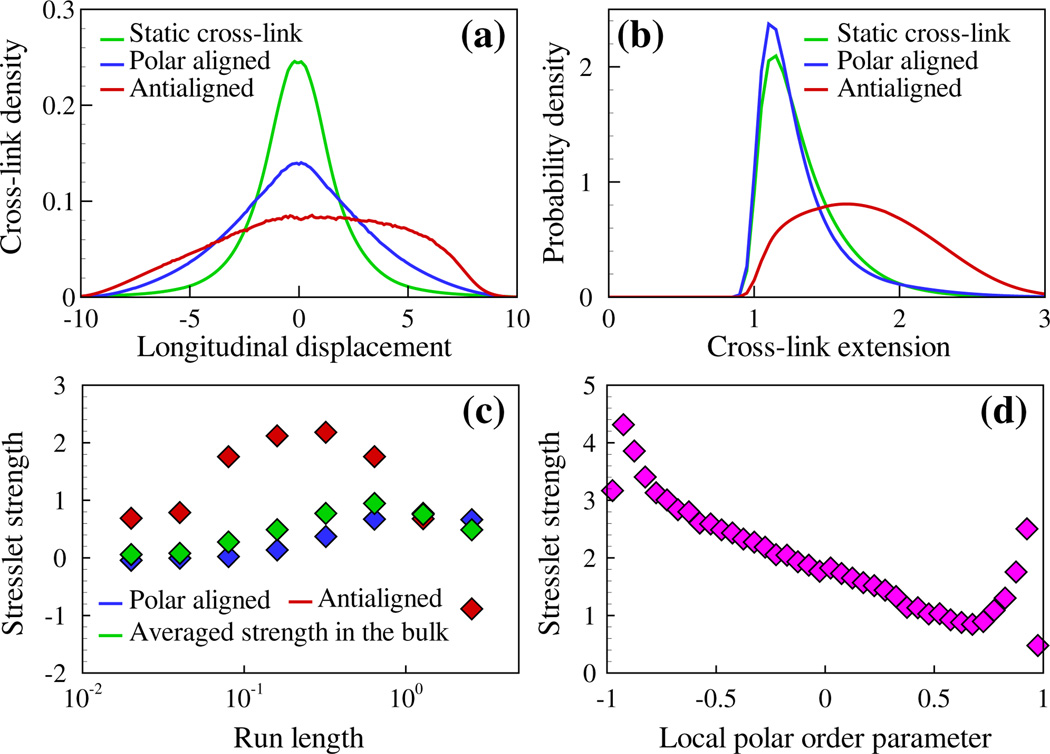
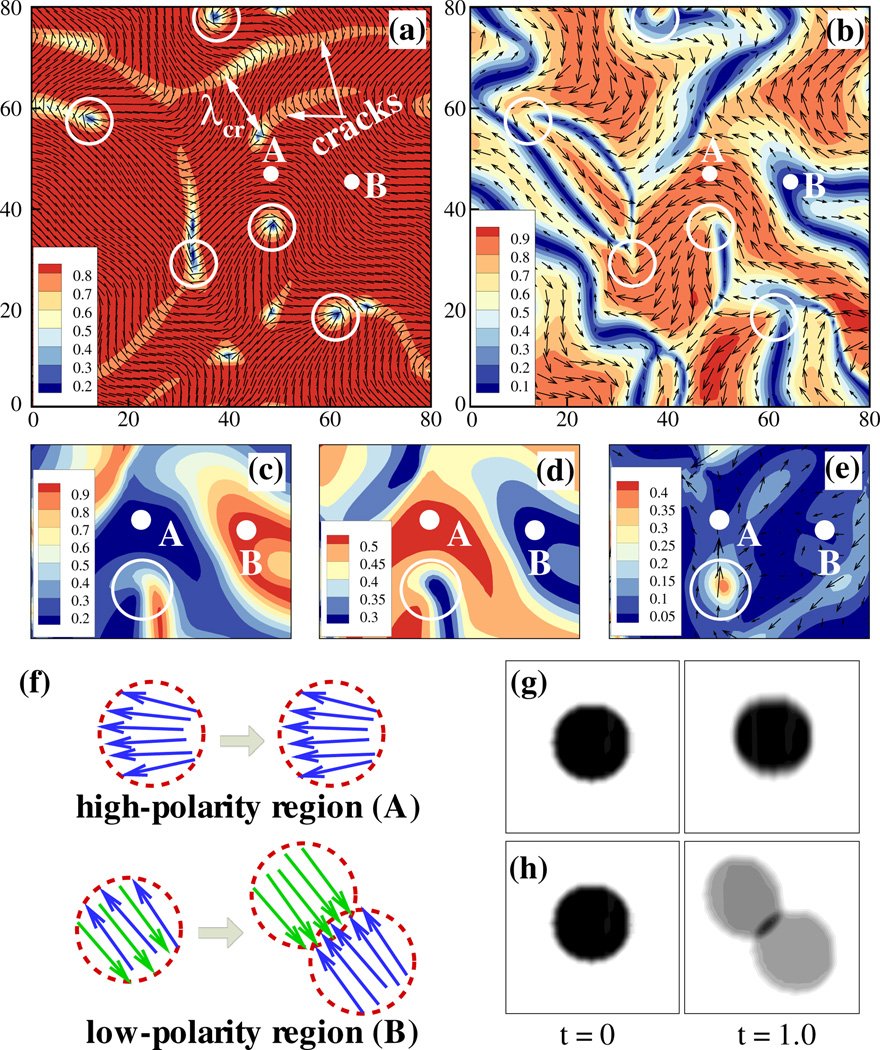
Microtubules and motor proteins are building blocks of self-organized subcellular biological structures such as the mitotic spindle and the centrosomal microtubule array. These same ingredients can form new "bioactive" liquid-crystalline fluids that are intrinsically out of equilibrium and which display complex flows and defect dynamics. It is not yet well understood how microscopic activity, which involves polarity-dependent interactions between motor proteins and microtubules, yields such larger-scale dynamical structures. In our multiscale theory, Brownian dynamics simulations of polar microtubule ensembles driven by cross-linking motors allow us to study microscopic organization and stresses. Polarity sorting and cross-link relaxation emerge as two polar-specific sources of active destabilizing stress. On larger length scales, our continuum Doi-Onsager theory captures the hydrodynamic flows generated by polarity-dependent active stresses. The results connect local polar structure to flow structures and defect dynamics.
微管和马达蛋白是自我组织的亚细胞生物结构的构建块,如有丝分裂纺锤体和中心体微管阵列。这些相同的成分可以形成新的“生物活性”液晶流体,这些流体本质上处于非平衡状态,并表现出复杂的流动和缺陷动力学。目前还不清楚微观活动(涉及马达蛋白和微管之间的极性依赖性相互作用)如何产生这种更大规模的动力学结构。在我们的多尺度理论中,通过交联马达驱动的极性微管集合的布朗动力学模拟使我们能够研究微观组织和应力。极性排序和交联松弛成为两种极性特异性的主动失稳应力源。在更大的尺度上,我们的连续体 Doi-Onsager 理论捕获了由极性依赖性主动应力产生的流体力学流动。结果将局部极性结构与流动结构和缺陷动力学联系起来。