Chen Z-Y, Raghav K, Lieu C H, Jiang Z-Q, Eng C, Vauthey J-N, Chang G J, Qiao W, Morris J, Hong D, Hoff P, Tran H, Menter D G, Heymach J, Overman M, Kopetz S
Department of Medical Oncology, Fudan University Shanghai Cancer Center, Shanghai, China.
Department of Gastrointestinal Medical Oncology, The University of Texas MD Anderson Cancer Center, Houston, Texas, USA.
Br J Cancer. 2015 Mar 17;112(6):1088-97. doi: 10.1038/bjc.2015.61.
High circulating neutrophil-lymphocyte ratio (NLR) appears to be prognostic in metastatic colorectal cancer (mCRC). We investigated the relationship of NLR with circulating cytokines and molecular alterations.
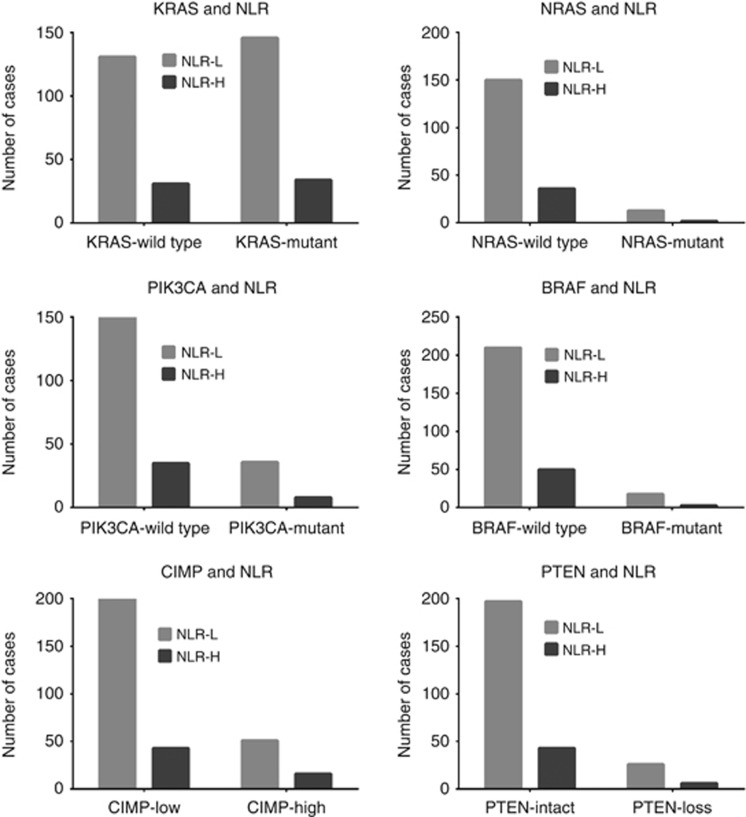
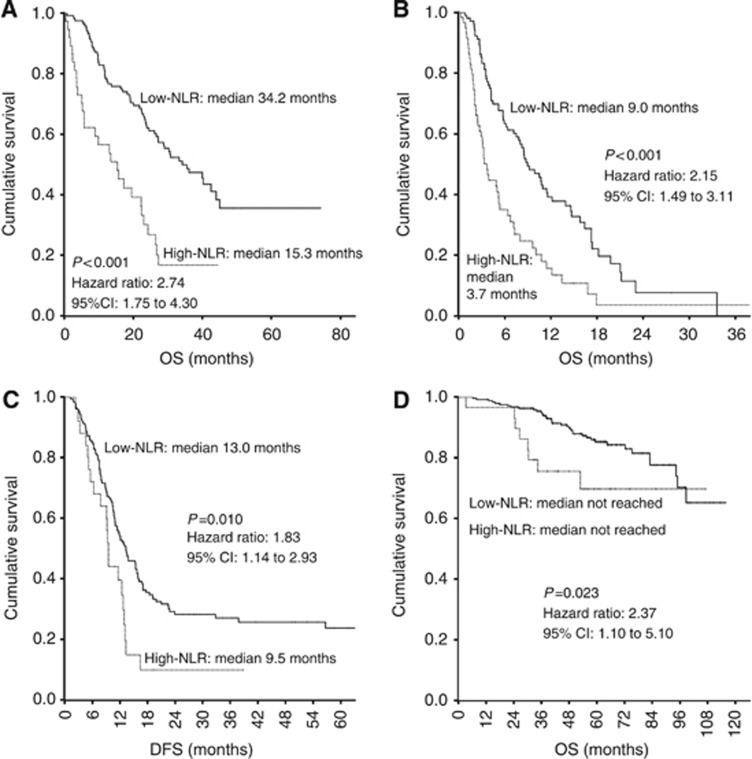
We performed retrospective analyses on multiple cohorts of CRC patients (metastatic untreated (n=166), refractory metastatic (n=161), hepatectomy (n=198), stage 2/3 (n=274), and molecularly screened (n=342)). High NLR (ratio of absolute neutrophil-to-lymphocyte counts in peripheral blood) was defined as NLR>5. Plasma cytokines were evaluated using multiplex-bead assays. Kaplan-Meier estimates, non-parametric correlation analysis, and hierarchical cluster analyses were used.
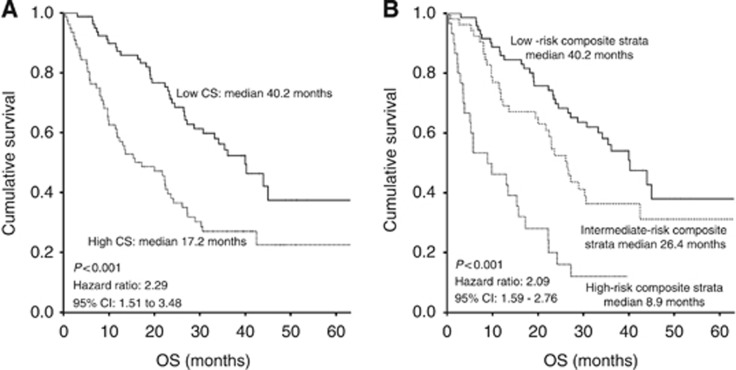
High NLR was associated with poor prognosis in mCRC (hazard ratio (HR) 1.73; 95% confidence interval (CI):1.03-2.89; P=0.039) independent of known prognostic factors and molecular alterations (KRAS/NRAS/BRAF/PIK3CA/CIMP). High NLR correlated with increased expression of interleukin 6 (IL-6), IL-8, IL-2Rα, hepatocyte growth factor, macrophage-colony stimulating factor, and vascular epidermal growth factor in exploratory (n=39) and validation (n=166) cohorts. Fourteen additional cytokines correlated with high NLR in the validation cohort. All 20 cytokines fell into three major clusters: inflammatory cytokines, angiogenic cytokines, and epidermal growth factor ligands. In mCRC, composite stratification based on NLR-cytokine score provided enhanced prognostic information (HR 2.09; 95% CI: 1.59-2.76; P<0.001) over and above NLR.
High NLR is an independent poor prognostic marker in CRC and correlates with a distinct cytokine profile related to key biological processes involved in carcinogenesis. A composite NLR-cytokine stratification has enhanced prognostic value in mCRC.
循环中性粒细胞与淋巴细胞比值(NLR)升高似乎对转移性结直肠癌(mCRC)具有预后价值。我们研究了NLR与循环细胞因子及分子改变之间的关系。
我们对多组结直肠癌患者(未经治疗的转移性患者(n = 166)、难治性转移性患者(n = 161)、肝切除患者(n = 198)、2/3期患者(n = 274)以及进行分子筛查的患者(n = 342))进行了回顾性分析。高NLR(外周血中性粒细胞与淋巴细胞绝对计数之比)定义为NLR>5。使用多重珠分析法评估血浆细胞因子。采用Kaplan-Meier估计法、非参数相关性分析和层次聚类分析。
在mCRC中,高NLR与预后不良相关(风险比(HR)1.73;95%置信区间(CI):1.03 - 2.89;P = 0.039),独立于已知的预后因素和分子改变(KRAS/NRAS/BRAF/PIK3CA/CIMP)。在探索性队列(n = 39)和验证性队列(n = 166)中,高NLR与白细胞介素6(IL-6)、IL-8、IL-2Rα、肝细胞生长因子、巨噬细胞集落刺激因子和血管内皮生长因子的表达增加相关。在验证性队列中,还有14种细胞因子与高NLR相关。所有20种细胞因子分为三大类:炎性细胞因子、血管生成细胞因子和表皮生长因子配体。在mCRC中,基于NLR-细胞因子评分的综合分层比单独的NLR提供了更强的预后信息(HR 2.09;95% CI:1.59 - 2.76;P<0.001)。
高NLR是结直肠癌独立的不良预后标志物,与致癌过程中关键生物学过程相关的独特细胞因子谱相关。NLR-细胞因子综合分层在mCRC中具有更高的预后价值。