Gholizadeh Asa, Borůvka Luboš, Vašát Radim, Saberioon Mohammadmehdi, Klement Aleš, Kratina Josef, Tejnecký Václav, Drábek Ondřej
Department of Soil Science and Soil Protection, Faculty of Agrobiology, Food and Natural Resources, Czech University of Life Science, Kamýcká 129, 165 21- Suchdol, Praha 6- Prague, Czech Republic.
Laboratory of Image and Signal Processing, Institute of Complex Systems, Faculty of Fisheries and Protection of Waters, University of South Bohemia in České Budějovice, Zámek 136 37 333- Nové Hrady, Czech Republic.
PLoS One. 2015 Feb 18;10(2):e0117457. doi: 10.1371/journal.pone.0117457. eCollection 2015.
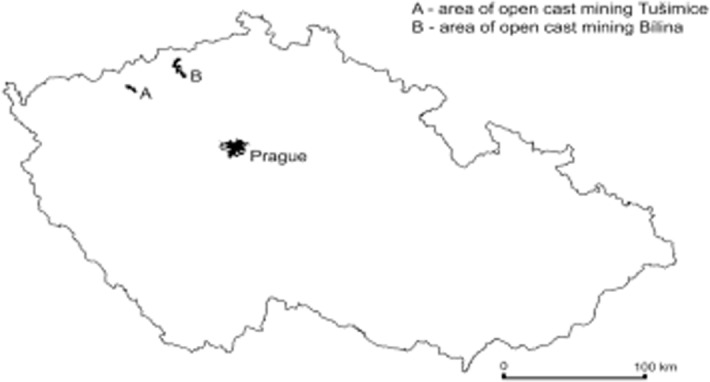
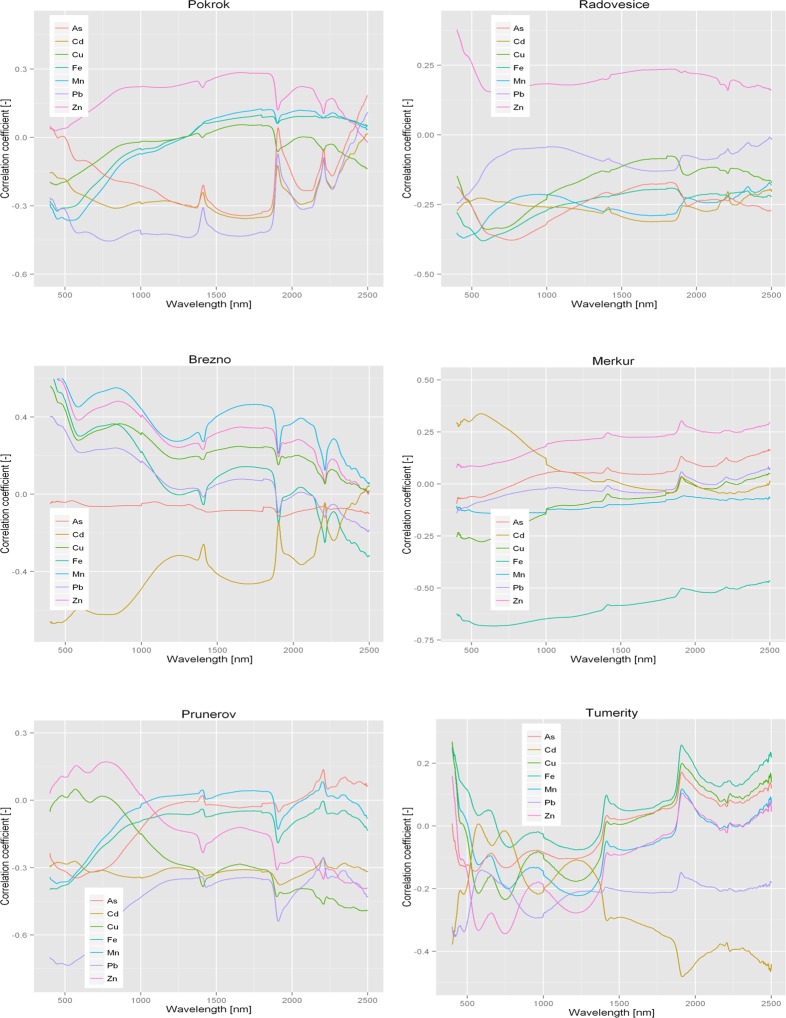
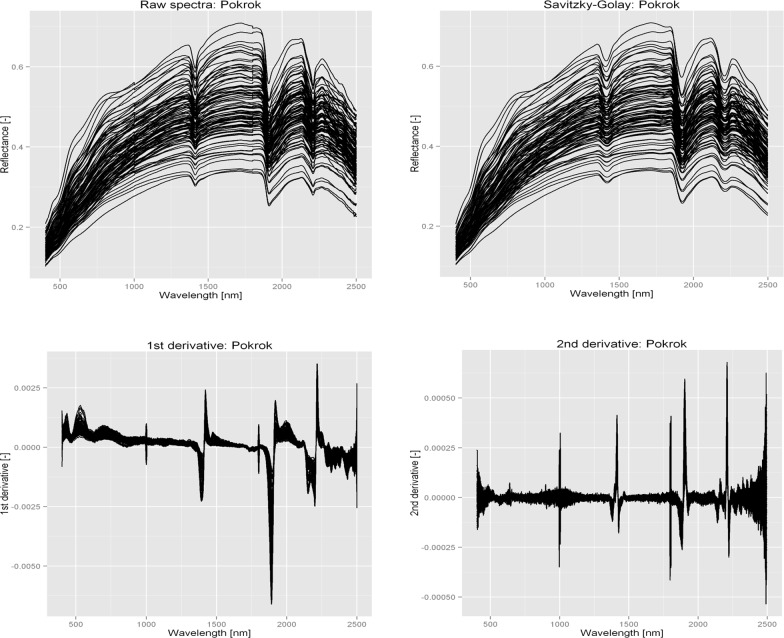
In order to monitor Potentially Toxic Elements (PTEs) in anthropogenic soils on brown coal mining dumpsites, a large number of samples and cumbersome, time-consuming laboratory measurements are required. Due to its rapidity, convenience and accuracy, reflectance spectroscopy within the Visible-Near Infrared (Vis-NIR) region has been used to predict soil constituents. This study evaluated the suitability of Vis-NIR (350-2500 nm) reflectance spectroscopy for predicting PTEs concentration, using samples collected on large brown coal mining dumpsites in the Czech Republic. Partial Least Square Regression (PLSR) and Support Vector Machine Regression (SVMR) with cross-validation were used to relate PTEs data to the reflectance spectral data by applying different preprocessing strategies. According to the criteria of minimal Root Mean Square Error of Prediction of Cross Validation (RMSEPcv) and maximal coefficient of determination (R2cv) and Residual Prediction Deviation (RPD), the SVMR models with the first derivative pretreatment provided the most accurate prediction for As (R2cv) = 0.89, RMSEPcv = 1.89, RPD = 2.63). Less accurate, but acceptable prediction for screening purposes for Cd and Cu (0.66 ˂ R2cv) ˂ 0.81, RMSEPcv = 0.0.8 and 4.08 respectively, 2.0 ˂ RPD ˂ 2.5) were obtained. The PLSR model for predicting Mn (R2cv) = 0.44, RMSEPcv = 116.43, RPD = 1.45) presented an inadequate model. Overall, SVMR models for the Vis-NIR spectra could be used indirectly for an accurate assessment of PTEs' concentrations.
为了监测褐煤矿山排土场人为土壤中的潜在有毒元素(PTEs),需要大量样本以及繁琐、耗时的实验室测量。由于可见 - 近红外(Vis - NIR)区域的反射光谱具有快速、便捷和准确的特点,已被用于预测土壤成分。本研究利用在捷克共和国大型褐煤矿山排土场采集的样本,评估了Vis - NIR(350 - 2500 nm)反射光谱用于预测PTEs浓度的适用性。采用偏最小二乘回归(PLSR)和支持向量机回归(SVMR)并进行交叉验证,通过应用不同的预处理策略将PTEs数据与反射光谱数据相关联。根据交叉验证预测的最小均方根误差(RMSEPcv)、最大决定系数(R2cv)和剩余预测偏差(RPD)的标准,采用一阶导数预处理的SVMR模型对砷的预测最为准确(R2cv = 0.89,RMSEPcv = 1.89,RPD = 2.63)。对于镉和铜,虽然预测准确性稍低,但用于筛选目的仍可接受(0.66 ˂ R2cv ˂ 0.81,RMSEPcv分别为0.08和4.08,2.0 ˂ RPD ˂ 2.5)。预测锰的PLSR模型(R2cv = 0.44,RMSEPcv = 116.43,RPD = 1.45)表现不佳。总体而言,Vis - NIR光谱的SVMR模型可间接用于准确评估PTEs的浓度。