Tanaka Yusuke, Fujino Junya, Ideno Takashi, Okubo Shigetaka, Takemura Kazuhisa, Miyata Jun, Kawada Ryosaku, Fujimoto Shinsuke, Kubota Manabu, Sasamoto Akihiko, Hirose Kimito, Takeuchi Hideaki, Fukuyama Hidenao, Murai Toshiya, Takahashi Hidehiko
Department of Psychiatry, Graduate School of Medicine, Kyoto University Kyoto, Japan.
Department of Psychology, Waseda University Tokyo, Japan.
Front Psychol. 2015 Feb 5;5:1550. doi: 10.3389/fpsyg.2014.01550. eCollection 2014.
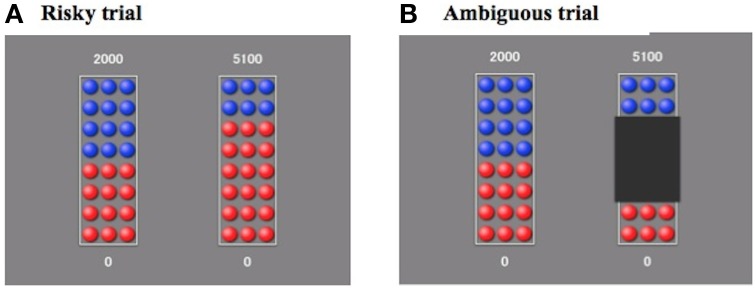
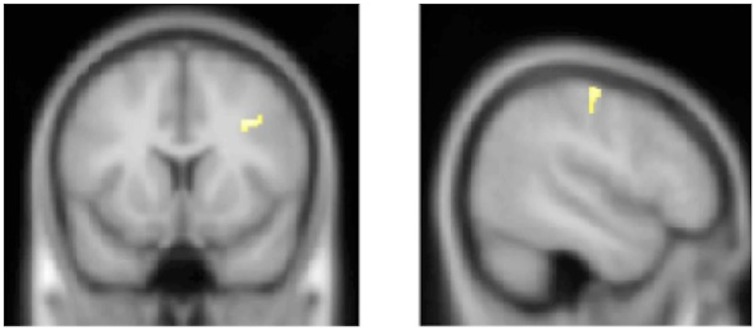
In recent years, there has been growing interest in understanding a person's reaction to ambiguous situations, and two similar constructs related to ambiguity, "ambiguity aversion" and "ambiguity intolerance," are defined in different disciplines. In the field of economic decision-making research, "ambiguity aversion" represents a preference for known risks relative to unknown risks. On the other hand, in clinical psychology, "ambiguity intolerance" describes the tendency to perceive ambiguous situations as undesirable. However, it remains unclear whether these two notions derived from different disciplines are identical or not. To clarify this issue, we combined an economic task, psychological questionnaires, and voxel-based morphometry (VBM) of structural brain magnetic resonance imaging (MRI) in a sample of healthy volunteers. The individual ambiguity aversion tendency parameter, as measured by our economic task, was negatively correlated with agreeableness scores on the self-reported version of the Revised NEO Personality Inventory. However, it was not correlated with scores of discomfort with ambiguity, one of the subscales of the Need for Closure Scale. Furthermore, the ambiguity aversion tendency parameter was negatively correlated with gray matter (GM) volume of areas in the lateral prefrontal cortex and parietal cortex, whereas ambiguity intolerance was not correlated with GM volume in any region. Our results suggest that ambiguity aversion, described in decision theory, may not necessarily be identical to ambiguity intolerance, referred to in clinical psychology. Cautious applications of decision theory to clinical neuropsychiatry are recommended.
近年来,人们对理解一个人对模糊情境的反应越来越感兴趣,并且在不同学科中定义了两个与模糊性相关的类似概念,即“模糊厌恶”和“模糊不耐受”。在经济决策研究领域,“模糊厌恶”表示相对于未知风险而言对已知风险的偏好。另一方面,在临床心理学中,“模糊不耐受”描述了将模糊情境视为不可取的倾向。然而,这两个源自不同学科的概念是否相同仍不清楚。为了阐明这个问题,我们在健康志愿者样本中结合了一项经济任务、心理问卷以及基于体素的结构脑磁共振成像(MRI)形态学测量(VBM)。通过我们的经济任务测量得到的个体模糊厌恶倾向参数,与修订版大五人格量表自我报告版本中的宜人性得分呈负相关。然而,它与闭合需求量表子量表之一的模糊不适得分不相关。此外,模糊厌恶倾向参数与外侧前额叶皮层和顶叶皮层区域的灰质(GM)体积呈负相关,而模糊不耐受与任何区域的GM体积均不相关。我们的结果表明,决策理论中描述的模糊厌恶不一定与临床心理学中提到的模糊不耐受相同。建议谨慎地将决策理论应用于临床神经精神病学。