Pushkarskaya Helen, Smithson Michael, Joseph Jane E, Corbly Christine, Levy Ifat
Department of Agricultural Economics, University of Kentucky Lexington, KY, USA ; Department of Diagnostic Radiology, Yale School of Medicine New Haven, CT, USA ; Section of Comparative Medicine, Yale School of Medicine New Haven, CT, USA.
Research School of Psychology, The Australian National University Canberra, ACT, Australia.
Front Behav Neurosci. 2015 Nov 27;9:325. doi: 10.3389/fnbeh.2015.00325. eCollection 2015.
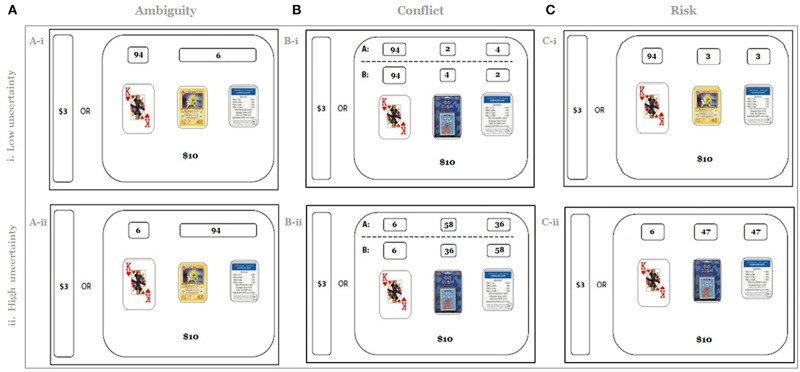
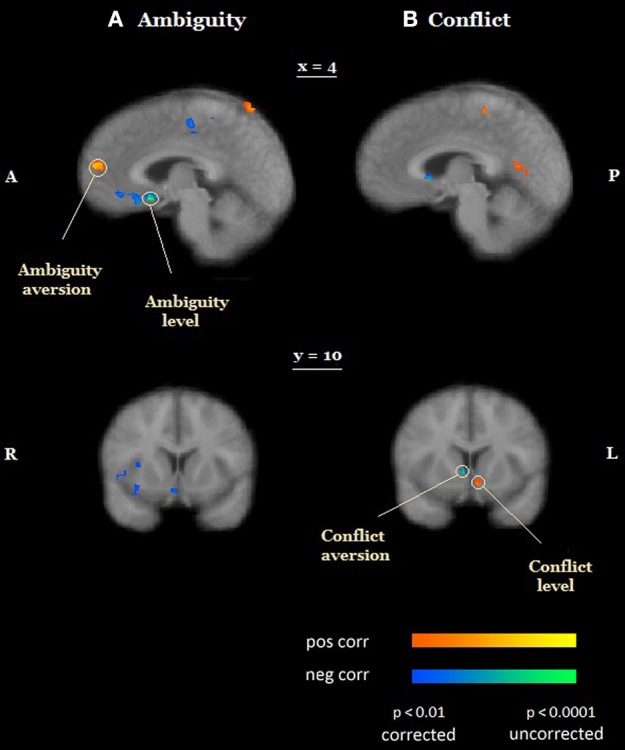
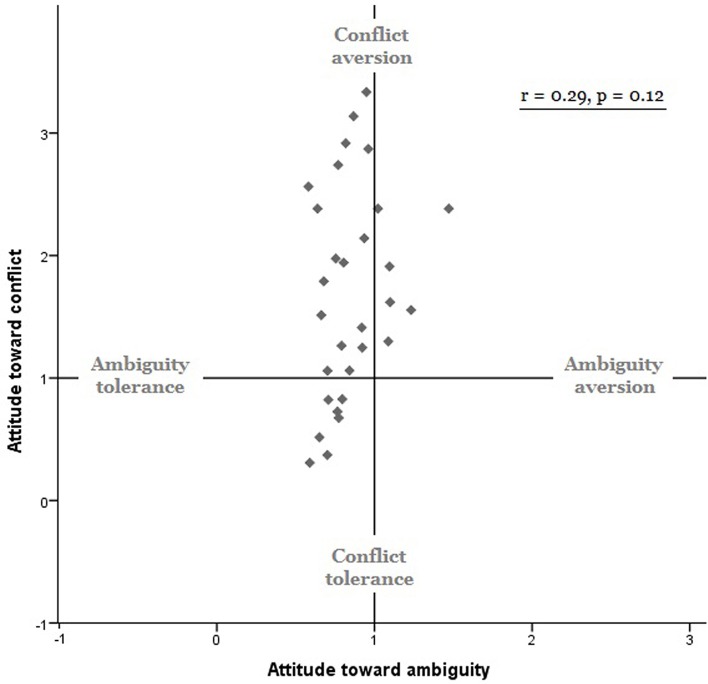
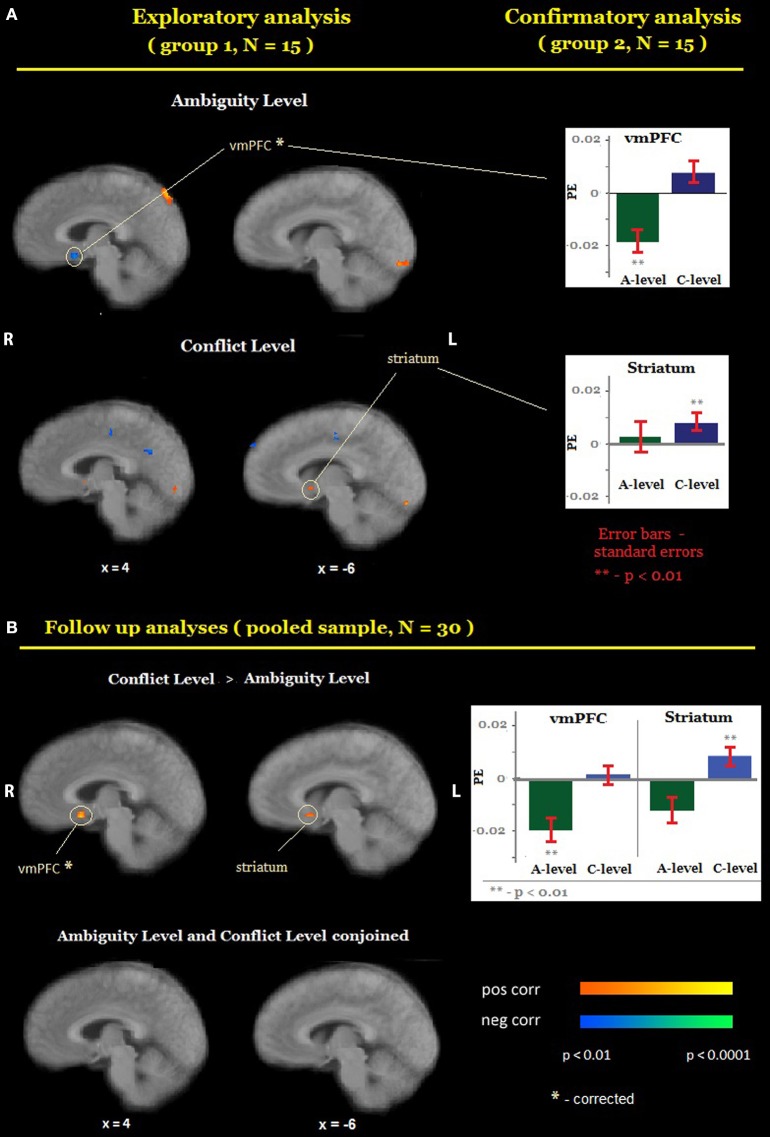
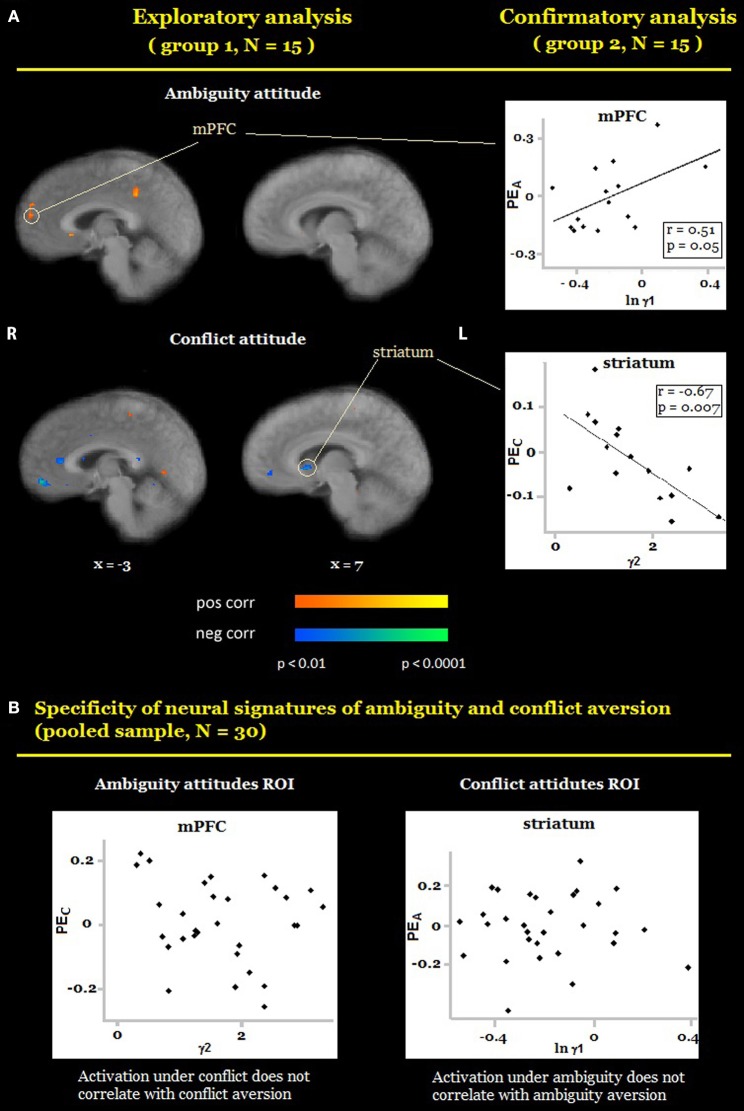
HIGHLIGHTS We use a simple gambles design in an fMRI study to compare two conditions: ambiguity and conflict.Participants were more conflict averse than ambiguity averse.Ambiguity aversion did not correlate with conflict aversion.Activation in the medial prefrontal cortex correlated with ambiguity level and ambiguity aversion.Activation in the ventral striatum correlated with conflict level and conflict aversion. Studies of decision making under uncertainty generally focus on imprecise information about outcome probabilities ("ambiguity"). It is not clear, however, whether conflicting information about outcome probabilities affects decision making in the same manner as ambiguity does. Here we combine functional magnetic resonance imaging (fMRI) and a simple gamble design to study this question. In this design the levels of ambiguity and conflict are parametrically varied, and ambiguity and conflict gambles are matched on expected value. Behaviorally, participants avoided conflict more than ambiguity, and attitudes toward ambiguity and conflict did not correlate across participants. Neurally, regional brain activation was differentially modulated by ambiguity level and aversion to ambiguity and by conflict level and aversion to conflict. Activation in the medial prefrontal cortex was correlated with the level of ambiguity and with ambiguity aversion, whereas activation in the ventral striatum was correlated with the level of conflict and with conflict aversion. These novel results indicate that decision makers process imprecise and conflicting information differently, a finding that has important implications for basic and clinical research.
我们在一项功能磁共振成像(fMRI)研究中采用简单赌博设计,以比较两种情况:模糊性和冲突性。参与者对冲突的厌恶程度高于对模糊性的厌恶程度。对模糊性的厌恶与对冲突的厌恶不相关。内侧前额叶皮层的激活与模糊性水平和对模糊性的厌恶相关。腹侧纹状体的激活与冲突水平和对冲突的厌恶相关。不确定性下的决策研究通常关注关于结果概率的不精确信息(“模糊性”)。然而,关于结果概率的冲突信息是否以与模糊性相同的方式影响决策尚不清楚。在此,我们结合功能磁共振成像(fMRI)和简单赌博设计来研究这个问题。在这个设计中,模糊性和冲突性的水平呈参数变化,并且模糊性和冲突性赌博在期望值上相匹配。在行为上,参与者避免冲突的程度超过避免模糊性,并且参与者对模糊性和冲突的态度不相关。在神经层面,大脑区域激活受到模糊性水平和对模糊性的厌恶以及冲突水平和对冲突的厌恶的不同调节。内侧前额叶皮层的激活与模糊性水平和对模糊性的厌恶相关,而腹侧纹状体的激活与冲突水平和对冲突的厌恶相关。这些新结果表明,决策者对不精确和冲突信息的处理方式不同,这一发现对基础研究和临床研究具有重要意义。