Kateh Francis, Nagbe Thomas, Kieta Abraham, Barskey Albert, Gasasira Alex Ntale, Driscoll Anne, Tucker Anthony, Christie Athalia, Karmo Ben, Scott Colleen, Bowah Collin, Barradas Danielle, Blackley David, Dweh Emmanuel, Warren Felicia, Mahoney Frank, Kassay Gabriel, Calvert Geoffrey M, Castro Georgina, Logan Gorbee, Appiah Grace, Kirking Hannah, Koon Hawa, Papowitz Heather, Walke Henry, Cole Isaac B, Montgomery Joel, Neatherlin John, Tappero Jordan W, Hagan Jose E, Forrester Joseph, Woodring Joseph, Mott Joshua, Attfield Kathleen, DeCock Kevin, Lindblade Kim A, Powell Krista, Yeoman Kristin, Adams Laura, Broyles Laura N, Slutsker Laurence, Larway Lawrence, Belcher Lisa, Cooper Lorraine, Santos Marjorie, Westercamp Matthew, Weinberg Meghan Pearce, Massoudi Mehran, Dea Monica, Patel Monita, Hennessey Morgan, Fomba Moses, Lubogo Mutaawe, Maxwell Nikki, Moonan Patrick, Arzoaquoi Sampson, Gee Samuel, Zayzay Samuel, Pillai Satish, Williams Seymour, Zarecki Shauna Mettee, Yett Sheldon, James Stephen, Grube Steven, Gupta Sundeep, Nelson Thelma, Malibiche Theophil, Frank Wilmont, Smith Wilmot, Nyenswah Tolbert
MMWR Morb Mortal Wkly Rep. 2015 Feb 27;64(7):188-92.
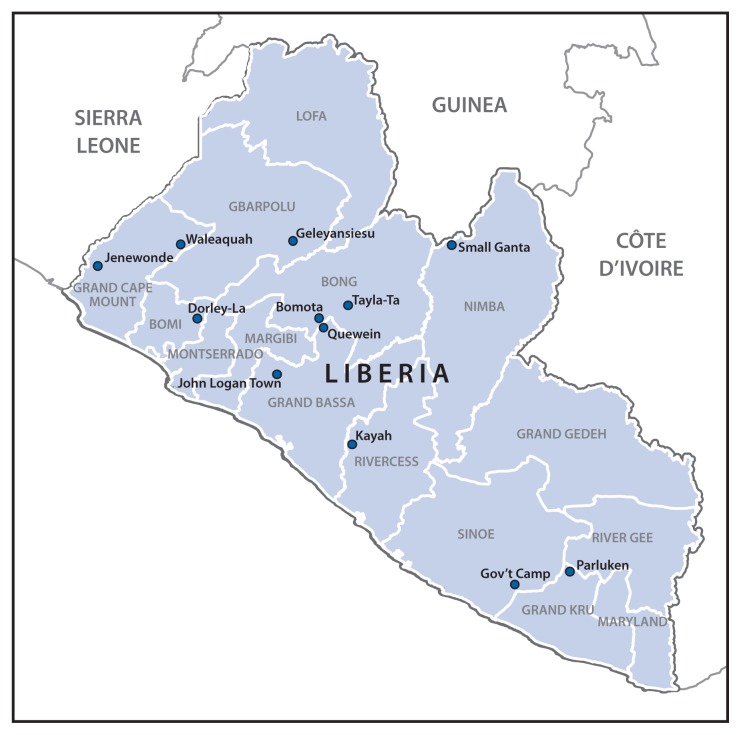
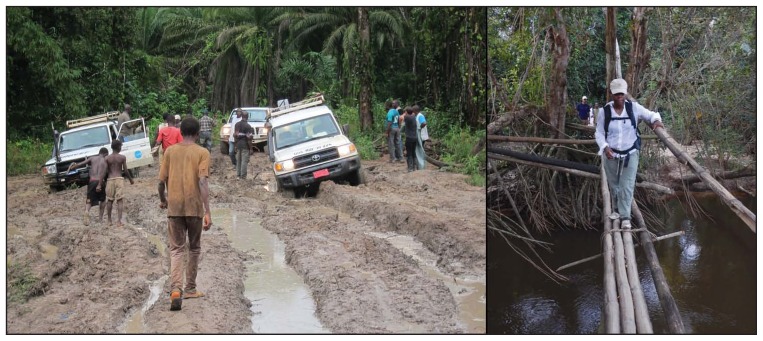
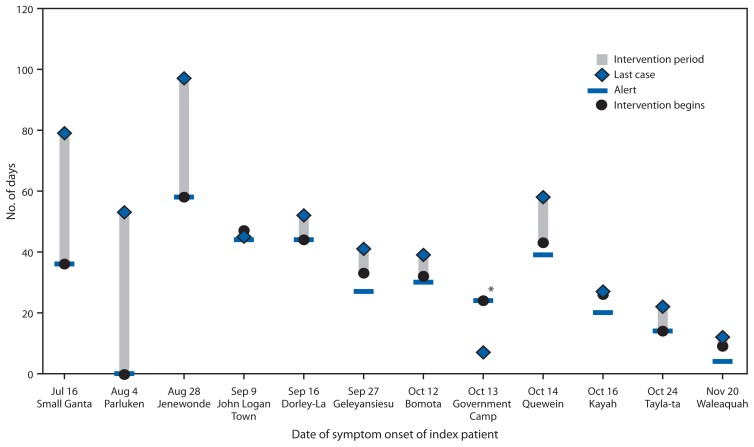
West Africa is experiencing its first epidemic of Ebola virus disease (Ebola). As of February 9, Liberia has reported 8,864 Ebola cases, of which 3,147 were laboratory-confirmed. Beginning in August 2014, the Liberia Ministry of Health and Social Welfare (MOHSW), supported by CDC, the World Health Organization (WHO), and others, began systematically investigating and responding to Ebola outbreaks in remote areas. Because many of these areas lacked mobile telephone service, easy road access, and basic infrastructure, flexible and targeted interventions often were required. Development of a national strategy for the Rapid Isolation and Treatment of Ebola (RITE) began in early October. The strategy focuses on enhancing capacity of county health teams (CHT) to investigate outbreaks in remote areas and lead tailored responses through effective and efficient coordination of technical and operational assistance from the MOHSW central level and international partners. To measure improvements in response indicators and outcomes over time, data from investigations of 12 of 15 outbreaks in remote areas with illness onset dates of index cases during July 16-November 20, 2014, were analyzed. The times to initial outbreak alerts and durations of the outbreaks declined over that period while the proportions of patients who were isolated and treated increased. At the same time, the case-fatality rate in each outbreak declined. Implementation of strategies, such as RITE, to rapidly respond to rural outbreaks of Ebola through coordinated and tailored responses can successfully reduce transmission and improve outcomes.
西非正在经历其首次埃博拉病毒病(埃博拉)疫情。截至2月9日,利比里亚已报告8864例埃博拉病例,其中3147例经实验室确诊。从2014年8月开始,在疾病控制与预防中心(CDC)、世界卫生组织(WHO)及其他机构的支持下,利比里亚卫生和社会福利部(MOHSW)开始系统调查并应对偏远地区的埃博拉疫情。由于这些地区中的许多地方缺乏移动电话服务、道路通行不便且基础设施薄弱,因此往往需要采取灵活且有针对性的干预措施。10月初开始制定国家快速隔离与治疗埃博拉(RITE)战略。该战略的重点是提高县卫生团队(CHT)的能力,以便在偏远地区调查疫情,并通过有效且高效地协调MOHSW中央层面和国际合作伙伴提供的技术及业务援助来领导针对性的应对行动。为衡量随着时间推移应对指标和成果的改善情况,对2014年7月16日至11月20日期间发病日期为指示病例的15起偏远地区疫情中的12起调查数据进行了分析。在此期间,首次疫情警报时间和疫情持续时间均有所下降,而被隔离和治疗的患者比例有所增加。与此同时,每起疫情的病死率均有所下降。通过协调和针对性应对措施来快速应对农村地区埃博拉疫情的战略(如RITE)的实施,能够成功减少传播并改善结果。