Polinder Suzanne, Haagsma Juanita A, van Klaveren David, Steyerberg Ewout W, van Beeck Ed F
Erasmus MC, Department of Public Health, PO Box 2040, 3000 Rotterdam, CA The Netherlands.
Popul Health Metr. 2015 Feb 17;13:4. doi: 10.1186/s12963-015-0037-1. eCollection 2015.
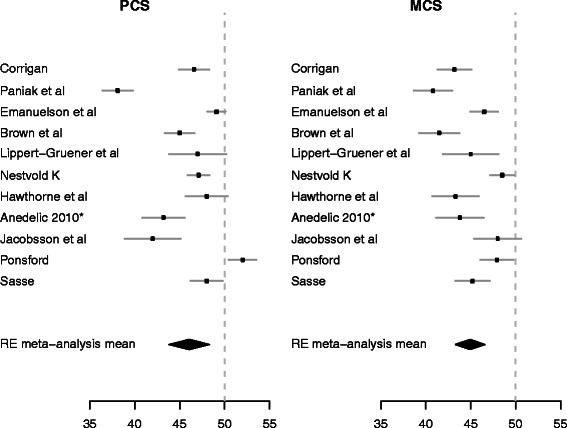
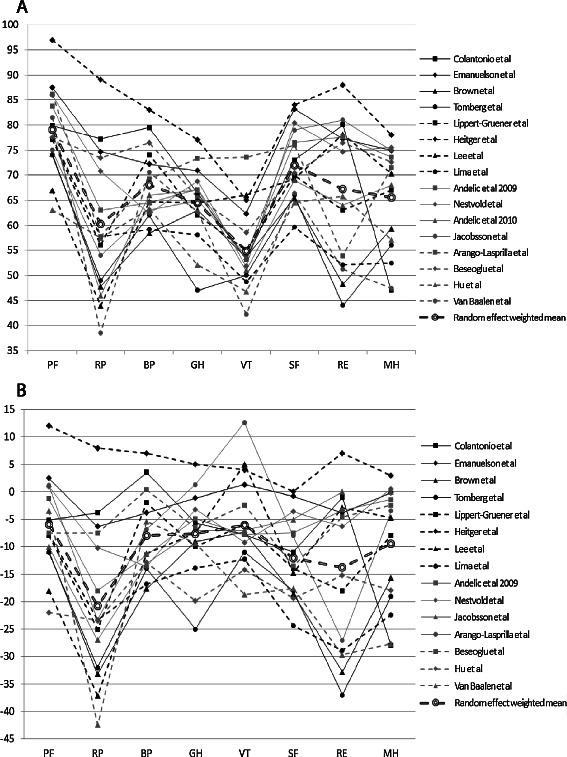
Measurement of health-related quality of life (HRQL) is essential to quantify the subjective burden of traumatic brain injury (TBI) in survivors. We performed a systematic review of HRQL studies in TBI to evaluate study design, instruments used, methodological quality, and outcome. Fifty-eight studies were included, showing large variation in HRQL instruments and assessment time points used. The Short Form-36 (SF-36) was most frequently used. A high prevalence of health problems during and after the first year of TBI was a common finding of the studies included. In the long term, patients with a TBI still showed large deficits from full recovery compared to population norms. Positive results for internal consistency and interpretability of the SF-36 were reported in validity studies. The Quality of Life after Brain Injury instrument (QOLIBRI), European Brain Injury Questionnaire (EBIQ), Child Health Questionnaire (CHQ), and the World Health Organization Quality of Life short version (WHOQOL-BREF) showed positive results, but evidence was limited. Meta-analysis of SF-36 showed that TBI outcome is heterogeneous, encompassing a broad spectrum of HRQL, with most problems reported in the physical, emotional, and social functioning domain. The use of SF-36 in combination with a TBI-specific instrument, i.e., QOLIBRI, seems promising. Consensus on preferred methodologies of HRQL measurement in TBI would facilitate comparability across studies, resulting in improved insights in recovery patterns and better estimates of the burden of TBI.
测量与健康相关的生活质量(HRQL)对于量化创伤性脑损伤(TBI)幸存者的主观负担至关重要。我们对TBI患者的HRQL研究进行了系统综述,以评估研究设计、所使用的工具、方法学质量和结果。纳入了58项研究,结果显示所使用的HRQL工具和评估时间点存在很大差异。最常使用的是简明健康调查问卷(SF-36)。所纳入的研究普遍发现,TBI后第一年期间及之后健康问题的发生率很高。从长期来看,与人群标准相比,TBI患者与完全康复仍存在较大差距。效度研究报告了SF-36在内部一致性和可解释性方面的积极结果。脑损伤后生活质量量表(QOLIBRI)、欧洲脑损伤问卷(EBIQ)、儿童健康问卷(CHQ)以及世界卫生组织生活质量简表(WHOQOL-BREF)均显示出积极结果,但证据有限。对SF-36的荟萃分析表明,TBI的结果具有异质性,涵盖了广泛的HRQL范围,其中身体、情感和社会功能领域报告的问题最多。将SF-36与特定于TBI的工具(即QOLIBRI)结合使用似乎很有前景。就TBI中HRQL测量的首选方法达成共识将有助于不同研究之间的可比性,从而更深入地了解康复模式,并更好地估计TBI的负担。