Ramezani Amitis, Aghasadeghi Mohammad Reza, Ahmadi Farrokhlagha, Razeghi Effat, Eslamifar Ali, Banifazl Mohammad, Sofian Masoomeh, Bahramali Golnaz, Hekmat Soheila, Aghakhani Arezoo
Department of Clinical Research, Pasteur Institute of Iran, Tehran, IR Iran.
Department of Hepatitis and AIDS, Pasteur Institute of Iran, Tehran, IR Iran.
Nephrourol Mon. 2014 Nov 30;7(1):e22674. doi: 10.5812/numonthly.22674. eCollection 2015 Jan.
Occult Hepatitis B virus (HBV) infection (OBI) is defined as the presence of HBV-DNA in the liver or serum with undetectable hepatitis B surface antigen (HBsAg). Hemodialysis (HD) patients are at risk of acquiring parenterally transmitted infections.
The aim of this study was to assess the prevalence of OBI in HD patients.
A hundred HBsAg negative HD patients were included in this study from main dialysis units in Tehran, Iran. HBsAg, hepatitis B surface antibody (anti-HBs), hepatitis B core antibody (anti-HBc) and liver enzymes levels were examined in all subjects. The presence of HBV-DNA was determined in plasma samples using real-time PCR.
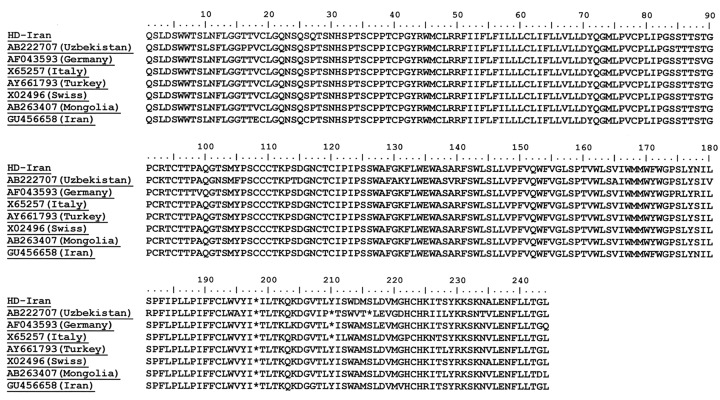
A hundredpatients with a mean age of 58.5 ± 16.1 years were enrolled in this study. In total, 56.7% were male and 43.3% female. Anti-HBs, anti-HBc, anti-HCV and anti-HIV were detected in 56.7%, 2%, 5.2% and 1% of patients, respectively. Isolated anti-HBc was detected in 2% of cases. HBV-DNA was detected in 1% of HBsAg negative patients.
This study showed a low rate of isolated anti-HBc and occult HBV infection in HD patients. It can be due to improvement of people's knowledge about HBV transmission routes, HBV vaccination of HD patients and regular surveillance of HBV infection.
隐匿性乙型肝炎病毒(HBV)感染(OBI)定义为肝脏或血清中存在HBV-DNA,但乙肝表面抗原(HBsAg)检测不到。血液透析(HD)患者有通过非肠道途径感染的风险。
本研究旨在评估HD患者中OBI的患病率。
本研究纳入了来自伊朗德黑兰主要透析单位的100例HBsAg阴性的HD患者。对所有受试者检测HBsAg、乙肝表面抗体(抗-HBs)、乙肝核心抗体(抗-HBc)和肝酶水平。使用实时PCR测定血浆样本中HBV-DNA的存在情况。
本研究纳入了100例平均年龄为58.5±16.1岁的患者。其中男性占56.7%,女性占43.3%。分别在56.7%、2%、5.2%和1%的患者中检测到抗-HBs、抗-HBc、抗-HCV和抗-HIV。2%的病例检测到孤立性抗-HBc。1%的HBsAg阴性患者检测到HBV-DNA。
本研究显示HD患者中孤立性抗-HBc和隐匿性HBV感染率较低。这可能归因于人们对HBV传播途径的认识提高、HD患者的HBV疫苗接种以及对HBV感染的定期监测。