Haddad Lawrence, Achadi Endang, Bendech Mohamed Ag, Ahuja Arti, Bhatia Komal, Bhutta Zulfiqar, Blössner Monika, Borghi Elaine, Colecraft Esi, de Onis Mercedes, Eriksen Kamilla, Fanzo Jessica, Flores-Ayala Rafael, Fracassi Patrizia, Kimani-Murage Elizabeth, Nago Koukoubou Eunice, Krasevec Julia, Newby Holly, Nugent Rachel, Oenema Stineke, Martin-Prével Yves, Randel Judith, Requejo Jennifer, Shyam Tara, Udomkesmalee Emorn, Reddy K Srinath
International Food Policy Research Institute, Washington, DC;
University of Indonesia, Jakarta, Indonesia;
J Nutr. 2015 Apr;145(4):663-71. doi: 10.3945/jn.114.206078. Epub 2015 Mar 4.
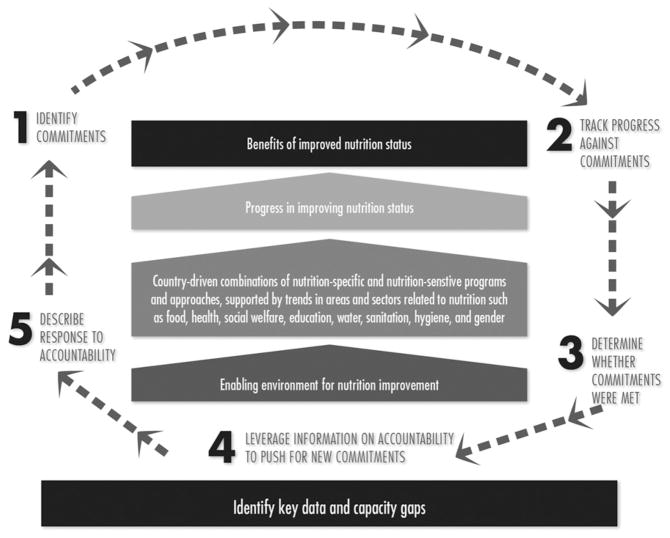
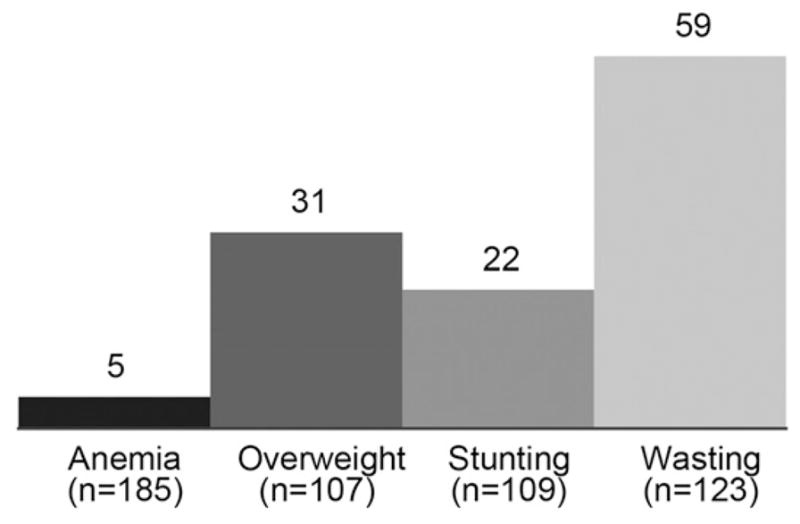
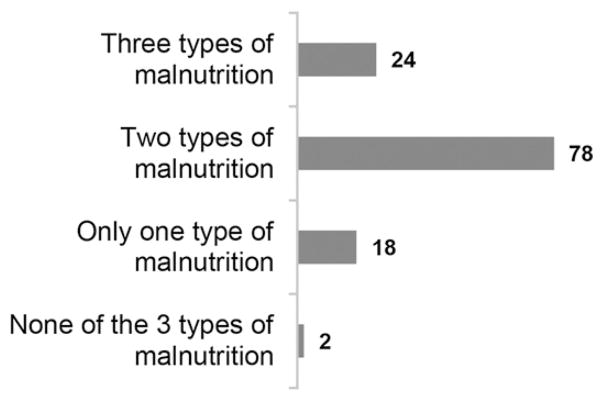
In 2013, the Nutrition for Growth Summit called for a Global Nutrition Report (GNR) to strengthen accountability in nutrition so that progress in reducing malnutrition could be accelerated. This article summarizes the results of the first GNR. By focusing on undernutrition and overweight, the GNR puts malnutrition in a new light. Nearly every country in the world is affected by malnutrition, and multiple malnutrition burdens are the "new normal." Unfortunately, the world is off track to meet the 2025 World Health Assembly (WHA) targets for nutrition. Many countries are, however, making good progress on WHA indicators, providing inspiration and guidance for others. Beyond the WHA goals, nutrition needs to be more strongly represented in the Sustainable Development Goal (SDG) framework. At present, it is only explicitly mentioned in 1 of 169 SDG targets despite the many contributions improved nutritional status will make to their attainment. To achieve improvements in nutrition status, it is vital to scale up nutrition programs. We identify bottlenecks in the scale-up of nutrition-specific and nutrition-sensitive approaches and highlight actions to accelerate coverage and reach. Holding stakeholders to account for delivery on nutrition actions requires a well-functioning accountability infrastructure, which is lacking in nutrition. New accountability mechanisms need piloting and evaluation, financial resource flows to nutrition need to be made explicit, nutrition spending targets should be established, and some key data gaps need to be filled. For example, many UN member states cannot report on their WHA progress and those that can often rely on data >5 y old. The world can accelerate malnutrition reduction substantially, but this will require stronger accountability mechanisms to hold all stakeholders to account.
2013年,“促进增长的营养峰会”呼吁发布一份《全球营养报告》(GNR),以加强营养领域的问责制,从而加快减少营养不良的进程。本文总结了首份《全球营养报告》的结果。通过关注营养不良和超重问题,《全球营养报告》使人们对营养不良有了新的认识。世界上几乎每个国家都受到营养不良的影响,多种营养不良负担已成为“新常态”。遗憾的是,世界在实现2025年世界卫生大会(WHA)的营养目标方面偏离了轨道。然而,许多国家在WHA指标方面取得了良好进展,为其他国家提供了启发和指导。除了WHA目标外,营养在可持续发展目标(SDG)框架中需要得到更有力的体现。目前,在169个SDG目标中只有1个明确提到了营养,尽管营养状况的改善对实现这些目标有诸多贡献。为了改善营养状况,扩大营养项目至关重要。我们确定了扩大特定营养和营养敏感方法方面的瓶颈,并强调了加快覆盖范围和触及范围的行动。要让利益相关者对营养行动的实施负责,需要一个运作良好的问责基础设施,而营养领域恰恰缺乏这一基础设施。新的问责机制需要进行试点和评估,营养资金流需要明确,应制定营养支出目标,还需要填补一些关键的数据空白。例如,许多联合国成员国无法报告其在WHA方面的进展情况,而能够报告的国家往往依赖5年以上的数据。世界能够大幅加快减少营养不良的速度,但这需要更有力的问责机制来让所有利益相关者承担责任。