Michel Martin A, Elliott Paul R, Swatek Kirby N, Simicek Michal, Pruneda Jonathan N, Wagstaff Jane L, Freund Stefan M V, Komander David
Medical Research Council Laboratory of Molecular Biology, Francis Crick Avenue, Cambridge CB2 0QH, UK.
Medical Research Council Laboratory of Molecular Biology, Francis Crick Avenue, Cambridge CB2 0QH, UK.
Mol Cell. 2015 Apr 2;58(1):95-109. doi: 10.1016/j.molcel.2015.01.042. Epub 2015 Mar 5.
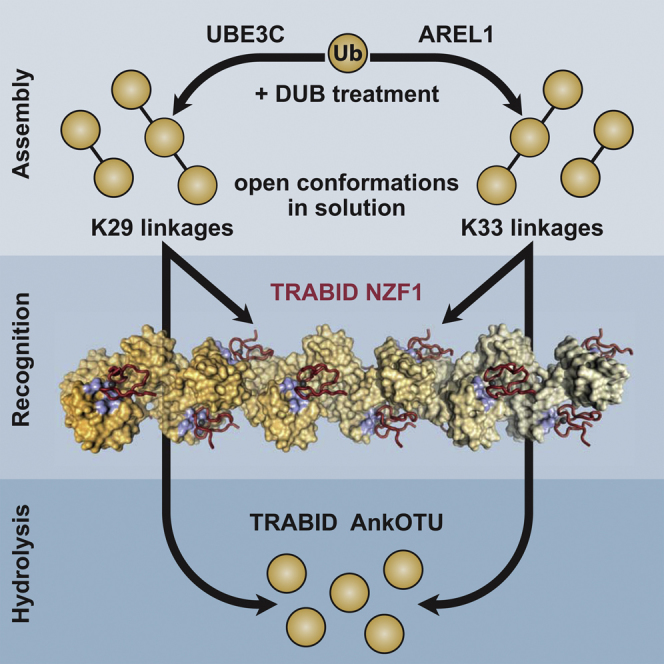
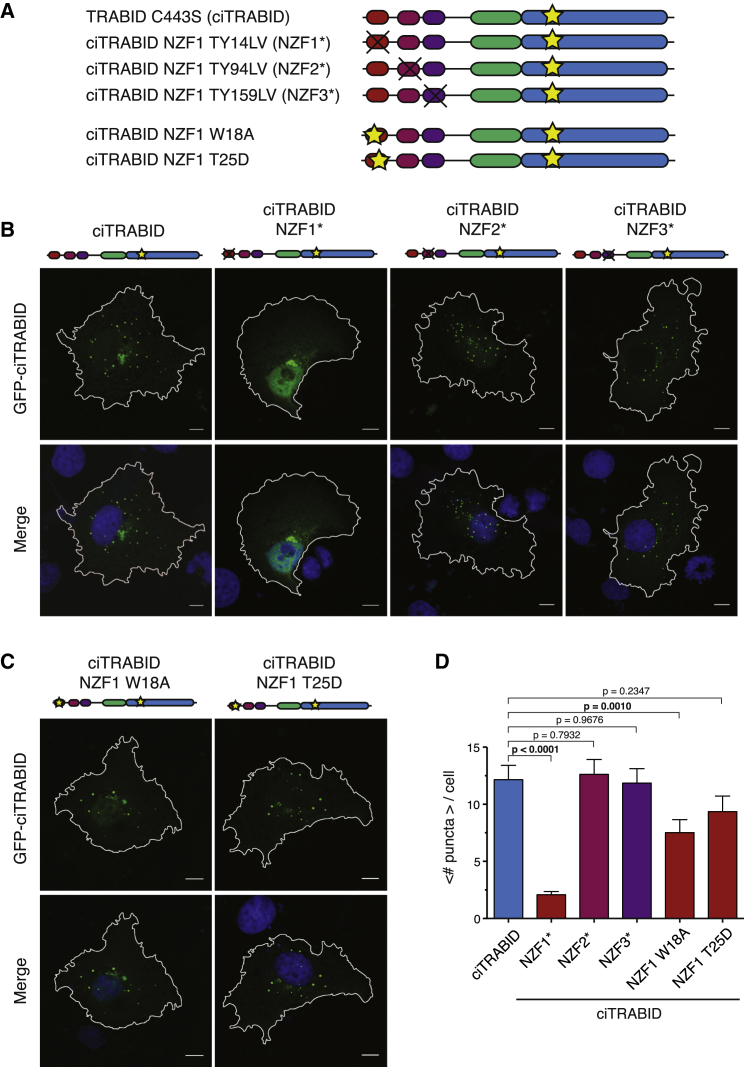
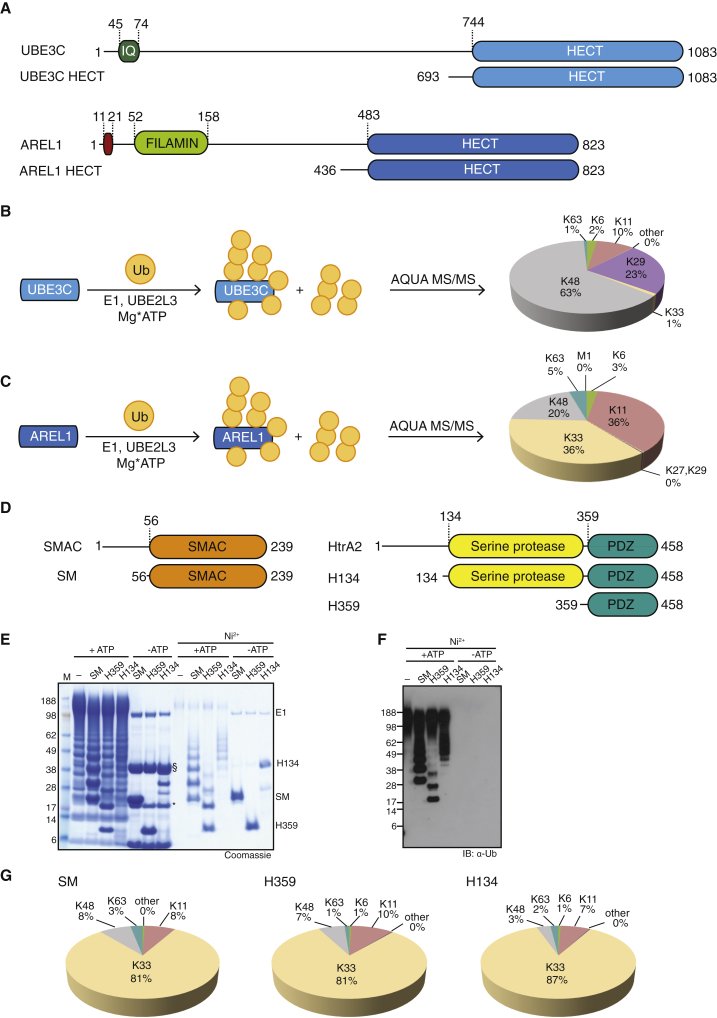
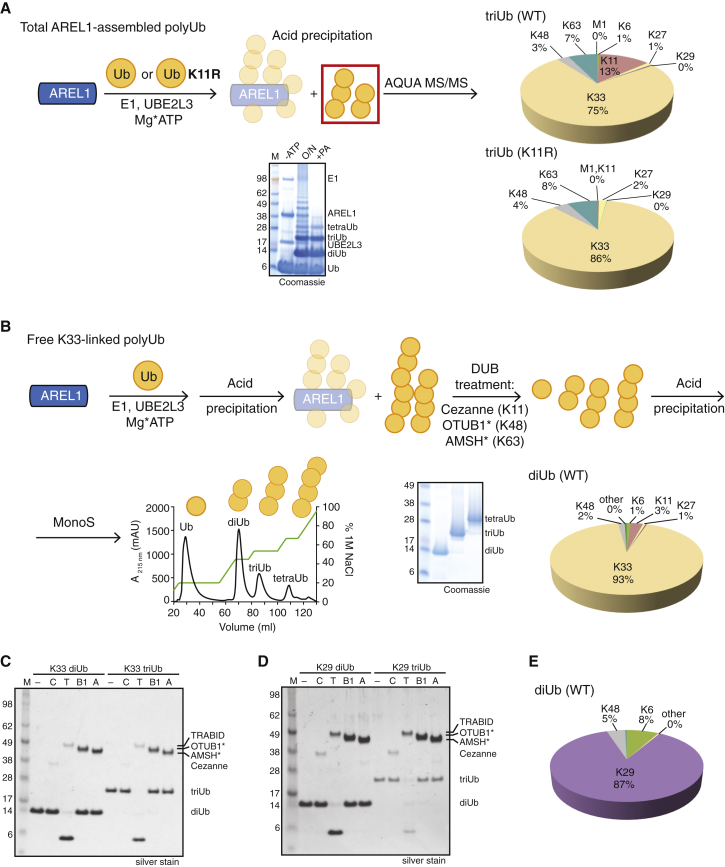
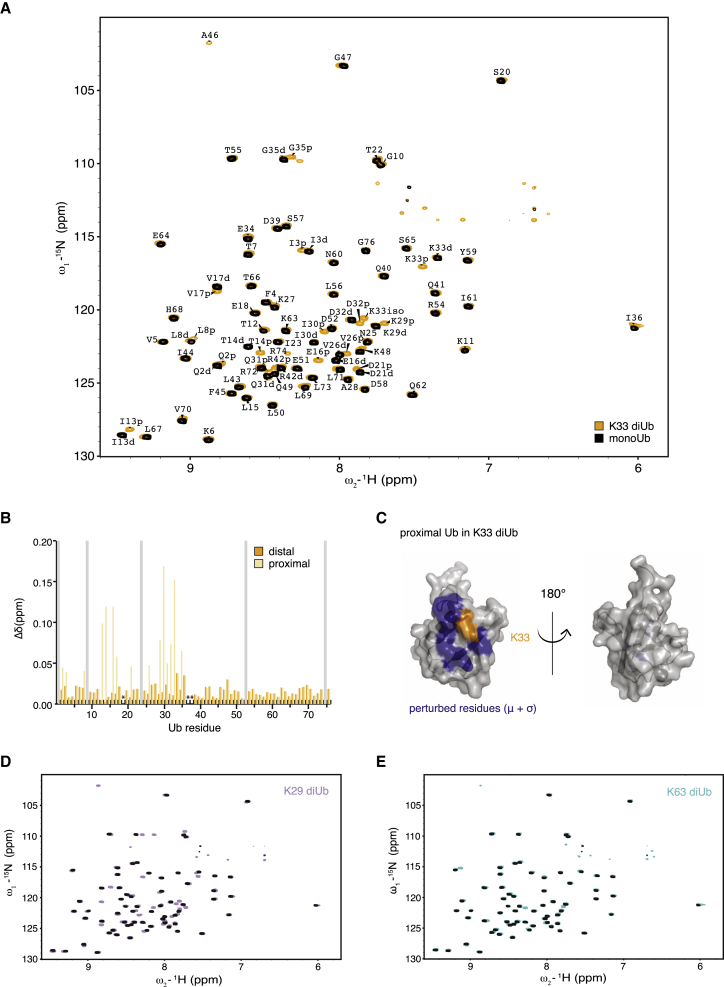
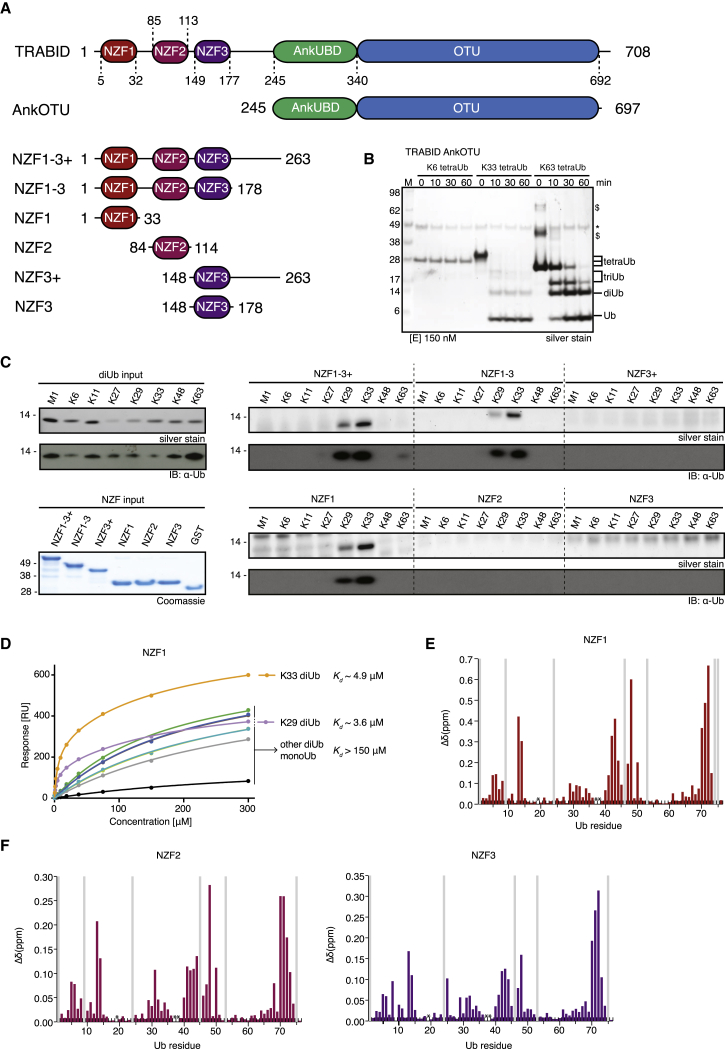
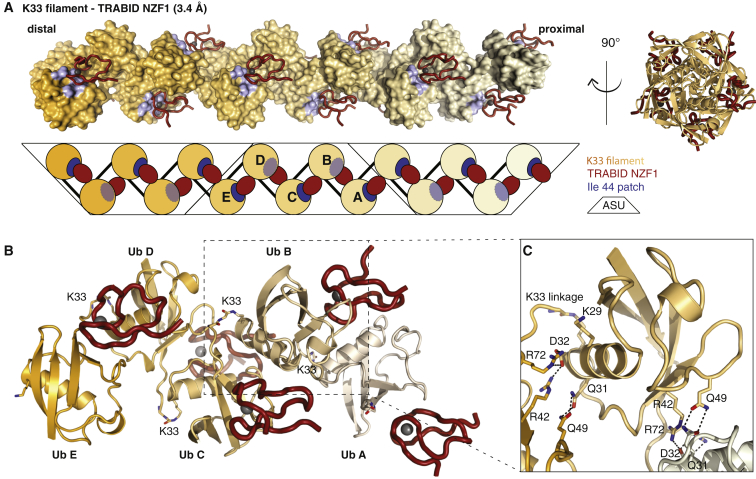
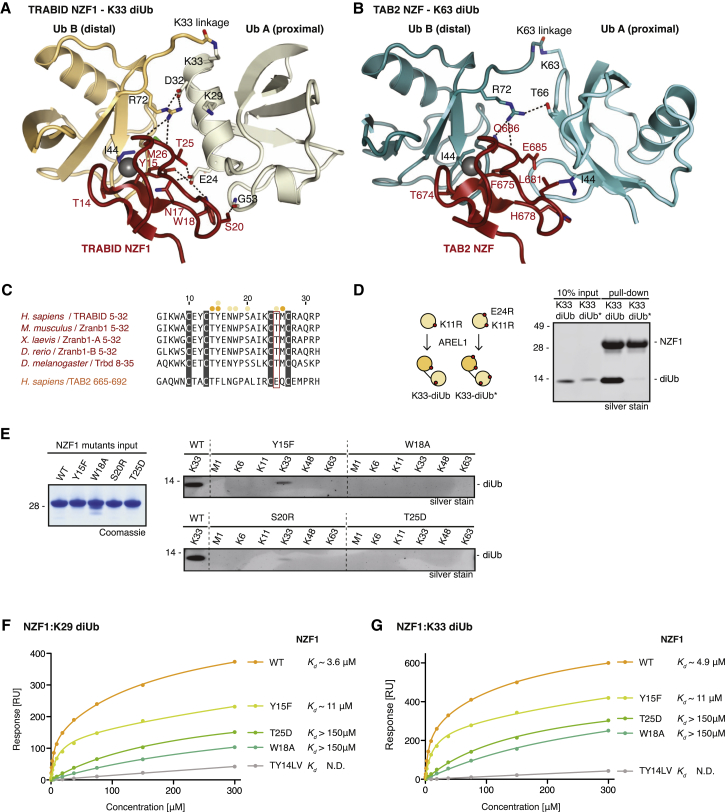
Protein ubiquitination regulates many cellular processes via attachment of structurally and functionally distinct ubiquitin (Ub) chains. Several atypical chain types have remained poorly characterized because the enzymes mediating their assembly and receptors with specific binding properties have been elusive. We found that the human HECT E3 ligases UBE3C and AREL1 assemble K48/K29- and K11/K33-linked Ub chains, respectively, and can be used in combination with DUBs to generate K29- and K33-linked chains for biochemical and structural analyses. Solution studies indicate that both chains adopt open and dynamic conformations. We further show that the N-terminal Npl4-like zinc finger (NZF1) domain of the K29/K33-specific deubiquitinase TRABID specifically binds K29/K33-linked diUb, and a crystal structure of this complex explains TRABID specificity and suggests a model for chain binding by TRABID. Our work uncovers linkage-specific components in the Ub system for atypical K29- and K33-linked Ub chains, providing tools to further understand these unstudied posttranslational modifications.
蛋白质泛素化通过连接结构和功能各异的泛素(Ub)链来调控许多细胞过程。几种非典型链类型的特征仍不清楚,因为介导其组装的酶以及具有特定结合特性的受体一直难以捉摸。我们发现,人类HECT E3连接酶UBE3C和AREL1分别组装K48/K29连接和K11/K33连接的Ub链,并且可以与去泛素化酶(DUBs)结合使用,以生成用于生化和结构分析的K29连接和K33连接的链。溶液研究表明,这两种链都呈现开放且动态的构象。我们进一步表明,K29/K33特异性去泛素化酶TRABID的N端Npl4样锌指(NZF1)结构域特异性结合K29/K33连接的双泛素,该复合物的晶体结构解释了TRABID的特异性,并提出了TRABID结合链的模型。我们的工作揭示了泛素系统中针对非典型K29和K33连接的Ub链的连接特异性成分,为进一步理解这些未被研究的翻译后修饰提供了工具。