Punzalan C S, Bukong T N, Szabo G
Department of Medicine, University of Massachusetts Medical School, Worcester, MA, USA.
J Viral Hepat. 2015 Oct;22(10):769-76. doi: 10.1111/jvh.12399. Epub 2015 Mar 6.
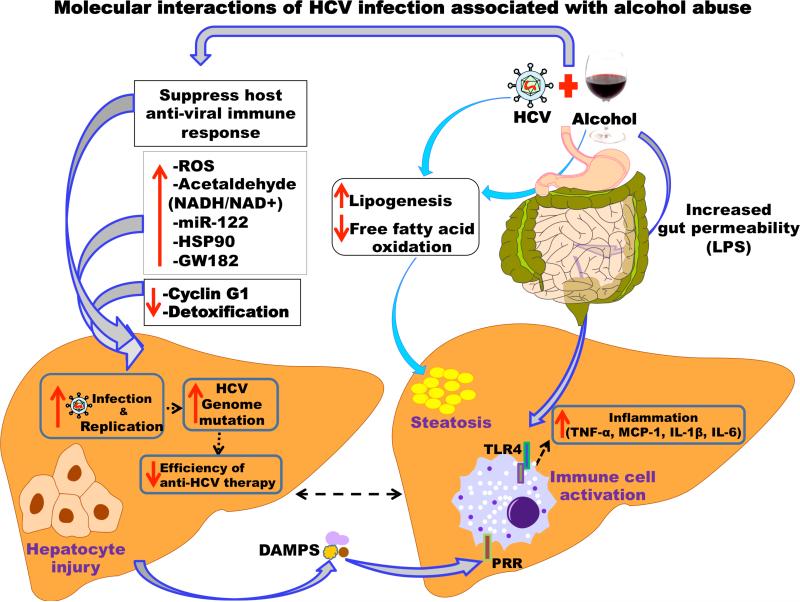
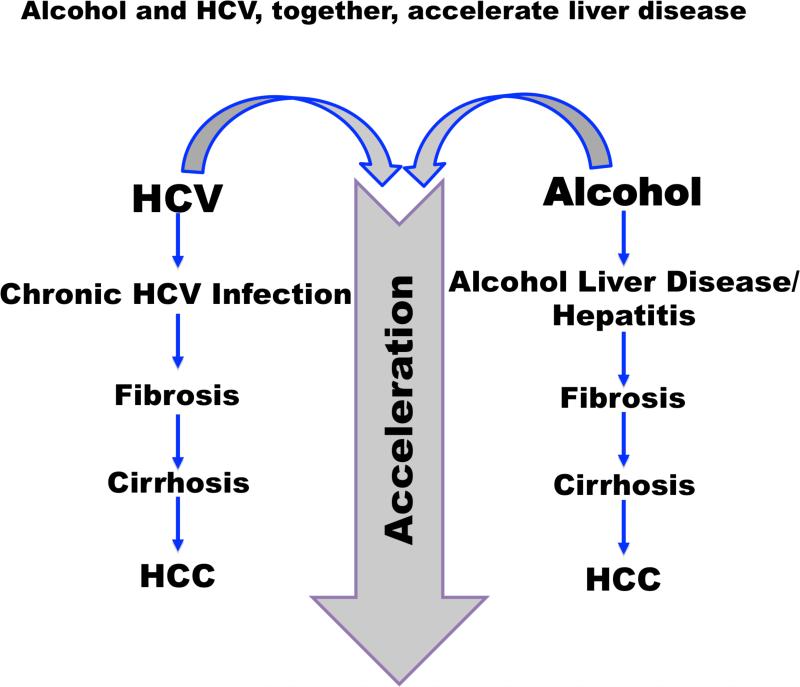
Most HCV-infected patients regularly consume alcohol. Alcoholic liver disease (ALD) and chronic hepatitis C virus (HCV) infection together are the most common causes of liver disease worldwide. Although both factors independently cause liver disease, they synergistically promote rapid liver disease progression with devastating outcomes for patients. This review focuses on the prevalence, clinical characteristics and molecular pathophysiologic mechanisms of HCV infection associated with alcohol abuse. Recent findings have centred on the synergistic effect of alcohol and HCV on viral replication, hepatocyte apoptosis, oxidative stress, alcohol-induced 'leaky gut', miR-122 and immune dysregulation. Clinical and basic research findings presented here summarize key scientific findings with the aim of highlighting potential areas for new therapies and identifying ways of optimizing current treatments for alcoholics with HCV infection.
大多数丙型肝炎病毒(HCV)感染患者经常饮酒。酒精性肝病(ALD)和慢性丙型肝炎病毒(HCV)感染共同构成了全球范围内肝病的最常见病因。尽管这两个因素各自都会导致肝病,但它们会协同作用,促进肝病快速进展,给患者带来灾难性后果。本综述聚焦于与酒精滥用相关的HCV感染的患病率、临床特征及分子病理生理机制。近期的研究发现集中在酒精与HCV在病毒复制、肝细胞凋亡、氧化应激、酒精诱导的“肠渗漏”、miR-122及免疫失调方面的协同作用。本文呈现的临床和基础研究结果总结了关键的科学发现,旨在突出新疗法的潜在领域,并确定优化当前对HCV感染酗酒者治疗方法的途径。