Department of Rheumatology and Immunology, The Affiliated Drum Tower Hospital of Nanjing University Medical School, 321 Zhongshan Road, Nanjing 210008, China.
J Immunol Res. 2014;2014:169082. doi: 10.1155/2014/169082. Epub 2014 Nov 24.
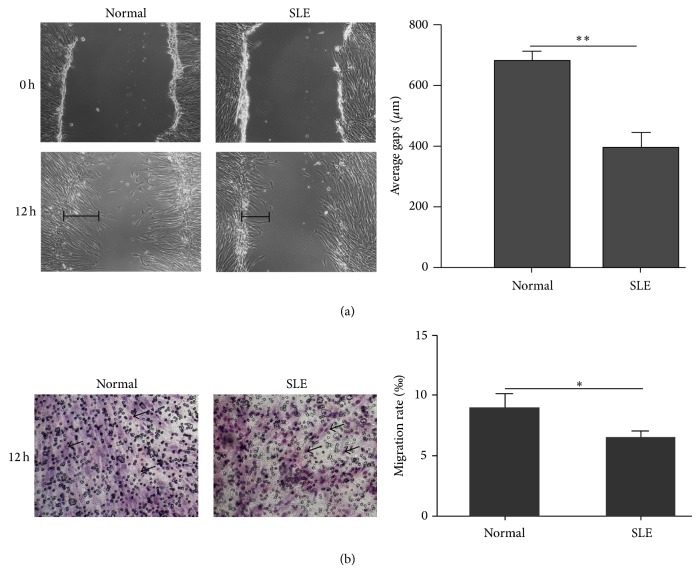
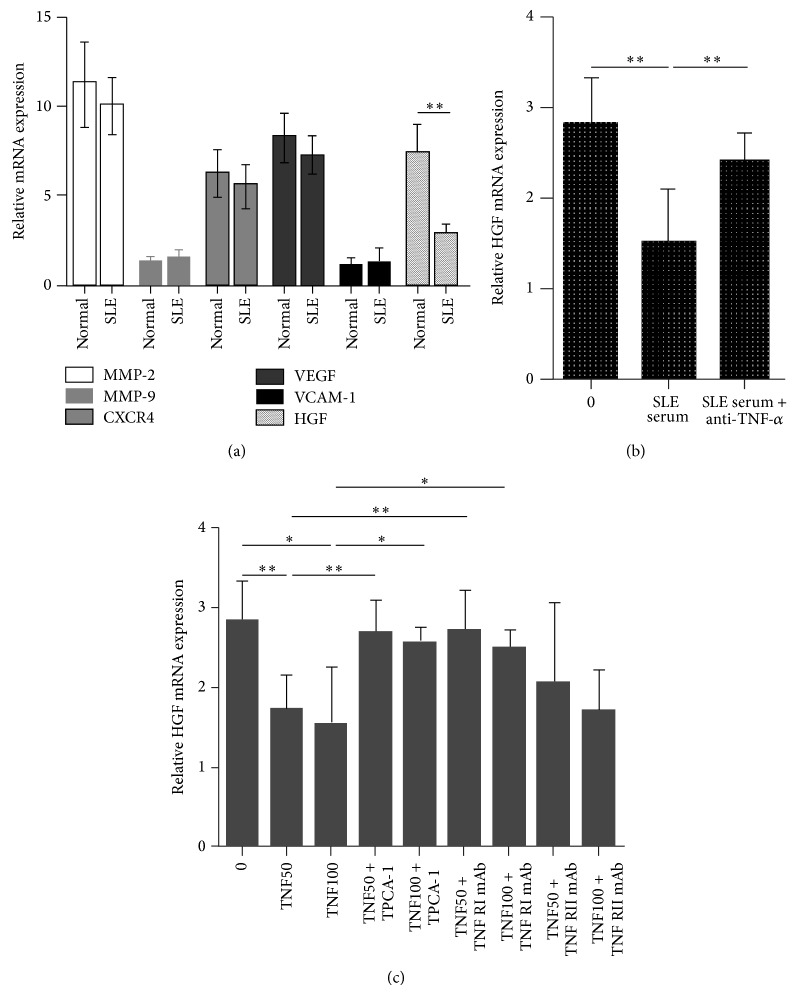
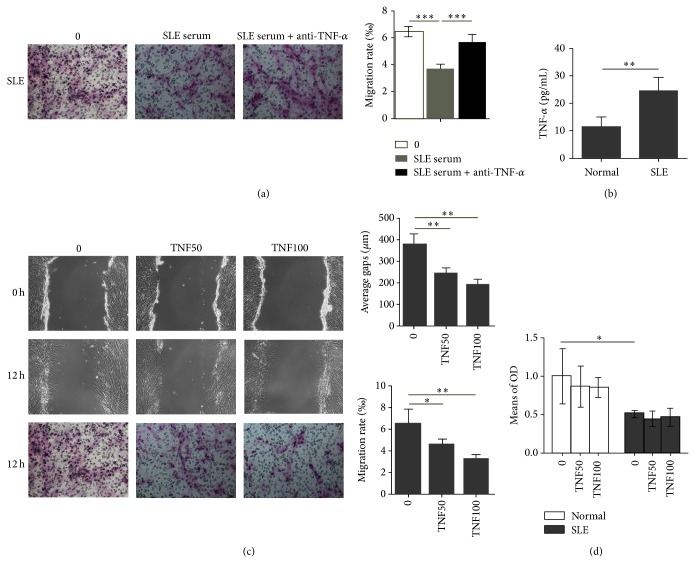
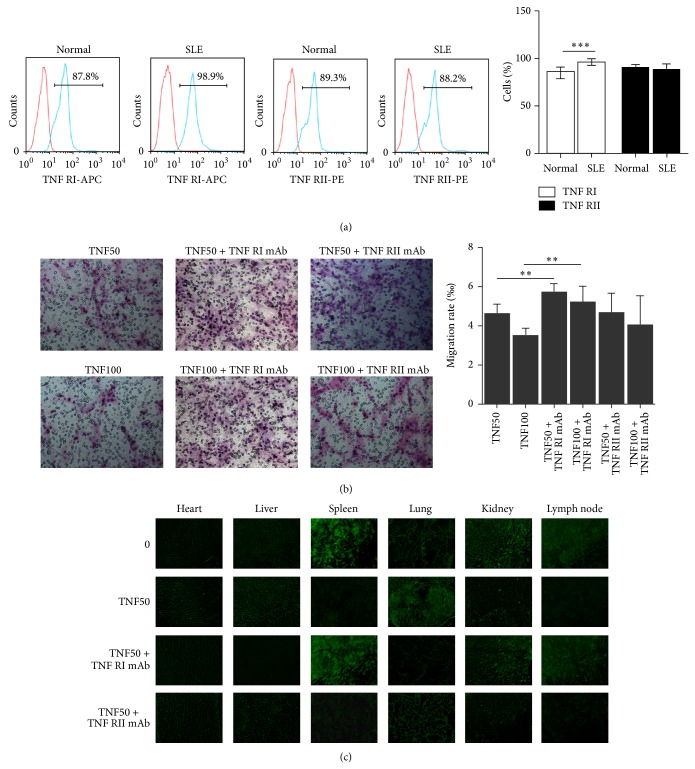
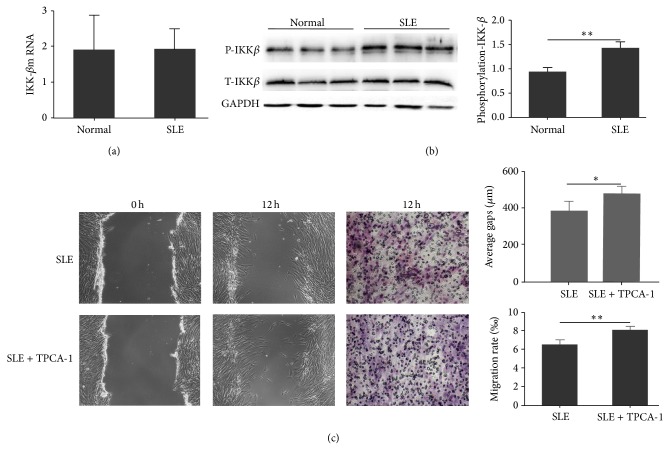
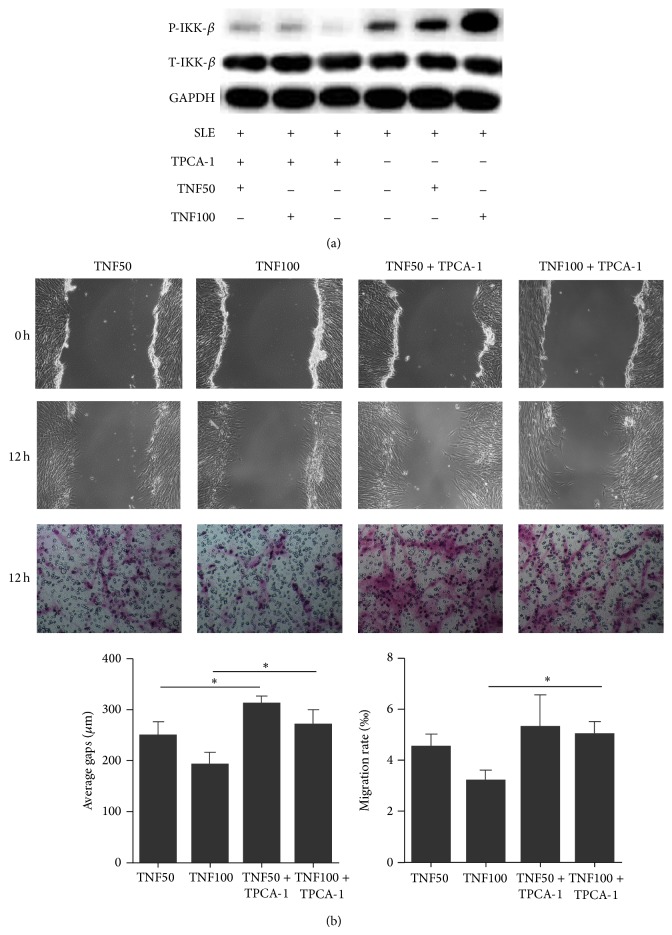
Previous studies indicated that bone marrow mesenchymal stem cells (BMSCs) from patients with systemic lupus erythematosus (SLE) exhibited impaired capacities of proliferation, differentiation, and immune modulation. Considering that migration capacity is important for the exertion of BMSCs functions, the defects in migration might contribute to BMSCs dysfunction in SLE patients. In this study, we showed that the migration capacity of SLE BMSCs was remarkably impaired in comparison with those of healthy controls. Increased tumor necrosis factor α (TNF-α) in SLE serum significantly inhibited the migration capacity and in vivo homing capacity of SLE BMSCs via a specific TNF receptor I (TNFRI) manner, in which decreased HGF mRNA production caused by the activation of I kappa B kinase beta (IKK-β) pathway is partially involved. To our knowledge, this is the first report to discuss the possible mechanisms for impaired migration of BMSCs in SLE patients. Our results suggest that inhibition of TNF-α pathway might be helpful for accelerating BMSCs migration to the inflammatory microenvironment in SLE patients, thereby having a potential role in SLE treatment.
先前的研究表明,系统性红斑狼疮(SLE)患者的骨髓间充质干细胞(BMSCs)表现出增殖、分化和免疫调节能力受损。鉴于迁移能力对于 BMSCs 功能的发挥很重要,因此迁移缺陷可能导致 SLE 患者的 BMSCs 功能障碍。在这项研究中,我们发现与健康对照组相比,SLE BMSCs 的迁移能力明显受损。SLE 血清中肿瘤坏死因子 α(TNF-α)的增加通过特定的 TNF 受体 I(TNFRI)方式显著抑制了 SLE BMSCs 的迁移能力和体内归巢能力,其中 IκB 激酶β(IKK-β)途径的激活导致 HGF mRNA 产生减少部分涉及。据我们所知,这是首次讨论 SLE 患者 BMSCs 迁移受损的可能机制的报告。我们的研究结果表明,抑制 TNF-α 途径可能有助于加速 SLE 患者 BMSCs 向炎症微环境的迁移,从而在 SLE 治疗中具有潜在作用。