Biotechnology, Research and Development Center, Saudi Aramco, Dhahran Saudi Arabia.
Front Microbiol. 2015 Feb 13;6:112. doi: 10.3389/fmicb.2015.00112. eCollection 2015.
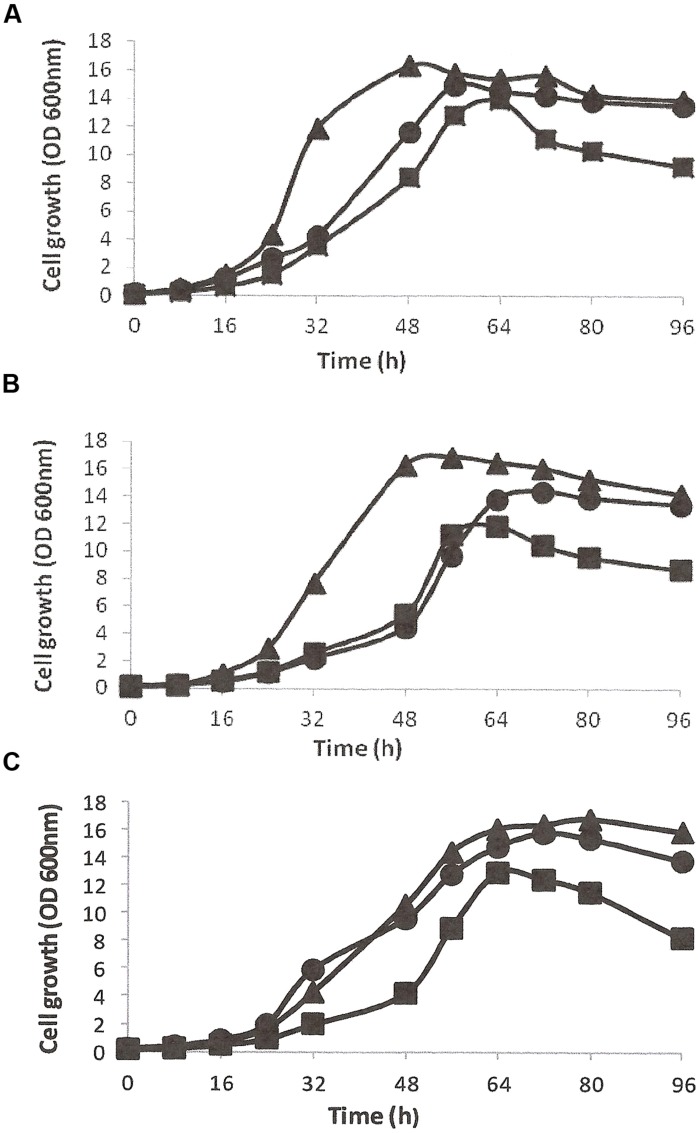
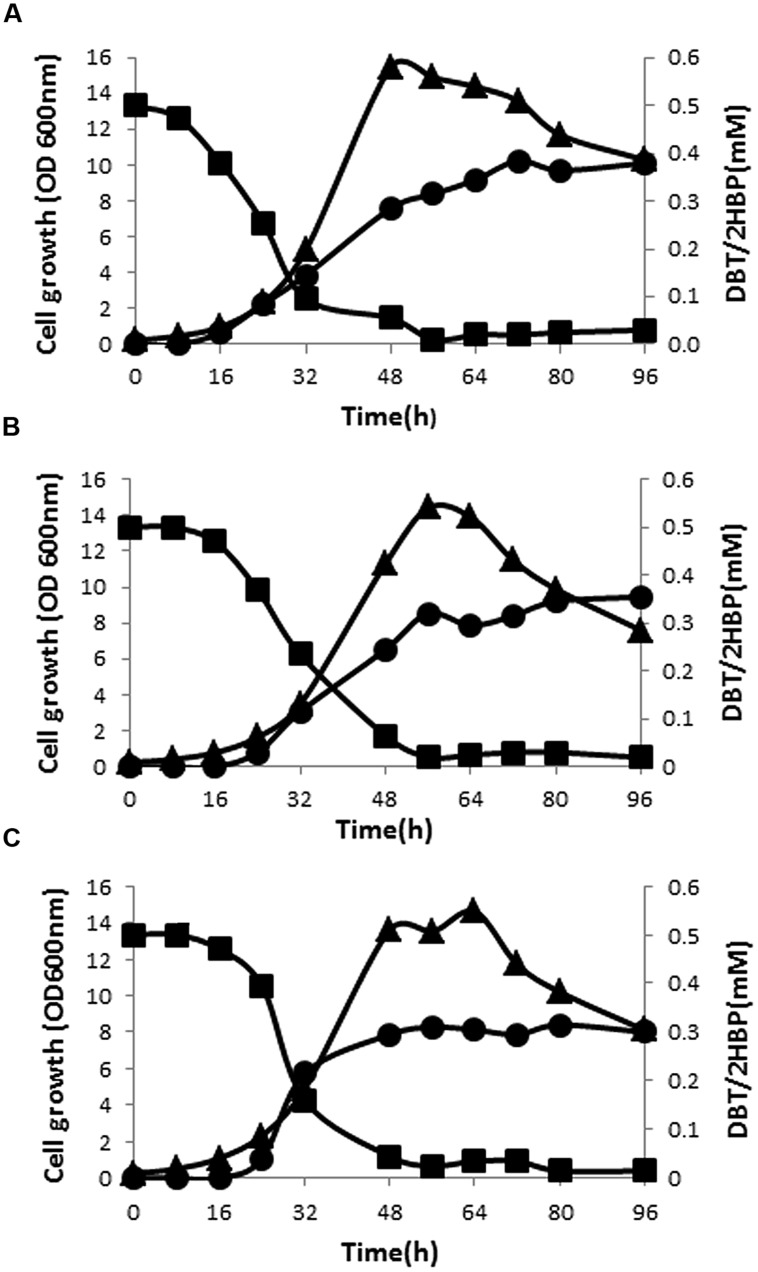
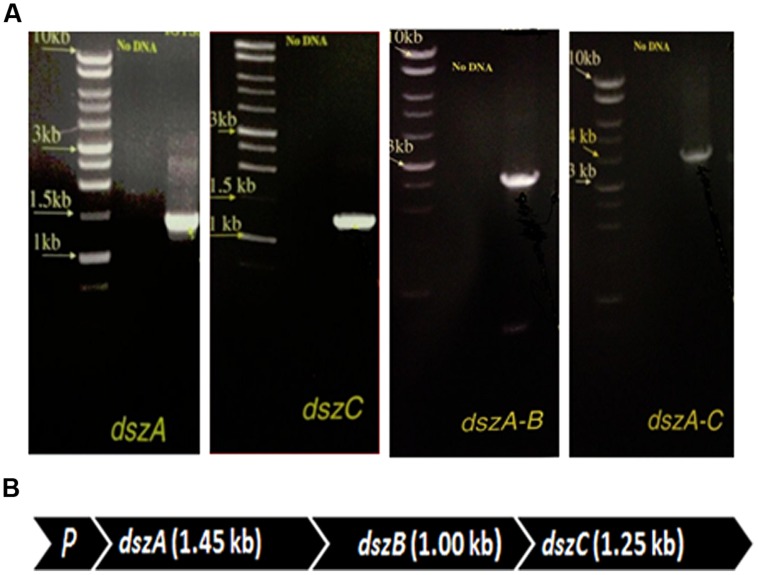
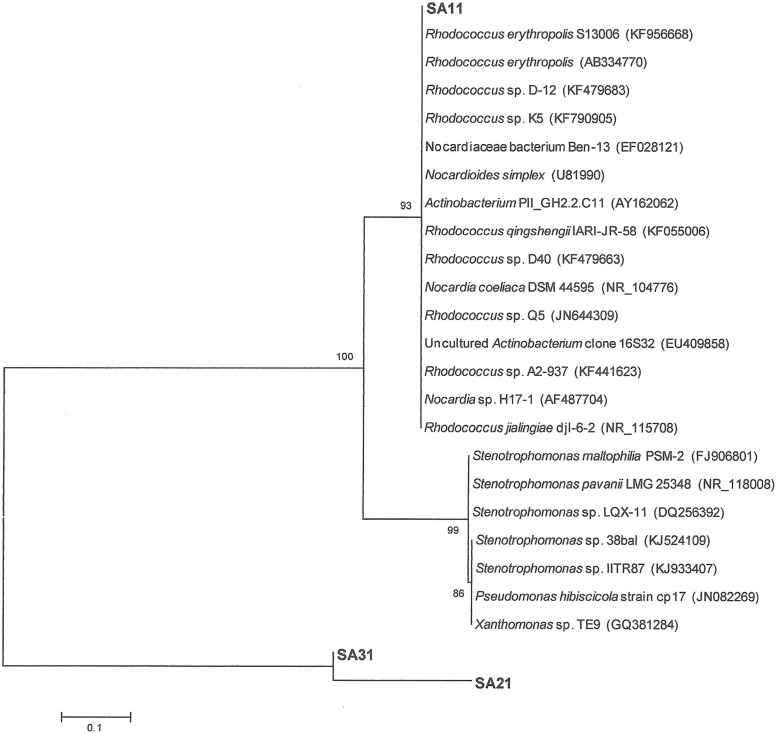
Microorganisms possess enormous highly specific metabolic activities, which enable them to utilize and transform nearly every known chemical class present in crude oil. In this context, one of the most studied biocatalytic processes is the biodesulfurization (BDS) of thiophenic sulfur-containing compounds such as benzothiophene (BT) and dibenzothiophene (DBT) in crude oils and refinery streams. Three newly isolated bacterial strains, which were affiliated as Rhodococcus sp. strain SA11, Stenotrophomonas sp. strain SA21, and Rhodococcus sp. strain SA31, were enriched from oil contaminated soil in the presence of DBT as the sole S source. GC-FID analysis of DBT-grown cultures showed consumption of DBT, transient formation of DBT sulfone (DBTO2) and accumulation of 2-hydroxybiphenyl (2-HBP). Molecular detection of the plasmid-borne dsz operon, which codes for the DBT desulfurization activity, revealed the presence of dszA, dszB, and dszC genes. These results point to the operation of the known 4S pathway in the BDS of DBT. The maximum consumption rate of DBT was 11 μmol/g dry cell weight (DCW)/h and the maximum formation rate of 2-HBP formation was 4 μmol/g DCW/h. Inhibition of both cell growth and DBT consumption by 2-HBP was observed for all isolates but SA11 isolate was the least affected. The isolated biocatalysts desulfurized other model DBT alkylated homologs. SA11 isolate was capable of desulfurizing BT as well. Resting cells of SA11 exhibited 10% reduction in total sulfur present in heavy crude oil and 18% reduction in total sulfur present in the hexane-soluble fraction of the heavy crude oil. The capabilities of the isolated bacteria to survive and desulfurize a wide range of S compounds present in crude oil are desirable traits for the development of a robust BDS biocatalyst to upgrade crude oils and refinery streams.
微生物具有巨大的高度特异性代谢活性,能够利用和转化几乎所有已知的存在于原油中的化学物质。在这种情况下,研究最多的生物催化过程之一是生物脱硫(BDS),即生物脱硫(BDS),将原油和炼油厂流中的噻吩硫化合物(如苯并噻吩(BT)和二苯并噻吩(DBT)转化为噻吩硫化合物。从含 DBT 的油污染土壤中分离到的 3 株新的细菌菌株,分别是 Rhodococcus sp. strain SA11、 Stenotrophomonas sp. strain SA21 和 Rhodococcus sp. strain SA31,它们在 DBT 作为唯一的 S 源的情况下被富集。GC-FID 分析表明,DBT 生长培养物消耗 DBT,瞬态形成 DBT 砜(DBTO2)并积累 2-羟基联苯(2-HBP)。对质粒携带的 dsz 操纵子的分子检测,该操纵子编码 DBT 脱硫活性,显示出 dszA、dszB 和 dszC 基因的存在。这些结果表明在 DBT 的 BDS 中存在已知的 4S 途径。DBT 的最大消耗速率为 11 μmol/g 干细胞重量(DCW)/h,2-HBP 形成的最大形成速率为 4 μmol/g DCW/h。所有分离物都观察到 2-HBP 对细胞生长和 DBT 消耗的抑制作用,但 SA11 分离物受影响最小。分离的生物催化剂脱硫其他模型 DBT 烷基化同系物。SA11 分离物也能够脱硫 BT。SA11 静止细胞使重质原油中总硫含量降低 10%,使重质原油的正己烷可溶部分中总硫含量降低 18%。分离细菌在原油中存在的各种 S 化合物中生存和脱硫的能力是开发用于升级原油和炼油厂流的强大 BDS 生物催化剂的理想特性。