• 文献检索
  • 文档翻译
  • 深度研究
  • 学术资讯
  • Suppr Zotero 插件Zotero 插件
  • 邀请有礼
  • 套餐&价格
  • 历史记录
应用&插件
Suppr Zotero 插件Zotero 插件浏览器插件Mac 客户端Windows 客户端微信小程序
定价
高级版会员购买积分包购买API积分包
服务
文献检索文档翻译深度研究API 文档MCP 服务
关于我们
关于 Suppr公司介绍联系我们用户协议隐私条款
关注我们

Suppr 超能文献

核心技术专利:CN118964589B侵权必究
粤ICP备2023148730 号-1Suppr @ 2026

文献检索

告别复杂PubMed语法,用中文像聊天一样搜索,搜遍4000万医学文献。AI智能推荐,让科研检索更轻松。

立即免费搜索

文件翻译

保留排版,准确专业,支持PDF/Word/PPT等文件格式,支持 12+语言互译。

免费翻译文档

深度研究

AI帮你快速写综述,25分钟生成高质量综述,智能提取关键信息,辅助科研写作。

立即免费体验

可培养的海绵 Theonella swinhoei 的相关细菌对高浓度砷具有耐受性。

Culturable associated-bacteria of the sponge Theonella swinhoei show tolerance to high arsenic concentrations.

机构信息

Department of Zoology, George S. Wise Faculty of Life Sciences, Tel Aviv University Tel Aviv, Israel.

出版信息

Front Microbiol. 2015 Feb 25;6:154. doi: 10.3389/fmicb.2015.00154. eCollection 2015.

DOI:10.3389/fmicb.2015.00154
PMID:25762993
原文链接:https://pmc.ncbi.nlm.nih.gov/articles/PMC4340220/
Abstract

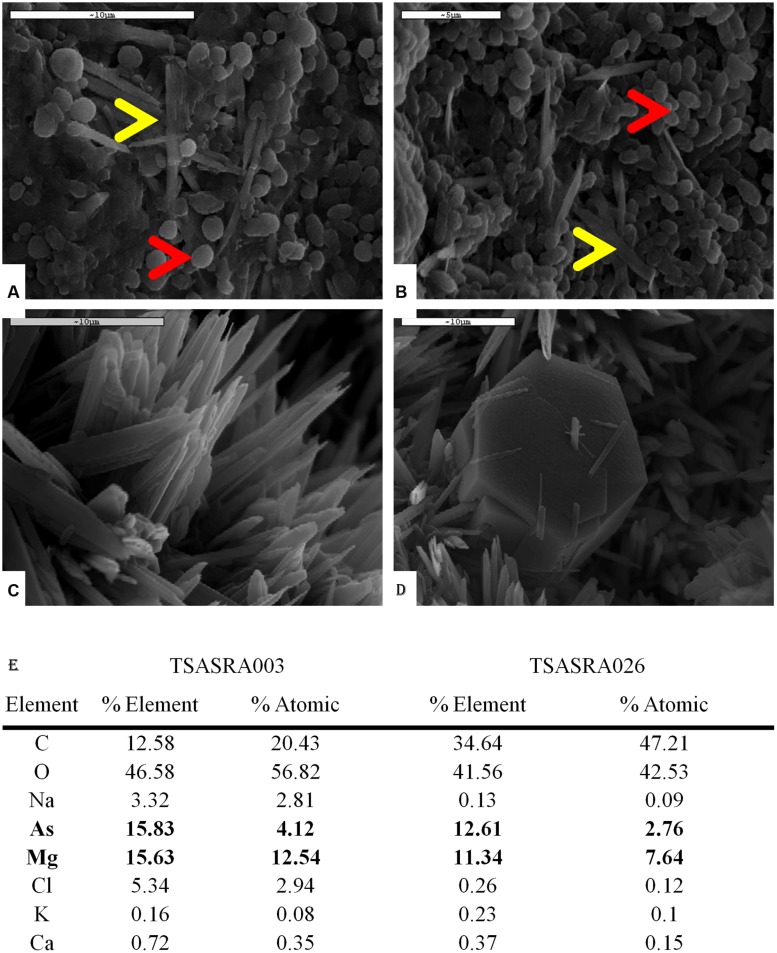
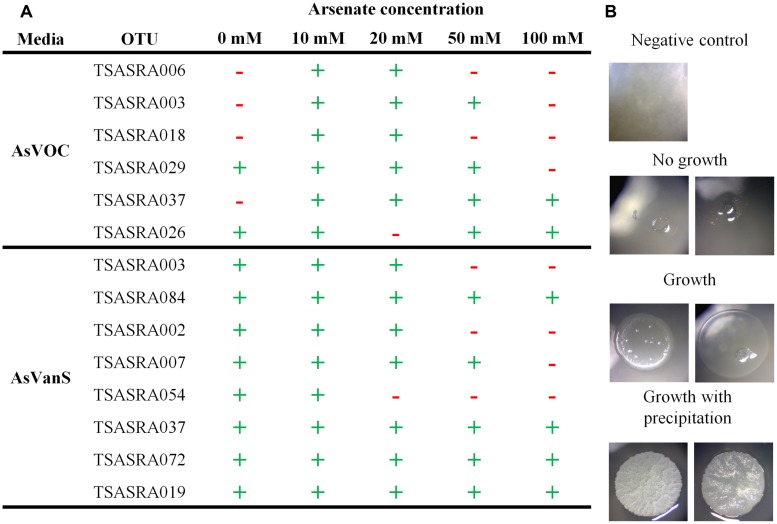
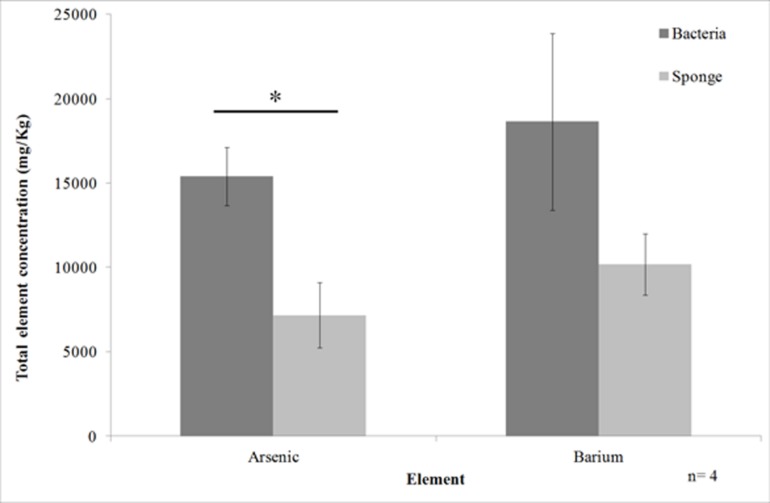
Sponges are potent filter feeders and as such are exposed to high fluxes of toxic trace elements, which can accumulate in their body over time. Such is the case of the Red Sea sponge Theonella swinhoei, which has been shown to accumulate up to 8500 mg/Kg of the highly toxicelement arsenic. T. swinhoei is known to harbor a multitude of sponge-associated bacteria, so it is hypothesized that the associated-bacteria will be tolerant to high arsenic concentration. This study also investigates the fate of the arsenic accumulated in the sponge to test if the associated-bacteria have an important role in the arsenic accumulation process of their host, since bacteria are key players in the natural arsenic cycle. Separation of the sponge to sponge cells and bacteria enriched fractions showed that arsenic is accumulated by the bacteria. Sponge-associated, arsenic-tolerant bacteria were cultured in the presence of 5 mM of either arsenate or arsenite (equivalent to 6150 mg/Kg arsenic, dry weight). The 54 isolated bacteria were grouped to 15 operational taxonomic units (OTUs) and isolates belonging to 12 OTUs were assessed for tolerance to arsenate at increased concentrations up to 100 mM. Eight of the 12 OTUs tolerated an order of magnitude increase in the concentration of arsenate, and some exhibited external biomineralization of arsenic-magnesium salts. The biomineralization of this unique mineral was directly observed in bacteria for the first time. These results may provide an explanation for the ability of the sponge to accumulate considerable amounts of arsenic. Furthermore arsenic-mineralizing bacteria can potentially be used for the study of bioremediation, as arsenic toxicity affects millions of people worldwide.

摘要

海绵是高效的滤食动物,因此会暴露在高浓度的有毒痕量元素中,这些元素会随着时间的推移在它们体内积累。红海海绵 Theonella swinhoei 就是一个典型的例子,它已经被证明可以积累高达 8500 毫克/千克的剧毒砷元素。已知 T. swinhoei 体内栖息着大量的海绵共生细菌,因此推测这些共生细菌对高浓度的砷具有耐受性。本研究还调查了海绵中积累的砷的归宿,以测试共生细菌是否在宿主的砷积累过程中发挥重要作用,因为细菌是自然砷循环中的关键参与者。将海绵分离为海绵细胞和细菌富集部分,结果表明砷是由细菌积累的。在存在 5 mM 砷酸盐或亚砷酸盐(相当于 6150 毫克/千克砷,干重)的情况下,对海绵共生、砷耐受细菌进行培养。从 54 株分离出的细菌中,将其分为 15 个操作分类单元(OTU),并评估了属于 12 个 OTU 的分离株对浓度高达 100 mM 的砷酸盐的耐受性。在 12 个 OTU 中有 8 个可以耐受砷酸盐浓度增加一个数量级,并且有些表现出对外源砷镁盐的生物矿化作用。首次直接在细菌中观察到这种独特矿物的生物矿化作用。这些结果可能为海绵能够积累大量砷提供了解释。此外,砷矿化细菌可能被用于生物修复的研究,因为砷的毒性影响着全球数百万人。
https://cdn.ncbi.nlm.nih.gov/pmc/blobs/6bf7/4340220/577ab0fee864/fmicb-06-00154-g003.jpg
https://cdn.ncbi.nlm.nih.gov/pmc/blobs/6bf7/4340220/02504b0cf946/fmicb-06-00154-g001.jpg
https://cdn.ncbi.nlm.nih.gov/pmc/blobs/6bf7/4340220/ce853e6b0339/fmicb-06-00154-g002.jpg
https://cdn.ncbi.nlm.nih.gov/pmc/blobs/6bf7/4340220/577ab0fee864/fmicb-06-00154-g003.jpg
https://cdn.ncbi.nlm.nih.gov/pmc/blobs/6bf7/4340220/02504b0cf946/fmicb-06-00154-g001.jpg
https://cdn.ncbi.nlm.nih.gov/pmc/blobs/6bf7/4340220/ce853e6b0339/fmicb-06-00154-g002.jpg
https://cdn.ncbi.nlm.nih.gov/pmc/blobs/6bf7/4340220/577ab0fee864/fmicb-06-00154-g003.jpg

相似文献

1
Culturable associated-bacteria of the sponge Theonella swinhoei show tolerance to high arsenic concentrations.可培养的海绵 Theonella swinhoei 的相关细菌对高浓度砷具有耐受性。
Front Microbiol. 2015 Feb 25;6:154. doi: 10.3389/fmicb.2015.00154. eCollection 2015.
2
Increasing the Richness of Culturable Arsenic-Tolerant Bacteria from Theonella swinhoei by Addition of Sponge Skeleton to the Growth Medium.通过在生长培养基中添加海绵骨架来增加来自斯氏海绵(Theonella swinhoei)的可培养耐砷细菌的丰富度。
Microb Ecol. 2016 May;71(4):873-86. doi: 10.1007/s00248-015-0726-0. Epub 2016 Jan 26.
3
Arsenate reducing bacteria isolated from the marine sponge Theonella swinhoei: Bioremediation potential.从海洋海绵 Theonella swinhoei 中分离出的砷酸盐还原菌:生物修复潜力。
Ecotoxicol Environ Saf. 2021 Oct 1;222:112522. doi: 10.1016/j.ecoenv.2021.112522. Epub 2021 Jul 22.
4
Identification of the protease inhibitor miraziridine A in the Red sea sponge Theonella swinhoei.在红海海绵斯氏棘海绵中鉴定出蛋白酶抑制剂米拉齐立定A。
Pharmacognosy Res. 2012 Jan;4(1):63-6. doi: 10.4103/0974-8490.91047.
5
A New N-Acyl Homoserine Lactone Synthase in an Uncultured Symbiont of the Red Sea Sponge Theonella swinhoei.红海海绵斯氏海绵未培养共生体中的一种新型N-酰基高丝氨酸内酯合酶。
Appl Environ Microbiol. 2015 Dec 11;82(4):1274-1285. doi: 10.1128/AEM.03111-15. Print 2016 Feb 15.
6
Pezizomycotina dominates the fungal communities of South China Sea sponges Theonella swinhoei and Xestospongia testudinaria.粪壳菌纲在南海海绵斯氏海绵和龟甲海绵的真菌群落中占主导地位。
FEMS Microbiol Ecol. 2014 Dec;90(3):935-45. doi: 10.1111/1574-6941.12446. Epub 2014 Nov 12.
7
Sponge-associated bacteria mineralize arsenic and barium on intracellular vesicles.海绵体相关细菌在细胞内囊泡中使砷和钡矿化。
Nat Commun. 2017 Feb 24;8:14393. doi: 10.1038/ncomms14393.
8
Implementing sponge physiological and genomic information to enhance the diversity of its culturable associated bacteria.将海绵生理和基因组信息付诸实践,以提高其可培养相关细菌的多样性。
FEMS Microbiol Ecol. 2014 Feb;87(2):486-502. doi: 10.1111/1574-6941.12240. Epub 2013 Dec 3.
9
Metagenomic Insights Reveal Unrecognized Diversity of Entotheonella in Japanese Theonella Sponges.元基因组学揭示了日本桐花海绵内生菌 Entotheonella 的未被识别的多样性。
Mar Biotechnol (NY). 2024 Oct;26(5):1009-1016. doi: 10.1007/s10126-024-10350-8. Epub 2024 Aug 5.
10
Inhabitancy of active Nitrosopumilus-like ammonia-oxidizing archaea and Nitrospira nitrite-oxidizing bacteria in the sponge Theonella swinhoei.活性类亚硝化侏儒菌属氨氧化古菌和硝化螺菌属亚硝酸盐氧化细菌在斯氏海绵中的栖息情况。
Sci Rep. 2016 Apr 26;6:24966. doi: 10.1038/srep24966.

引用本文的文献

1
Out of the blue: Hyperaccumulation of molybdenum in the Indo-Pacific sponge .意外发现:印度洋-太平洋海绵中钼的超积累
Sci Adv. 2024 Jul 19;10(29):eadn3923. doi: 10.1126/sciadv.adn3923. Epub 2024 Jul 17.
2
Bacteria Cultivated From Sponges and Bacteria Not Yet Cultivated From Sponges-A Review.从海绵中培养出的细菌及尚未从海绵中培养出的细菌——综述
Front Microbiol. 2021 Nov 10;12:737925. doi: 10.3389/fmicb.2021.737925. eCollection 2021.
3
Chemotactic migration of bacteria in porous media.细菌在多孔介质中的趋化迁移。

本文引用的文献

1
The HMA-LMA dichotomy revisited: an electron microscopical survey of 56 sponge species.重探六放海绵纲与寻常海绵纲的二分法:对56种海绵物种的电子显微镜研究
Biol Bull. 2014 Aug;227(1):78-88. doi: 10.1086/BBLv227n1p78.
2
The elemental composition of demospongiae from the Red Sea, Gulf of Aqaba.红海亚喀巴湾的海绵纲动物的元素组成。
PLoS One. 2014 Apr 23;9(4):e95775. doi: 10.1371/journal.pone.0095775. eCollection 2014.
3
Arsenic in marine organisms : A minireview.海洋生物中的砷:综述
Biophys J. 2021 Aug 17;120(16):3483-3497. doi: 10.1016/j.bpj.2021.05.012. Epub 2021 May 20.
4
Cultivation of Bacteria From : Effects of Oxygen and Nutrient Gradients.细菌培养来源:氧气和营养梯度的影响
Front Microbiol. 2020 Feb 19;11:175. doi: 10.3389/fmicb.2020.00175. eCollection 2020.
5
A novel Chromatiales bacterium is a potential sulfide oxidizer in multiple orders of marine sponges.一种新型 Chromatiales 细菌是多种海洋海绵中潜在的硫化物氧化剂。
Environ Microbiol. 2018 Feb;20(2):800-814. doi: 10.1111/1462-2920.14013. Epub 2017 Dec 15.
6
A Place to Call Home: An Analysis of the Bacterial Communities in Two Tethya rubra Samaai and Gibbons 2005 Populations in Algoa Bay, South Africa.一个可以称之为家的地方:对南非阿尔戈阿湾两个2005年萨马伊和吉本斯所研究的红海鞘种群中细菌群落的分析
Mar Drugs. 2017 Mar 25;15(4):95. doi: 10.3390/md15040095.
7
Sponge-associated bacteria mineralize arsenic and barium on intracellular vesicles.海绵体相关细菌在细胞内囊泡中使砷和钡矿化。
Nat Commun. 2017 Feb 24;8:14393. doi: 10.1038/ncomms14393.
8
Insights into the lifestyle of uncultured bacterial natural product factories associated with marine sponges.对与海洋海绵相关的未培养细菌天然产物工厂生活方式的见解。
Proc Natl Acad Sci U S A. 2017 Jan 17;114(3):E347-E356. doi: 10.1073/pnas.1616234114. Epub 2017 Jan 3.
9
Keeping it in the family: Coevolution of latrunculid sponges and their dominant bacterial symbionts.家族内部:扁海绵及其主要细菌共生体的共同进化
Microbiologyopen. 2017 Apr;6(2). doi: 10.1002/mbo3.417. Epub 2016 Oct 26.
10
New Genomic Insights into "Entotheonella" Symbionts in Theonella swinhoei: Mixotrophy, Anaerobic Adaptation, Resilience, and Interaction.对斯氏海绵中“内共生菌属”共生体的新基因组见解:兼养、厌氧适应、恢复力及相互作用
Front Microbiol. 2016 Aug 25;7:1333. doi: 10.3389/fmicb.2016.01333. eCollection 2016.
Biol Trace Elem Res. 1984 Apr;6(2):159-64. doi: 10.1007/BF02916932.
4
Implementing sponge physiological and genomic information to enhance the diversity of its culturable associated bacteria.将海绵生理和基因组信息付诸实践,以提高其可培养相关细菌的多样性。
FEMS Microbiol Ecol. 2014 Feb;87(2):486-502. doi: 10.1111/1574-6941.12240. Epub 2013 Dec 3.
5
How prokaryotes deal with arsenic(†).原核生物如何应对砷(†)。
Environ Microbiol Rep. 2012 Dec;4(6):571-86. doi: 10.1111/j.1758-2229.2011.00300.x. Epub 2011 Nov 3.
6
Nutrient fluxes through sponges: biology, budgets, and ecological implications.通过海绵的营养通量:生物学、预算和生态影响。
Adv Mar Biol. 2012;62:113-82. doi: 10.1016/B978-0-12-394283-8.00003-5.
7
Bioaccumulation, biotransformation and trophic transfer of arsenic in the aquatic food chain.砷在水生食物链中的生物积累、生物转化和营养传递。
Environ Res. 2012 Jul;116:118-35. doi: 10.1016/j.envres.2012.03.014. Epub 2012 Apr 24.
8
Introducing EzTaxon-e: a prokaryotic 16S rRNA gene sequence database with phylotypes that represent uncultured species.介绍 EzTaxon-e:一个具有代表未培养物种的分类群的细菌 16S rRNA 基因序列数据库。
Int J Syst Evol Microbiol. 2012 Mar;62(Pt 3):716-721. doi: 10.1099/ijs.0.038075-0. Epub 2011 Nov 25.
9
Arsenic toxicity in a sediment-dwelling polychaete: detoxification and arsenic metabolism.底栖多毛类动物中的砷毒性:解毒和砷代谢。
Ecotoxicology. 2012 Mar;21(2):576-90. doi: 10.1007/s10646-011-0818-7. Epub 2011 Nov 15.
10
Assessing the complex sponge microbiota: core, variable and species-specific bacterial communities in marine sponges.评估复杂的海绵微生物群:海洋海绵中的核心、可变和物种特异性细菌群落。
ISME J. 2012 Mar;6(3):564-76. doi: 10.1038/ismej.2011.116. Epub 2011 Oct 13.