Michail Sonia, Lin Malinda, Frey Mark R, Fanter Rob, Paliy Oleg, Hilbush Brian, Reo Nicholas V
Department of Pediatrics, Division of Gastroenterology, Hepatology, and Nutrition at Children's Hospital Los Angeles, 4650 Sunset Blvd. MS#78, Los Angeles, CA 90027, USA Keck School of Medicine at the University of Southern California, Los Angeles, CA 90089, USA
Department of Pediatrics, Division of Gastroenterology, Hepatology, and Nutrition at Children's Hospital Los Angeles, 4650 Sunset Blvd. MS#78, Los Angeles, CA 90027, USA Keck School of Medicine at the University of Southern California, Los Angeles, CA 90089, USA.
FEMS Microbiol Ecol. 2015 Feb;91(2):1-9. doi: 10.1093/femsec/fiu002. Epub 2014 Dec 5.
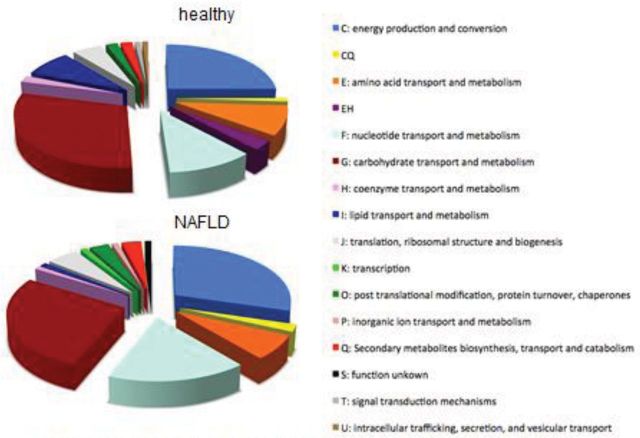
Obesity is becoming the new pediatric epidemic. Non-alcoholic fatty liver disease (NAFLD) is frequently associated with obesity and has become the most common cause of pediatric liver disease. The gut microbiome is the major metabolic organ and determines how calories are processed, serving as a caloric gate and contributing towards the pathogenesis of NAFLD. The goal of this study is to examine gut microbial profiles in children with NAFLD using phylogenetic, metabolomic, metagenomic and proteomic approaches. Fecal samples were obtained from obese children with or without NAFLD and healthy lean children. Stool specimens were subjected to 16S rRNA gene microarray, shotgun sequencing, mass spectroscopy for proteomics and NMR spectroscopy for metabolite analysis. Children with NAFLD had more abundant Gammaproteobacteria and Prevotella and significantly higher levels of ethanol, with differential effects on short chain fatty acids. This group also had increased genomic and protein abundance for energy production with a reduction in carbohydrate and amino acid metabolism and urea cycle and urea transport systems. The metaproteome and metagenome showed similar findings. The gut microbiome in pediatric NAFLD is distinct from lean healthy children with more alcohol production and pathways allocated to energy metabolism over carbohydrate and amino acid metabolism, which would contribute to development of disease.
肥胖正成为新的儿科流行病。非酒精性脂肪性肝病(NAFLD)常与肥胖相关,已成为儿科肝病最常见的病因。肠道微生物群是主要的代谢器官,决定了卡路里的处理方式,充当热量闸门并促成NAFLD的发病机制。本研究的目的是使用系统发育、代谢组学、宏基因组学和蛋白质组学方法检查NAFLD儿童的肠道微生物谱。从患有或未患有NAFLD的肥胖儿童以及健康的瘦儿童中获取粪便样本。粪便标本进行16S rRNA基因微阵列、鸟枪法测序、蛋白质组学质谱分析和代谢物分析的核磁共振光谱分析。患有NAFLD的儿童γ-变形菌和普雷沃菌更为丰富,乙醇水平显著更高,对短链脂肪酸有不同影响。该组能量产生的基因组和蛋白质丰度也增加,碳水化合物和氨基酸代谢以及尿素循环和尿素转运系统减少。宏蛋白质组和宏基因组显示出类似的结果。儿科NAFLD中的肠道微生物群与健康瘦儿童不同,产生更多酒精,能量代谢途径多于碳水化合物和氨基酸代谢途径,这将有助于疾病的发展。