Kralovicova Jana, Knut Marcin, Cross Nicholas C P, Vorechovsky Igor
University of Southampton, Faculty of Medicine, Southampton SO16 6YD, UK.
University of Southampton, Faculty of Medicine, Southampton SO16 6YD, UK Wessex Regional Genetics Laboratory, Salisbury District Hospital, Salisbury SP2 8BJ, UK.
Nucleic Acids Res. 2015 Apr 20;43(7):3747-63. doi: 10.1093/nar/gkv194. Epub 2015 Mar 16.
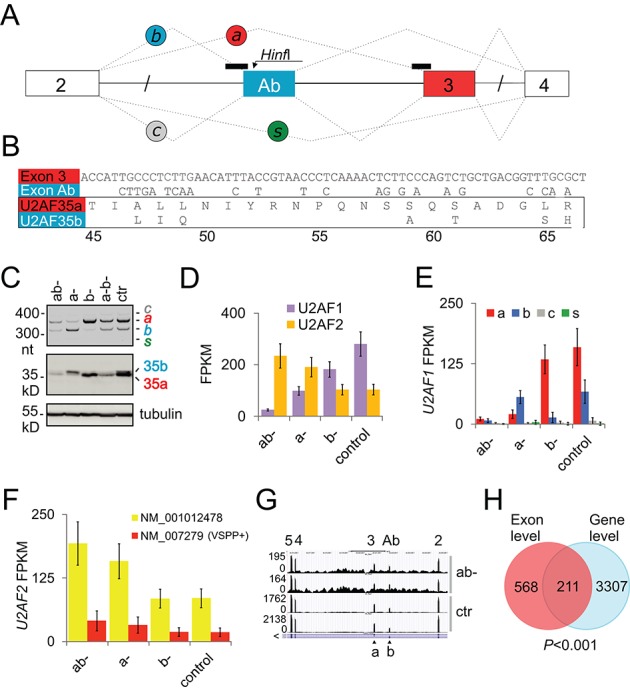
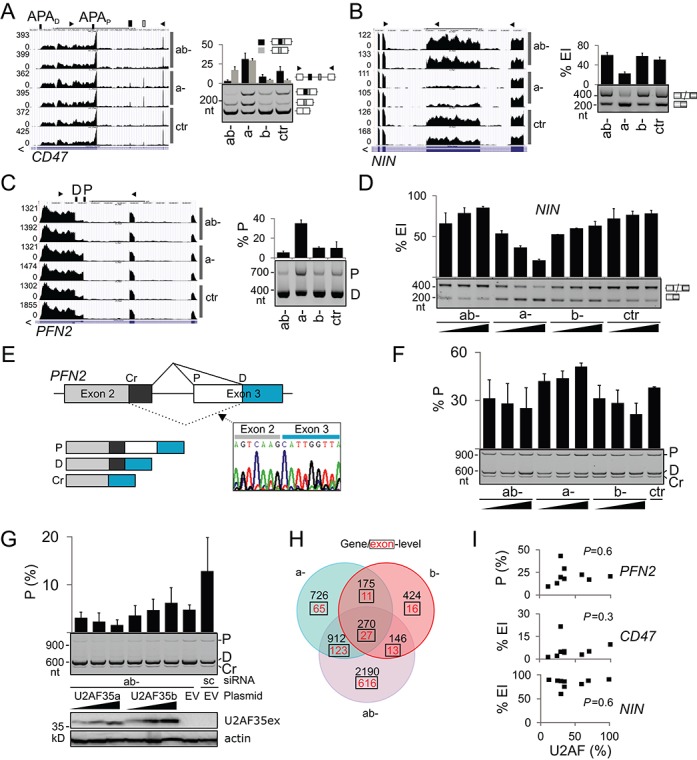
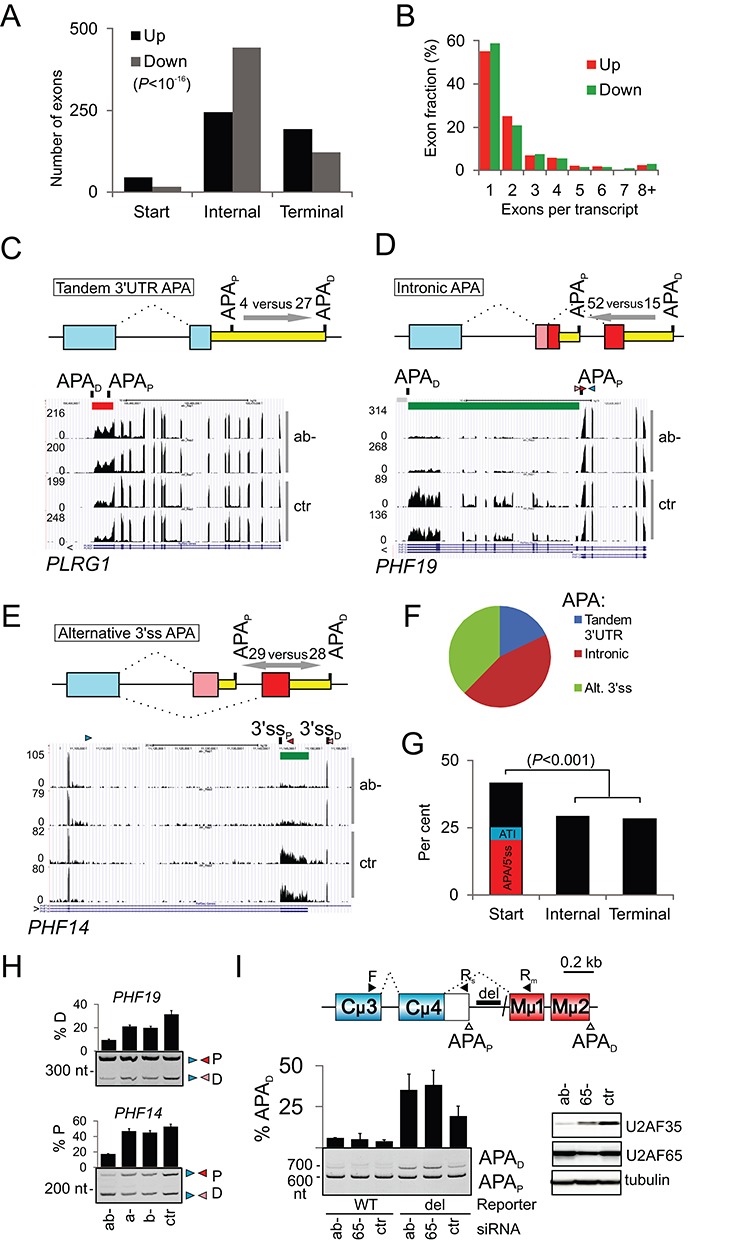
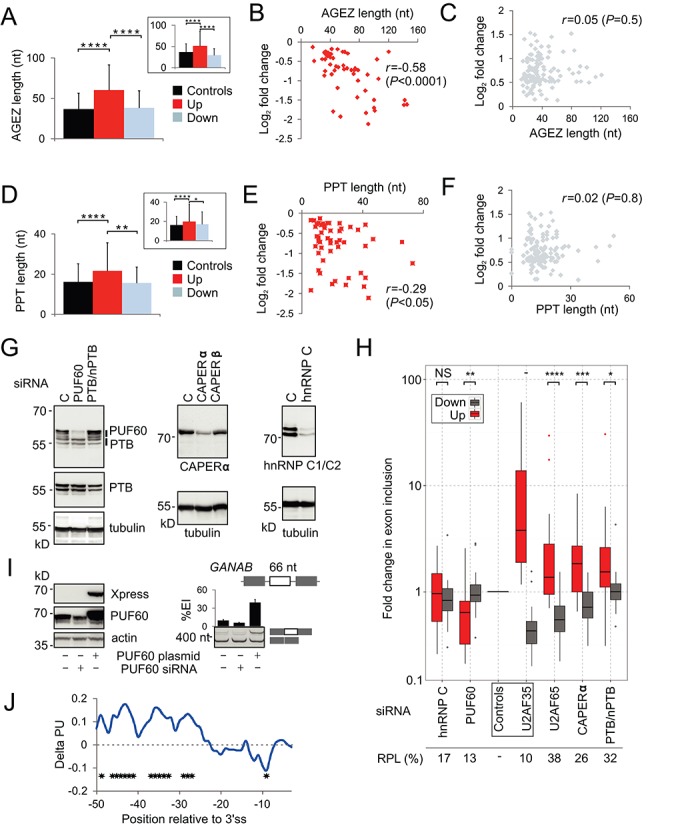
The auxiliary factor of U2 small nuclear RNA (U2AF) is a heterodimer consisting of 65- and 35-kD proteins that bind the polypyrimidine tract (PPT) and AG dinucleotides at the 3' splice site (3'ss). The gene encoding U2AF35 (U2AF1) is alternatively spliced, giving rise to two isoforms U2AF35a and U2AF35b. Here, we knocked down U2AF35 and each isoform and characterized transcriptomes of HEK293 cells with varying U2AF35/U2AF65 and U2AF35a/b ratios. Depletion of both isoforms preferentially modified alternative RNA processing events without widespread failure to recognize 3'ss or constitutive exons. Over a third of differentially used exons were terminal, resulting largely from the use of known alternative polyadenylation (APA) sites. Intronic APA sites activated in depleted cultures were mostly proximal whereas tandem 3'UTR APA was biased toward distal sites. Exons upregulated in depleted cells were preceded by longer AG exclusion zones and PPTs than downregulated or control exons and were largely activated by PUF60 and repressed by CAPERα. The U2AF(35) repression and activation was associated with a significant interchange in the average probabilities to form single-stranded RNA in the optimal PPT and branch site locations and sequences further upstream. Although most differentially used exons were responsive to both U2AF subunits and their inclusion correlated with U2AF levels, a small number of transcripts exhibited distinct responses to U2AF35a and U2AF35b, supporting the existence of isoform-specific interactions. These results provide new insights into function of U2AF and U2AF35 in alternative RNA processing.
U2小核RNA辅助因子(U2AF)是一种异源二聚体,由65kD和35kD的蛋白质组成,它们结合多嘧啶序列(PPT)和3'剪接位点(3'ss)处的AG二核苷酸。编码U2AF35(U2AF1)的基因存在可变剪接,产生两种异构体U2AF35a和U2AF35b。在此,我们敲低了U2AF35及其每种异构体,并对具有不同U2AF35/U2AF65和U2AF35a/b比例的HEK293细胞转录组进行了表征。两种异构体的缺失优先改变了可变RNA加工事件,而没有广泛出现无法识别3'ss或组成型外显子的情况。超过三分之一的差异使用外显子是末端外显子,这主要是由于已知的可变聚腺苷酸化(APA)位点的使用。在缺失培养物中激活的内含子APA位点大多靠近近端,而串联3'UTR APA则偏向远端位点。与下调或对照外显子相比,缺失细胞中上调的外显子之前有更长的AG排除区和PPT,并且大多被PUF60激活并被CAPERα抑制。U2AF(35)的抑制和激活与在最佳PPT和分支位点位置以及更上游序列中形成单链RNA的平均概率的显著互换有关。尽管大多数差异使用的外显子对两个U2AF亚基都有反应,并且它们的包含与U2AF水平相关,但少数转录本对U2AF35a和U2AF35b表现出不同的反应,支持存在异构体特异性相互作用。这些结果为U2AF和U2AF35在可变RNA加工中的功能提供了新的见解。