Sorbonne Paris Cité, Laboratory of Development of the Gonads, Unit of Stem Cells and Radiation, University Paris Diderot, BP 6, 92265 Fontenay-aux-Roses, France ; CEA, DSV, iRCM, SCSR, LDG, 92265 Fontenay-aux-Roses, France ; INSERM, Unité 967, F-92265 Fontenay aux Roses, France ; Stem Cells and Radiation Unit, LDG / SCSR / iRCM / DSV, Centre CEA, BP6, F-92265 Fontenay aux Roses, France.
Sorbonne Paris Cité, Laboratory of Development of the Gonads, Unit of Stem Cells and Radiation, University Paris Diderot, BP 6, 92265 Fontenay-aux-Roses, France ; CEA, DSV, iRCM, SCSR, LDG, 92265 Fontenay-aux-Roses, France ; INSERM, Unité 967, F-92265 Fontenay aux Roses, France.
Basic Clin Androl. 2014 Sep 2;24:14. doi: 10.1186/2051-4190-24-14. eCollection 2014.
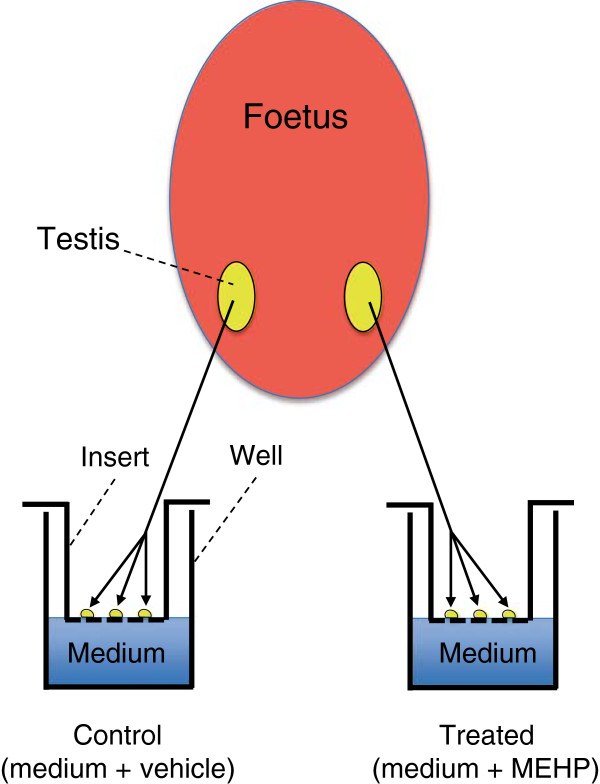
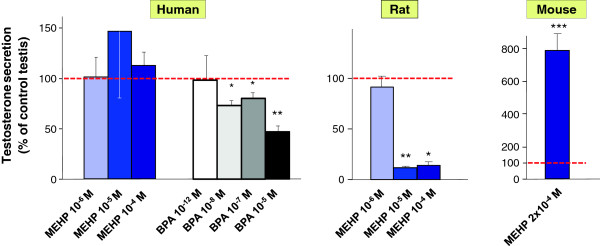
Phthalates provide one of the most documented example evidencing how much we must be cautious when using the traditional paradigm based on extrapolation of experimental data from rodent studies for human health risk assessment of endocrine disruptors (EDs). Since foetal testis is known as one of the most sensitive targets of EDs, phthalate risk assessment is routinely based on the capacity of such compounds to decrease testosterone production by the testis or to impair masculinization in the rat during foetal life. In this paper, the well-established inhibiting effects of phthalates of the foetal Leydig cells function in the rat are briefly reviewed. Then, data obtained in humans and other species are carefully analysed. Already in January 2009, using the organotypic culture system named Fetal Testis Assay (FeTA) that we developed, we reported that phthalates might not affect testosterone production in human foetal testes. Several recent experimental studies using xenografts confirm the absence of detectable anti-androgenic effect of phthalates in the human foetal testes. Epidemiological studies led to contradictory results. Altogether, these findings suggest that phthalates effects on foetal Leydig cells are largely species-specific. Consequently, the phthalate threshold doses that disturb foetal steroidogenesis in rat testes and that are presently used to define the acceptable daily intake levels for human health protection must be questioned. This does not mean that phthalates are safe because these compounds have many deleterious effects upon germ cell development that may be common to the different studied species including human. More generally, the identification of common molecular, cellular or/and phenotypic targets in rat and human testes should precede the choice of the toxicological endpoint in rat to accurately assess the safety threshold of any ED in humans.
邻苯二甲酸酯为我们提供了一个极具说服力的例证,表明在对内分泌干扰物(EDs)进行人类健康风险评估时,我们必须非常谨慎,不能再盲目地将实验数据从啮齿动物研究外推至传统模式。由于胎儿睾丸被认为是 EDs 的最敏感靶标之一,因此邻苯二甲酸酯风险评估通常基于这些化合物降低睾丸中睾酮产生或在胎儿期损害大鼠雄性化的能力。本文简要回顾了邻苯二甲酸酯对大鼠胎儿睾丸中莱迪希细胞功能的既定抑制作用。然后,仔细分析了在人类和其他物种中获得的数据。早在 2009 年 1 月,我们使用我们开发的器官型培养系统命名为胎儿睾丸测定(FeTA),就已经报道邻苯二甲酸酯可能不会影响人类胎儿睾丸中的睾酮产生。最近的几项使用异种移植的实验研究证实了邻苯二甲酸酯在人类胎儿睾丸中没有可检测的抗雄激素作用。流行病学研究得出了相互矛盾的结果。总之,这些发现表明邻苯二甲酸酯对胎儿莱迪希细胞的影响在很大程度上是物种特异性的。因此,扰乱大鼠睾丸中胎儿类固醇生成的邻苯二甲酸酯阈值剂量以及目前用于定义人类健康保护可接受日摄入量水平的剂量必须受到质疑。这并不意味着邻苯二甲酸酯是安全的,因为这些化合物对生殖细胞发育有许多有害影响,这些影响可能在包括人类在内的不同研究物种中是共同的。更一般地说,应该在大鼠中选择毒性终点之前,确定大鼠和人睾丸中共同的分子、细胞或/和表型靶标,以准确评估任何 ED 在人类中的安全阈值。