Monaco Lucia, Crimi Marco, Wang Chiuhui Mary
Pathobiology. 2014;81(5-6):231-236. doi: 10.1159/000358492. Epub 2015 Mar 16.
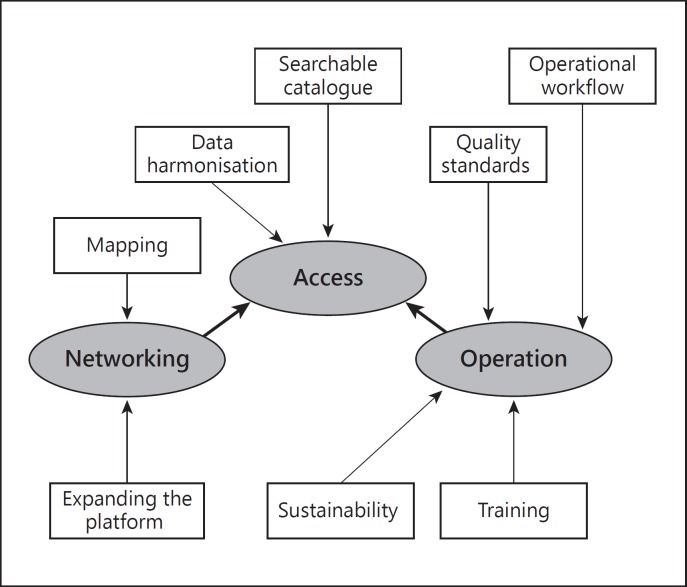
Access to biological materials is a key prerequisite for scientific research in any medical field and in particular for research into rare diseases (RDs), for which obtaining high-quality samples and the related clinical data remains a major hurdle. RD biobanks play a pivotal role in making such materials and data available to the scientific community. In order to increase the effectiveness of RD biobanks, three major challenges need to be met: maximise access to rare biological samples stored in RD biobanks spread globally by the international scientific community, promote networking among such biobanks to share quality standards and procedures and allow collaboration with RD registries and databases, and finally adopt an efficient management model compliant with legal and ethical issues and ensuring biobank sustainability. The European program RD-Connect, funded under the FP7 program, addresses all of these issues through an articulated action plan aimed at building a network of European RD biobanks. Ultimately, RD-Connect will offer access to precious, quality-controlled biological samples from RD patients through an online, searchable, dynamic catalogue in the context of an integrated platform that links RD patient registries to biobanks and to clinical bioinformatics data for RD research.
获取生物材料是任何医学领域科学研究的关键前提,尤其是对于罕见病研究而言,获取高质量样本及相关临床数据仍是一个主要障碍。罕见病生物样本库在向科学界提供此类材料和数据方面发挥着关键作用。为提高罕见病生物样本库的效率,需要应对三大挑战:使国际科学界能够最大限度地获取全球各地罕见病生物样本库中存储的珍稀生物样本,促进此类生物样本库之间的网络建设以共享质量标准和程序,并允许与罕见病登记处和数据库开展合作,最后采用一种符合法律和伦理问题并确保生物样本库可持续性的高效管理模式。由第七框架计划资助的欧洲项目“罕见病连接”(RD-Connect)通过一项旨在建立欧洲罕见病生物样本库网络的明确行动计划来解决所有这些问题。最终,“罕见病连接”将通过一个在线的、可搜索的动态目录,在一个将罕见病患者登记处与生物样本库以及罕见病研究的临床生物信息学数据相连接的综合平台上,提供获取来自罕见病患者的珍贵的、经过质量控制的生物样本的途径。