Brignell Jennifer L, Perry Matthew D, Nelson Carl P, Willets Jonathon M, Challiss R A John, Davies Noel W
Department of Cell Physiology and Pharmacology, University of Leicester, Leicester, United Kingdom.
Department of Cell Physiology and Pharmacology, University of Leicester, Leicester, United Kingdom; Department of Cancer Studies and Molecular Medicine, Leicester Royal Infirmary, Leicester, United Kingdom.
PLoS One. 2015 Mar 20;10(3):e0121285. doi: 10.1371/journal.pone.0121285. eCollection 2015.
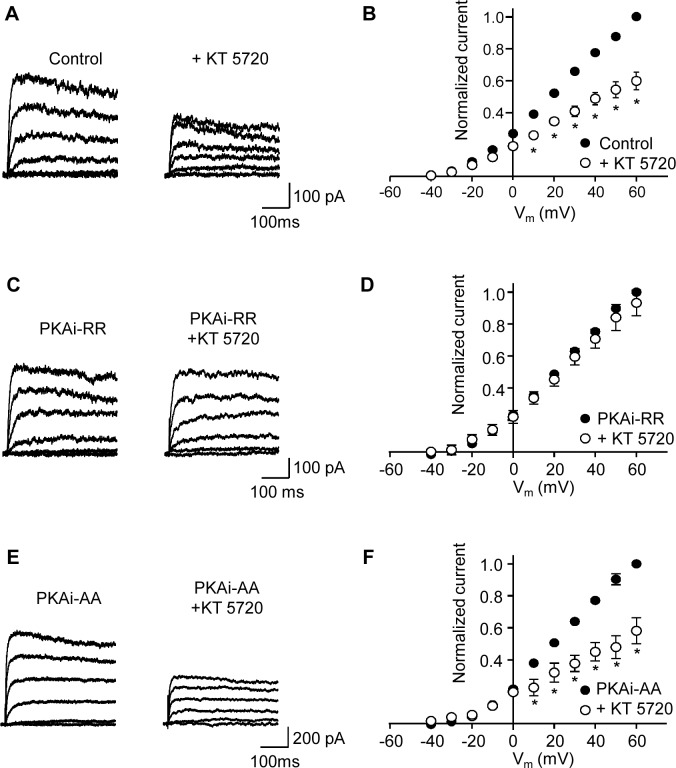
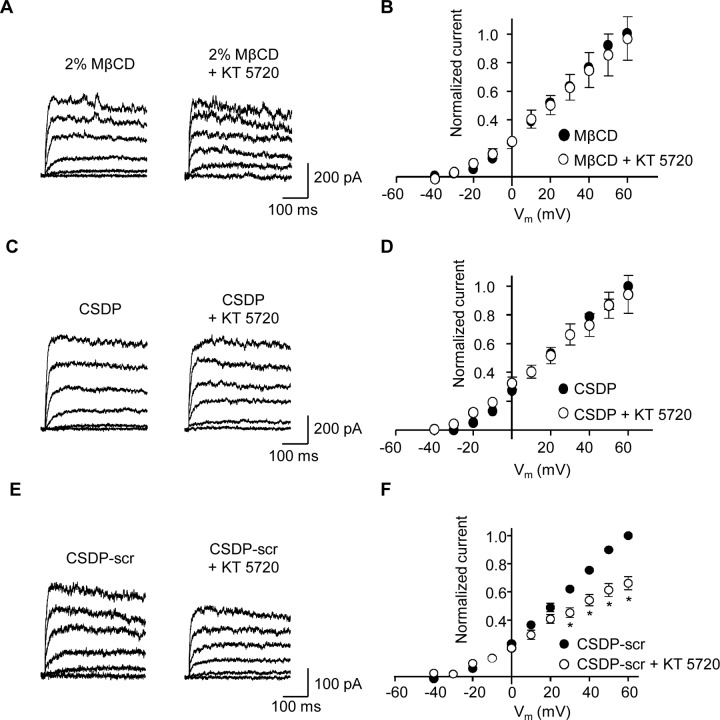
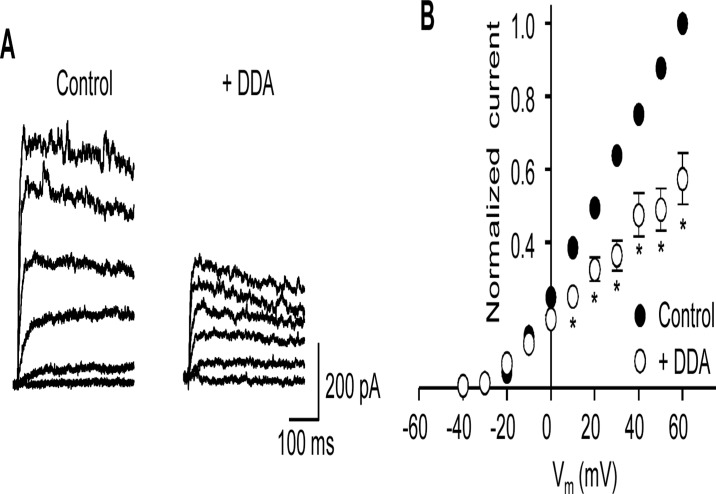
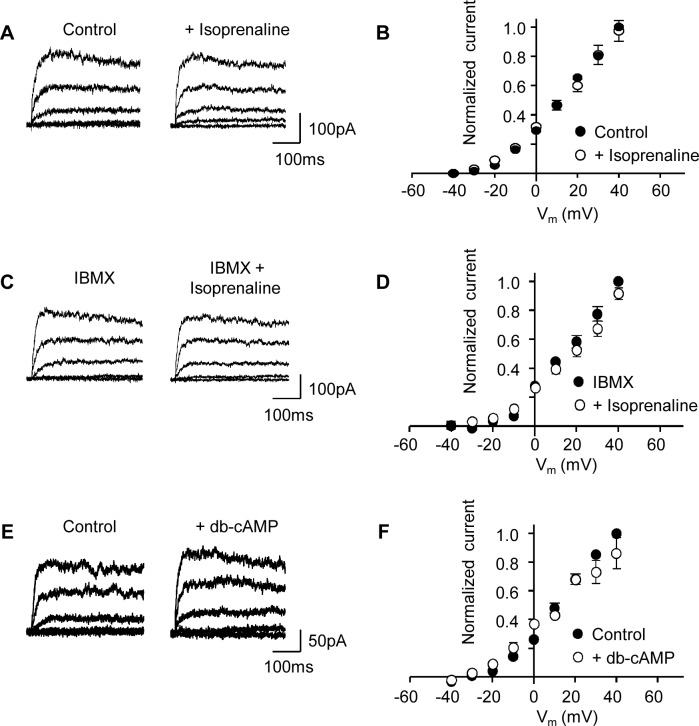
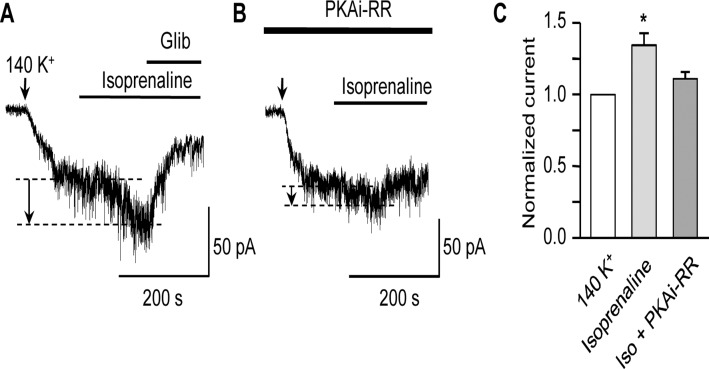
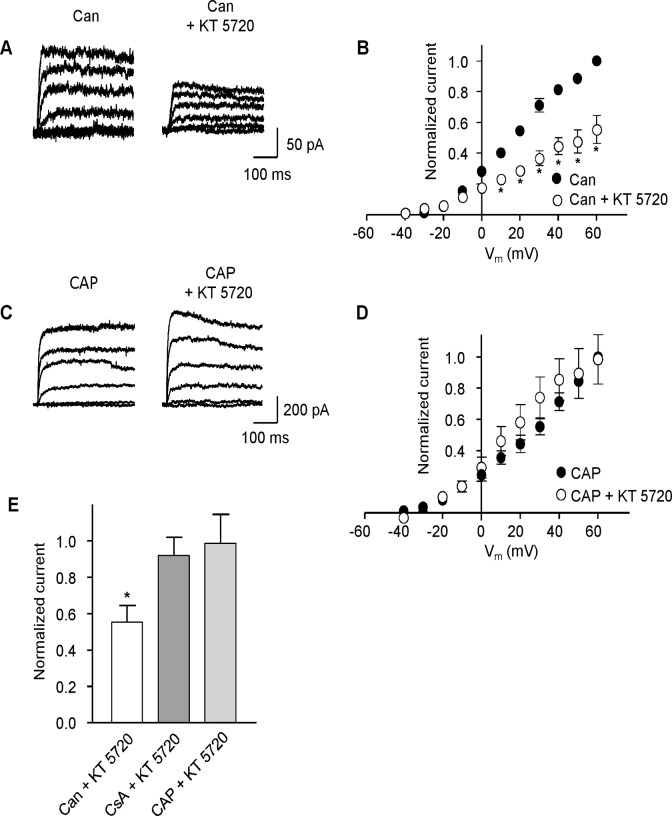
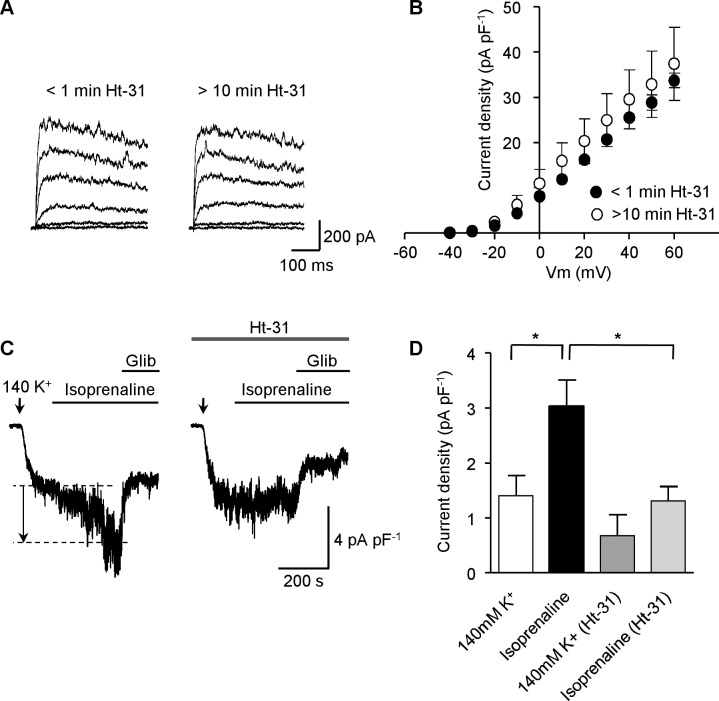
Voltage-gated potassium channels (Kv) are important regulators of membrane potential in vascular smooth muscle cells, which is integral to controlling intracellular Ca2+ concentration and regulating vascular tone. Previous work indicates that Kv channels can be modulated by receptor-driven alterations of cyclic AMP-dependent protein kinase (PKA) activity. Here, we demonstrate that Kv channel activity is maintained by tonic activity of PKA. Whole-cell recording was used to assess the effect of manipulating PKA signalling on Kv and ATP-dependent K+ channels of rat mesenteric artery smooth muscle cells. Application of PKA inhibitors, KT5720 or H89, caused a significant inhibition of Kv currents. Tonic PKA-mediated activation of Kv appears maximal as application of isoprenaline (a β-adrenoceptor agonist) or dibutyryl-cAMP failed to enhance Kv currents. We also show that this modulation of Kv by PKA can be reversed by protein phosphatase 2B/calcineurin (PP2B). PKA-dependent inhibition of Kv by KT5720 can be abrogated by pre-treatment with the PP2B inhibitor cyclosporin A, or inclusion of a PP2B auto-inhibitory peptide in the pipette solution. Finally, we demonstrate that tonic PKA-mediated modulation of Kv requires intact caveolae. Pre-treatment of the cells with methyl-β-cyclodextrin to deplete cellular cholesterol, or adding caveolin-scaffolding domain peptide to the pipette solution to disrupt caveolae-dependent signalling each attenuated PKA-mediated modulation of the Kv current. These findings highlight a novel, caveolae-dependent, tonic modulatory role of PKA on Kv channels providing new insight into mechanisms and the potential for pharmacological manipulation of vascular tone.
电压门控钾通道(Kv)是血管平滑肌细胞膜电位的重要调节因子,这对于控制细胞内Ca2+浓度和调节血管张力不可或缺。先前的研究表明,Kv通道可通过受体驱动的环磷酸腺苷依赖性蛋白激酶(PKA)活性改变进行调节。在此,我们证明Kv通道活性由PKA的张力性活性维持。采用全细胞记录法评估操纵PKA信号传导对大鼠肠系膜动脉平滑肌细胞Kv通道和ATP依赖性钾通道的影响。应用PKA抑制剂KT5720或H89可显著抑制Kv电流。由于应用异丙肾上腺素(一种β肾上腺素能受体激动剂)或二丁酰环磷腺苷未能增强Kv电流,PKA介导的Kv张力性激活似乎已达到最大值。我们还表明PKA对Kv的这种调节作用可被蛋白磷酸酶2B/钙调神经磷酸酶(PP2B)逆转。KT5720对Kv的PKA依赖性抑制作用可通过用PP2B抑制剂环孢素A预处理或在移液管溶液中加入PP2B自身抑制肽来消除。最后,我们证明PKA介导的Kv张力性调节需要完整的小窝。用甲基-β-环糊精预处理细胞以耗尽细胞胆固醇,或向移液管溶液中加入小窝蛋白支架结构域肽以破坏小窝依赖性信号传导,均可减弱PKA介导的Kv电流调节作用。这些发现突出了PKA对Kv通道的一种新的、小窝依赖性的张力性调节作用,为血管张力的机制及药理学调控潜力提供了新的见解。