Weiterer Sebastian, Uhle Florian, Lichtenstern Christoph, Siegler Benedikt H, Bhuju Sabin, Jarek Michael, Bartkuhn Marek, Weigand Markus A
Department of Anaesthesiology, Heidelberg University Hospital, Heidelberg, Germany; German Centre for Infection Research (DZIF), partner site Giessen-Marburg-Langen, Giessen, Germany.
Department of Anaesthesiology, Heidelberg University Hospital, Heidelberg, Germany.
PLoS One. 2015 Mar 20;10(3):e0121748. doi: 10.1371/journal.pone.0121748. eCollection 2015.
Sepsis is a global burden and the primary cause of death in intensive care units worldwide. The pathophysiological changes induced by the host's systemic inflammatory response to infection are not yet fully understood. During sepsis, the immune system is confronted with a variety of factors, which are integrated within the individual cells and result in changes of their basal state of responsiveness. Epigenetic mechanisms like histone modifications are known to participate in the control of immune reactions, but so far the situation during sepsis is unknown.
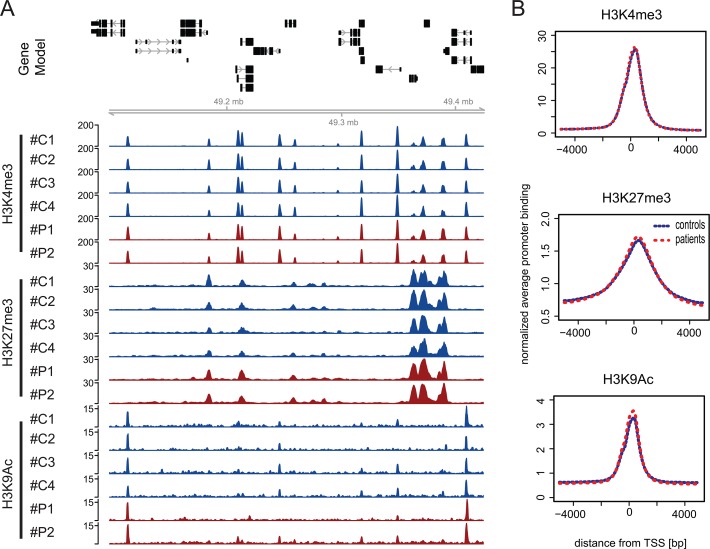
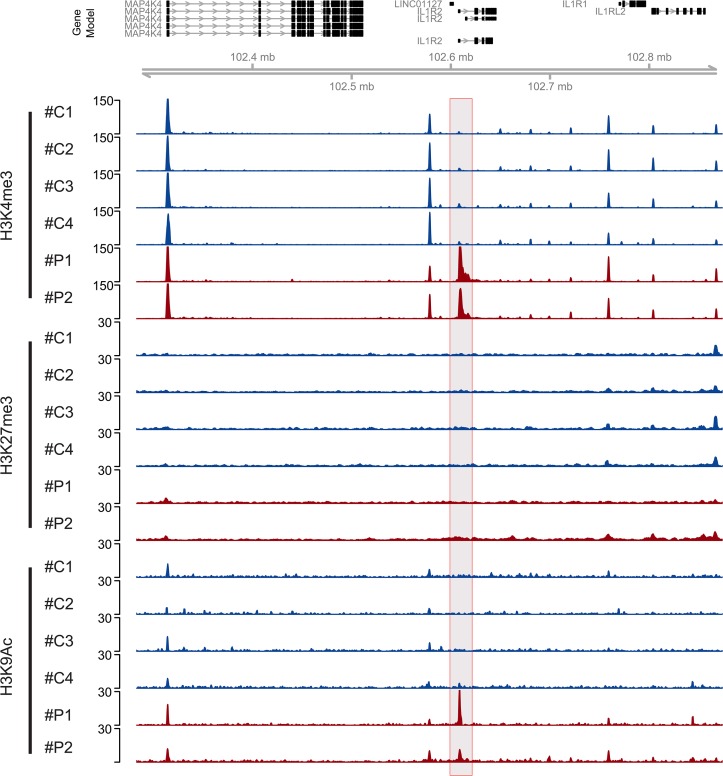
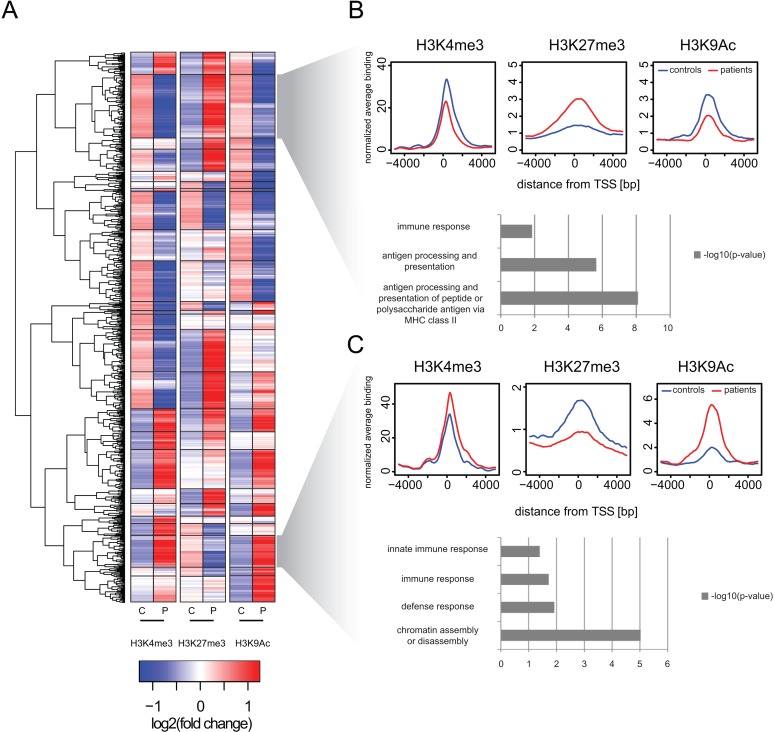
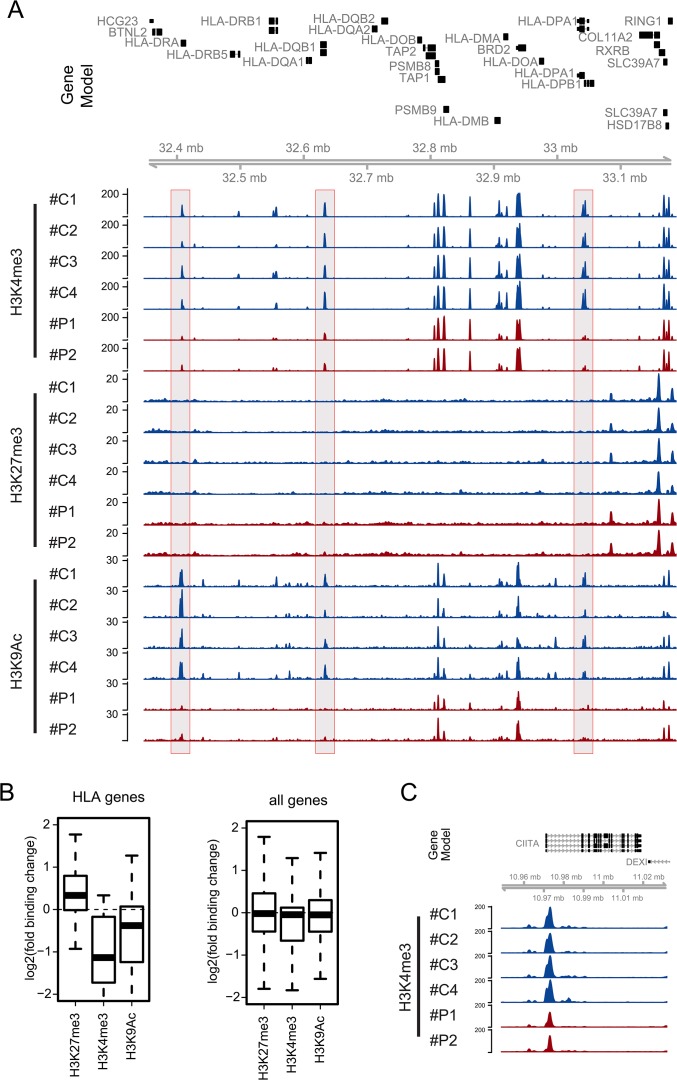
In a pilot approach, we performed combined chromatin immunoprecipitation followed by high-throughput sequencing to assess the genome-wide distribution of the chromatin modifications histone 3 lysine 4 and 27 trimethylation and lysine 9 acetylation in monocytes isolated from healthy donors (n = 4) and patients with sepsis (n = 2). Despite different underlying causes for sepsis, a comparison over promoter regions shows a high correlation between the patients for all chromatin marks. These findings hold true also when comparing patients to healthy controls. Despite the global similarity, differential analysis reveals a set of distinct promoters with significant enrichment or depletion of histone marks. Further analysis of overrepresented GO terms show an enrichment of genes involved in immune function. To the most prominent ones belong different members of the HLA family located within the MHC cluster together with the gene coding for the major regulator of this locus-CIITA.
We are able to show for the first time that sepsis in humans induces selective and precise changes of chromatin modifications in distinct promoter regions of immunologically relevant genes, shedding light on basal regulatory mechanisms that might be contributing to the functional changes occurring in monocytes.
脓毒症是一个全球性负担,也是全球重症监护病房患者的主要死因。宿主对感染的全身炎症反应所引发的病理生理变化尚未完全明确。在脓毒症期间,免疫系统会面临多种因素,这些因素在单个细胞内整合,导致其基础反应状态发生变化。已知组蛋白修饰等表观遗传机制参与免疫反应的调控,但脓毒症期间的情况迄今尚不清楚。
在一项初步研究中,我们进行了染色质免疫沉淀联合高通量测序,以评估从健康供体(n = 4)和脓毒症患者(n = 2)分离的单核细胞中染色质修饰组蛋白3赖氨酸4和27三甲基化以及赖氨酸9乙酰化在全基因组范围的分布。尽管脓毒症的潜在病因不同,但对启动子区域的比较显示,所有染色质标记在患者之间具有高度相关性。将患者与健康对照进行比较时,这些发现同样成立。尽管存在整体相似性,但差异分析揭示了一组具有组蛋白标记显著富集或缺失的不同启动子。对过度富集的基因本体(GO)术语的进一步分析表明,参与免疫功能的基因有所富集。其中最突出的是位于主要组织相容性复合体(MHC)簇内的HLA家族的不同成员,以及编码该位点主要调节因子——II类反式激活因子(CIITA)的基因。
我们首次能够证明,人类脓毒症会在免疫相关基因的不同启动子区域诱导染色质修饰发生选择性和精确的变化,从而揭示了可能导致单核细胞功能变化的基础调控机制。