Burke Suzanne D, Seaward Alexandra V C, Ramshaw Heather, Smith Graeme N, Virani Sophia, Croy Barbara A, Lima Patricia D A
Department of Biomedical and Molecular Sciences, Queen's University, Kingston, Ontario, Canada.
Department of Obstetrics and Gynecology, Queen's University, Kingston, Ontario, Canada.
PLoS One. 2015 Mar 20;10(3):e0119526. doi: 10.1371/journal.pone.0119526. eCollection 2015.
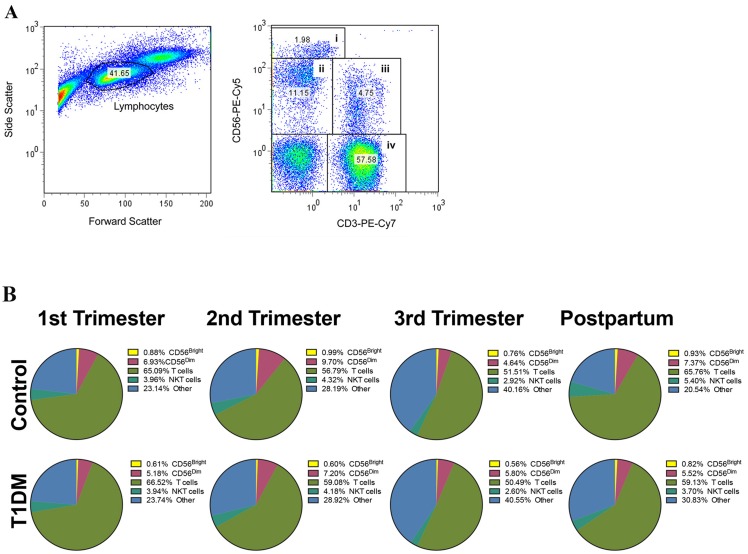
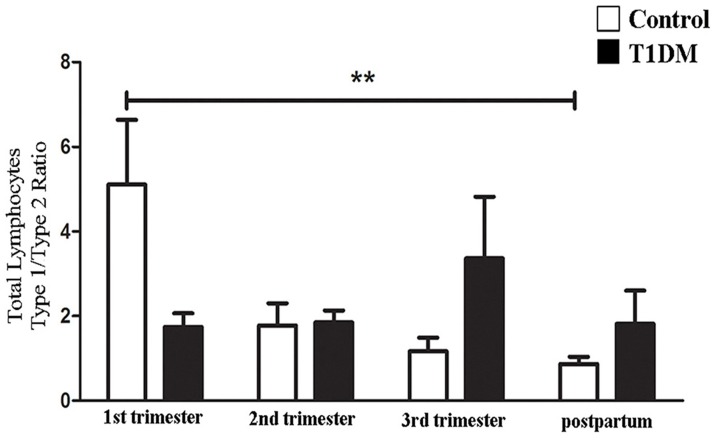
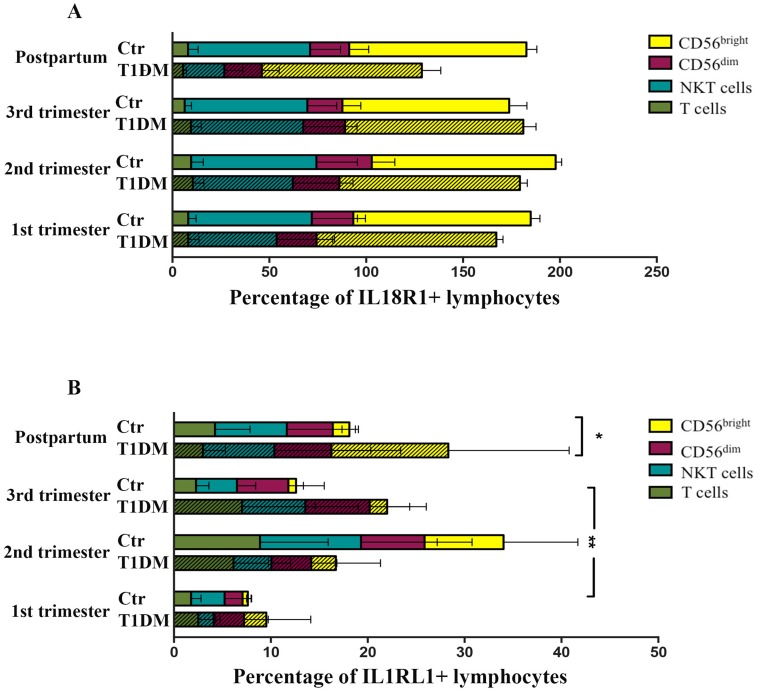
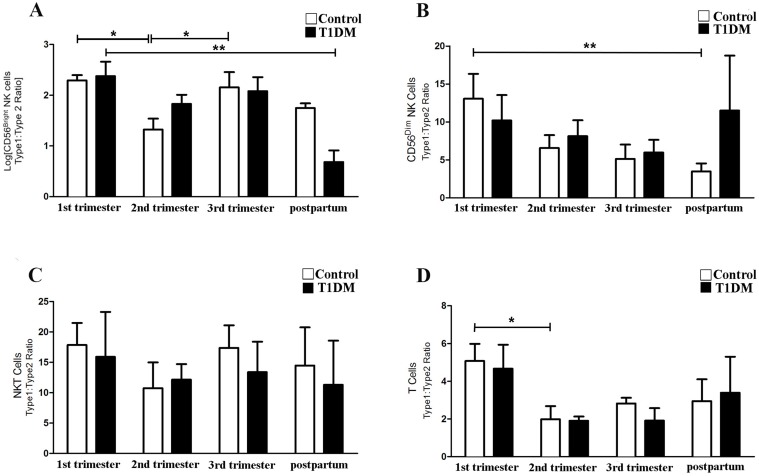
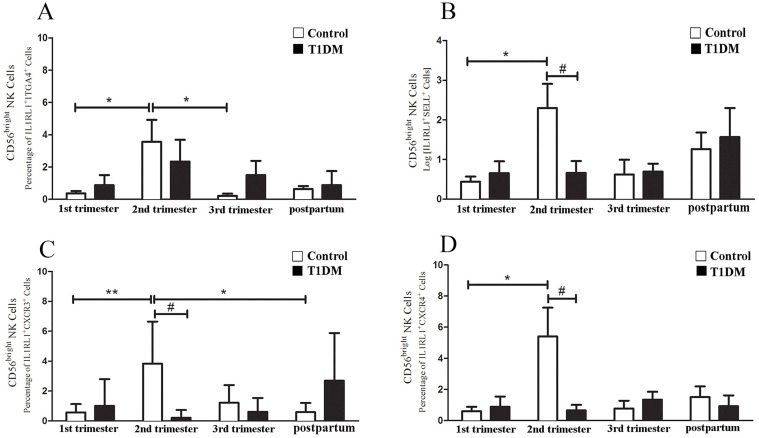
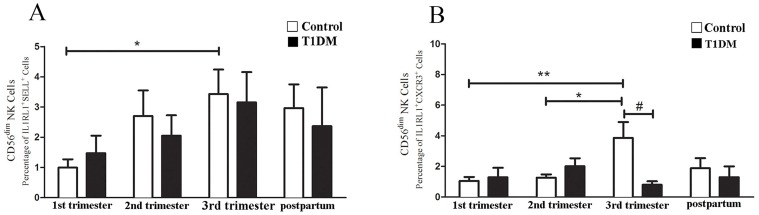
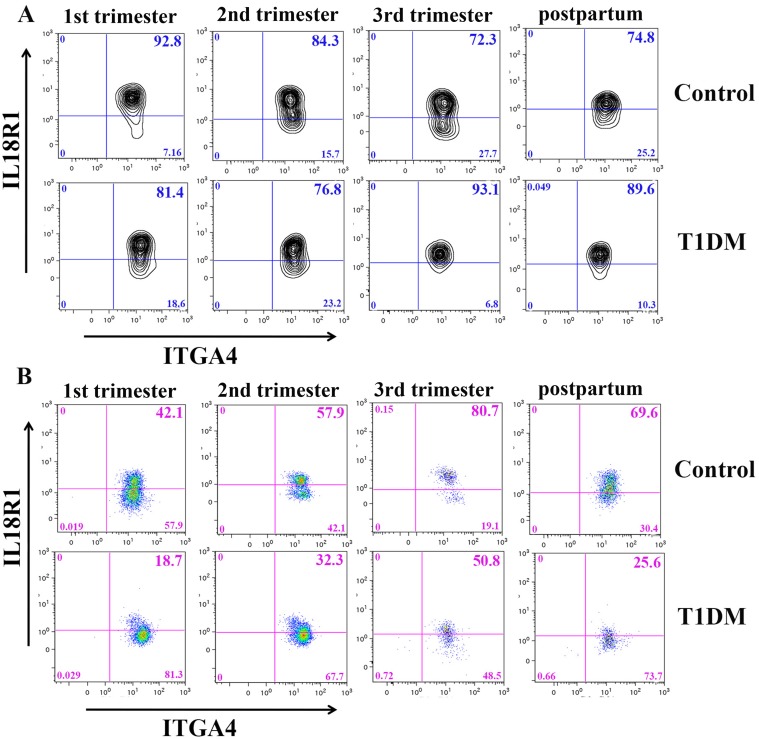
Type 1 Diabetes Mellitus (T1DM) is characterized by an augmented pro-inflammatory immune state. This contributes to the increased risk for gestational complications observed in T1DM mothers. In normal pregnancies, critical immunological changes occur, including the massive recruitment of lymphocytes, particularly CD56bright NK cells, into early decidua basalis and a 2nd trimester shift towards Type 2 immunity. Decidual CD56bright NK cells arise at least partly from circulating progenitors expressing adhesion molecules SELL and ITGA4 and the chemokine receptors CXCR3 and CXCR4. In vitro studies show that T1DM reduces interactions between blood CD56+ NK cells and decidual endothelial cells by reducing SELL and ITGA4-based interactions. To address the mechanisms by which specific lymphocyte subsets may be recruited from the circulation during pregnancy and whether these mechanisms are altered in T1DM, flow cytometry was used to examine eight peripheral blood lymphocyte subsets (Type 1 (IL18R1+) and Type 2 (IL1RL1+) CD56bright NK, CD56dim NK, NKT and T cells) from control and T1DM women. Blood was collected serially over pregnancy and postpartum, and lymphocytes were compared for expression of homing receptors SELL, ITGA4, CXCR3, and CXCR4. The decline of Type 1/Type 2 immune cells in normal pregnancy was driven by an increase in Type 2 cells that did not occur in T1DM. CD56bright NK cells from control women had the highest expression of all four receptors with greatest expression in 2nd trimester. At this time, these receptors were expressed at very low levels by CD56bright NK cells from TIDM patients. Type 1/Type 2 NKT cell ratios were not influenced by either pregnancy or TIDM. Our results suggest that T1DM alters immunological balances during pregnancy with its greatest impact on CD56bright NK cells. This implicates CD56bright NK cells in diabetic pregnancy complications.
1型糖尿病(T1DM)的特征是促炎免疫状态增强。这导致了T1DM母亲出现妊娠并发症的风险增加。在正常妊娠中,会发生关键的免疫变化,包括大量淋巴细胞,特别是CD56bright自然杀伤(NK)细胞募集到早期基底蜕膜,以及在妊娠中期向2型免疫转变。蜕膜CD56bright NK细胞至少部分来源于表达黏附分子SELL和ITGA4以及趋化因子受体CXCR3和CXCR4的循环祖细胞。体外研究表明,T1DM通过减少基于SELL和ITGA4的相互作用,降低了血液中CD56 + NK细胞与蜕膜内皮细胞之间的相互作用。为了研究妊娠期间特定淋巴细胞亚群从循环中募集的机制,以及这些机制在T1DM中是否改变,采用流式细胞术检测了对照组和T1DM女性的8种外周血淋巴细胞亚群(1型(IL18R1 +)和2型(IL1RL1 +)CD56bright NK细胞、CD56dim NK细胞、自然杀伤T(NKT)细胞和T细胞)。在整个孕期和产后连续采集血液,并比较淋巴细胞归巢受体SELL、ITGA4、CXCR3和CXCR4的表达。正常妊娠中1型/2型免疫细胞的减少是由2型细胞的增加驱动的,而T1DM中并未出现这种情况。对照组女性的CD56bright NK细胞在所有四种受体中表达最高,在妊娠中期表达最强。此时,T1DM患者CD56bright NK细胞对这些受体的表达水平非常低。1型/2型NKT细胞比例不受妊娠或T1DM的影响。我们的结果表明,T1DM改变了妊娠期间的免疫平衡,对CD56bright NK细胞影响最大。这表明CD56bright NK细胞与糖尿病妊娠并发症有关。