Agboola Stephen O, Ju Woong, Elfiky Aymen, Kvedar Joseph C, Jethwani Kamal
Partners Healthcare Center for Connected Health, Boston, MA, United States.
J Med Internet Res. 2015 Mar 13;17(3):e65. doi: 10.2196/jmir.4009.
The burden of cancer is increasing; projections over the next 2 decades suggest that the annual cases of cancer will rise from 14 million in 2012 to 22 million. However, cancer patients in the 21st century are living longer due to the availability of novel therapeutic regimens, which has prompted a growing focus on maintaining patients' health-related quality of life. Telehealth is increasingly being used to connect with patients outside of traditional clinical settings, and early work has shown its importance in improving quality of life and other clinical outcomes in cancer care.
The aim of this study was to systematically assess the literature for the effect of supportive telehealth interventions on pain, depression, and quality of life in cancer patients via a systematic review of clinical trials.
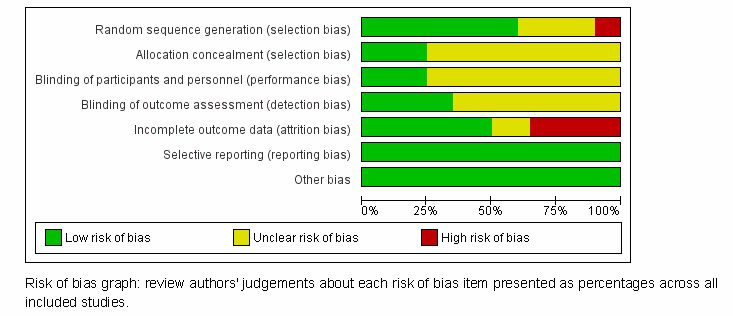
We searched PubMed, EMBASE, Google Scholar, CINAHL, and PsycINFO in July 2013 and updated the literature search again in January 2015 for prospective randomized trials evaluating the effect of telehealth interventions in cancer care with pain, depression, and quality of life as main outcomes. Two of the authors independently reviewed and extracted data from eligible randomized controlled trials, based on pre-determined selection criteria. Methodological quality of studies was assessed by the Cochrane Collaboration risk of bias tool.
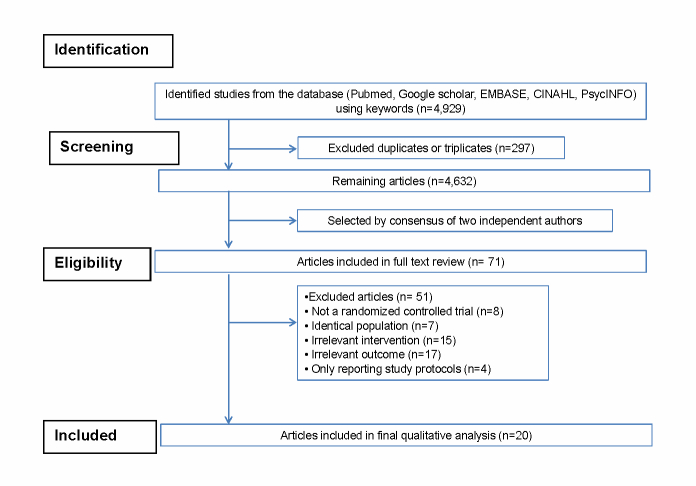
Of the 4929 articles retrieved from databases and relevant bibliographies, a total of 20 RCTs were included in the final review. The studies were largely heterogeneous in the type and duration of the intervention as well as in outcome assessments. A majority of the studies were telephone-based interventions that remotely connected patients with their health care provider or health coach. The intervention times ranged from 1 week to 12 months. In general, most of the studies had low risk of bias across the domains of the Cochrane Collaboration risk of bias tool, but most of the studies had insufficient information about the allocation concealment domain. Two of the three studies focused on pain control reported significant effects of the intervention; four of the nine studies focus on depression reported significant effects, while only the studies that were focused on quality of life reported significant effects.
This systematic review demonstrates the potential of telehealth interventions in improving outcomes in cancer care. However, more high-quality large-sized trials are needed to demonstrate cogent evidence of its effectiveness.
癌症负担正在增加;未来20年的预测表明,癌症年病例数将从2012年的1400万增至2200万。然而,由于新型治疗方案的出现,21世纪的癌症患者寿命延长,这促使人们越来越关注维持患者与健康相关的生活质量。远程医疗越来越多地用于在传统临床环境之外与患者建立联系,早期研究已表明其在改善癌症护理中的生活质量和其他临床结局方面的重要性。
本研究的目的是通过对临床试验的系统评价,系统评估支持性远程医疗干预对癌症患者疼痛、抑郁和生活质量影响的文献。
2013年7月,我们检索了PubMed、EMBASE、谷歌学术、CINAHL和PsycINFO,并于2015年1月再次更新文献检索,以查找评估远程医疗干预在癌症护理中的效果且以疼痛、抑郁和生活质量为主要结局的前瞻性随机试验。两位作者根据预先确定的选择标准,独立对符合条件的随机对照试验进行审查并提取数据。采用Cochrane协作网偏倚风险工具评估研究的方法学质量。
从数据库和相关参考文献中检索到4929篇文章,最终纳入综述的共有20项随机对照试验。这些研究在干预类型、持续时间以及结局评估方面存在很大异质性。大多数研究是基于电话的干预措施,通过远程方式将患者与其医疗服务提供者或健康教练联系起来。干预时间从1周到12个月不等。总体而言,大多数研究在Cochrane协作网偏倚风险工具的各个领域中偏倚风险较低,但大多数研究在分配隐藏领域的信息不足。三项关注疼痛控制的研究中有两项报告干预有显著效果;九项关注抑郁的研究中有四项报告有显著效果,而只有关注生活质量的研究报告有显著效果。
本系统评价表明远程医疗干预在改善癌症护理结局方面具有潜力。然而,需要更多高质量的大型试验来证明其有效性的确凿证据。