Department of Psychology, The University of Texas at Austin Austin, TX, USA.
Department of Psychology, The University of Texas at Austin Austin, TX, USA ; Precision and Intelligence Laboratory, Tokyo Institute of Technology Tokyo, Japan.
Front Neurosci. 2015 Mar 5;9:63. doi: 10.3389/fnins.2015.00063. eCollection 2015.
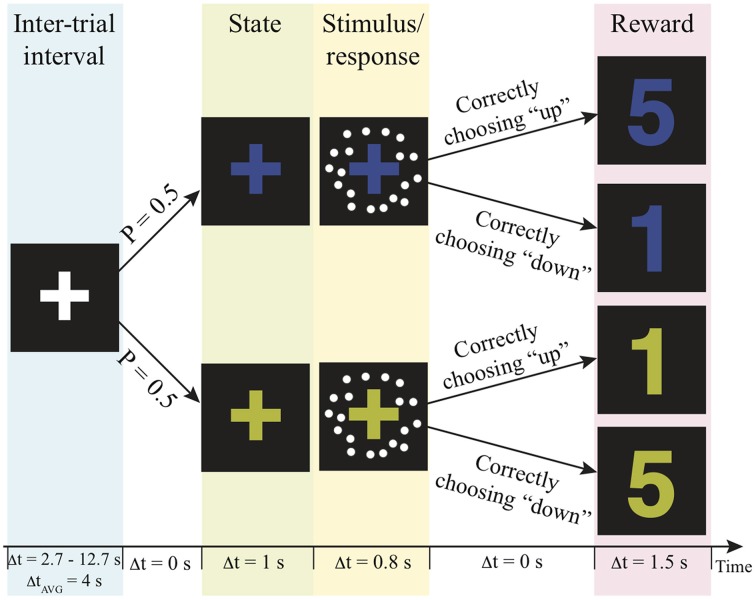
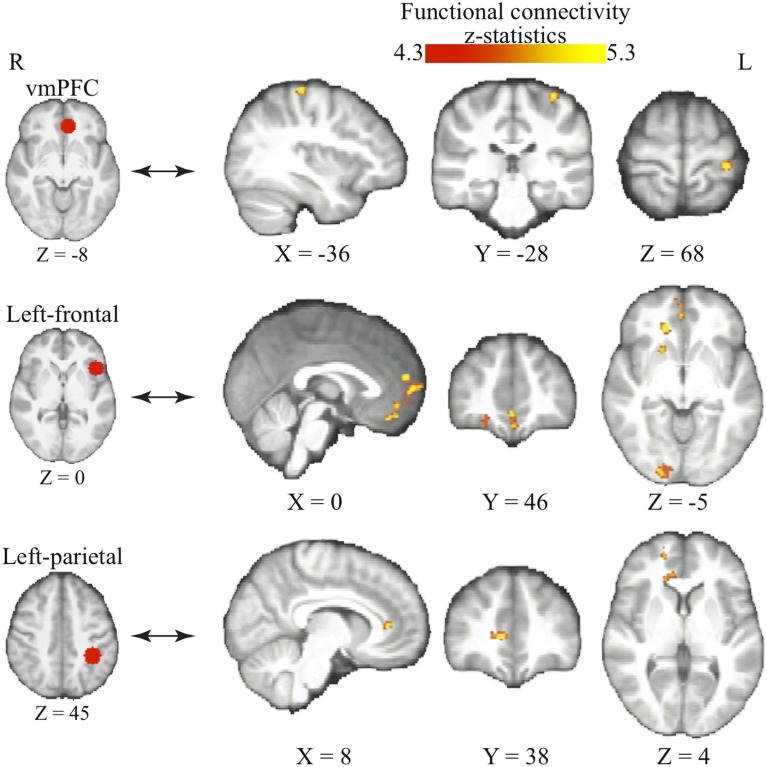
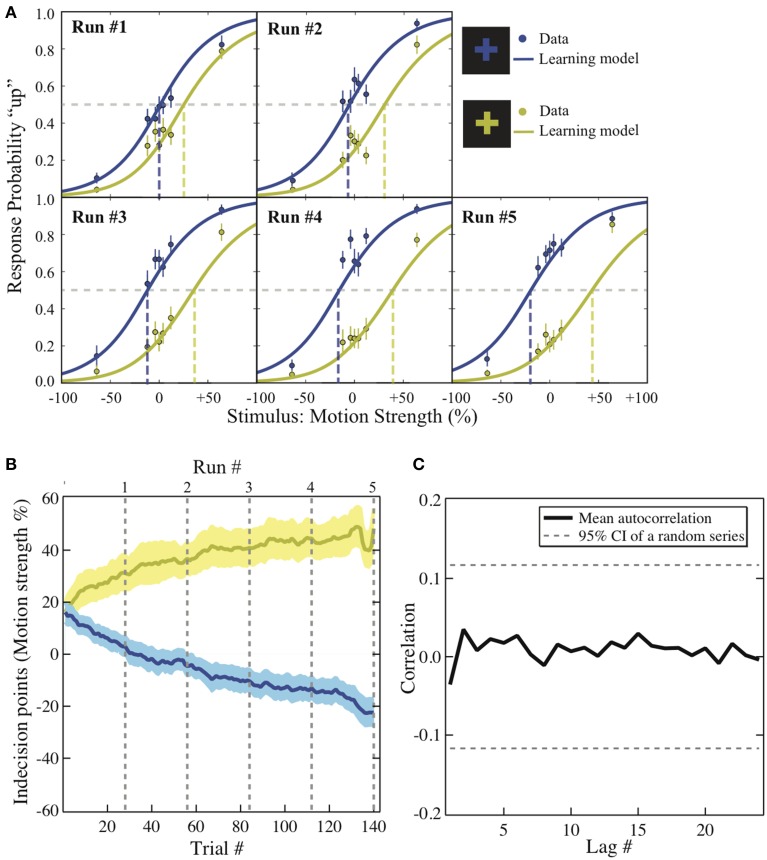
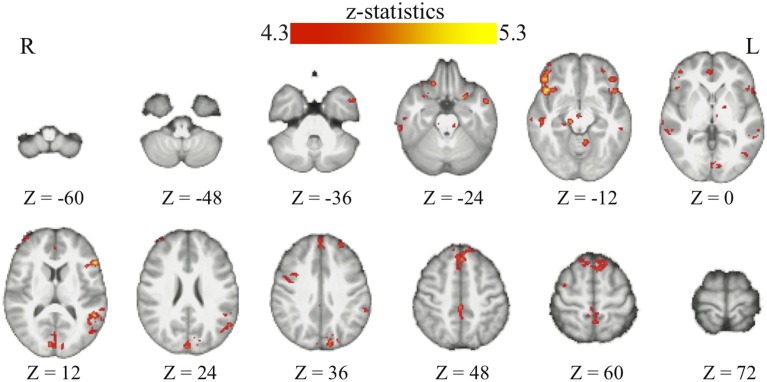
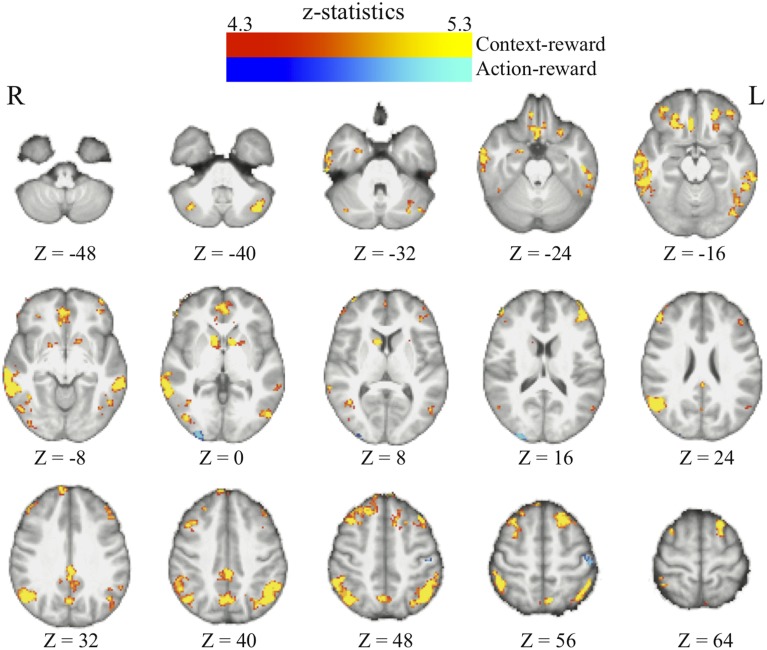
Bias occurs in perceptual decisions when the reward associated with a particular response dominates the sensory evidence in support of a choice. However, it remains unclear how this bias is acquired and once acquired, how it influences perceptual decision processes in the brain. We addressed these questions using model-based neuroimaging in a motion discrimination paradigm where contextual cues suggested which one of two options would receive higher rewards on each trial. We found that participants gradually learned to choose the higher-rewarded option in each context when making a perceptual decision. The amount of bias on each trial was fit well by a reinforcement-learning model that estimated the subjective value of each option within the current context. The brain mechanisms underlying this bias acquisition process were similar to those observed in reward-based decision tasks: prediction errors correlated with the fMRI signals in ventral striatum, dlPFC, and parietal cortex, whereas the amount of acquired bias correlated with activity in ventromedial prefrontal (vmPFC), dorsolateral frontal (dlPFC), and parietal cortices. Moreover, psychophysiological interaction analysis revealed that as bias increased, functional connectivity increased within multiple brain networks (dlPFC-vmPFC-visual, vmPFC-motor, and parietal-anterior-cingulate), suggesting that multiple mechanisms contribute to bias in perceptual decisions through integration of value processing with action, sensory, and control systems. These provide a novel link between the neural mechanisms underlying perceptual and economic decision-making.
当与特定反应相关的奖励主导支持选择的感官证据时,感知决策中会出现偏差。然而,目前尚不清楚这种偏差是如何产生的,以及一旦产生,它如何影响大脑中的感知决策过程。我们在运动辨别范式中使用基于模型的神经影像学来解决这些问题,其中上下文线索提示在每次试验中哪个选项将获得更高的奖励。我们发现,参与者在进行感知决策时,逐渐学会在每种情况下选择获得更高奖励的选项。在每次试验中,偏差的幅度都很好地符合强化学习模型,该模型估计了当前环境中每个选项的主观价值。这种偏差获取过程的大脑机制与基于奖励的决策任务中观察到的机制相似:预测误差与腹侧纹状体、dlPFC 和顶叶皮层的 fMRI 信号相关,而获得的偏差幅度与腹内侧前额叶皮层(vmPFC)、背外侧前额叶皮层(dlPFC)和顶叶皮层的活动相关。此外,心理生理交互分析表明,随着偏差的增加,多个大脑网络(dlPFC-vmPFC-视觉、vmPFC-运动和顶叶-前扣带)内的功能连接增加,表明多个机制通过将价值处理与行动、感觉和控制系统相结合,对感知决策中的偏差产生影响。这些为感知和经济决策背后的神经机制之间提供了新的联系。