Cluster of Excellence "Hearing4all" Hannover, Germany ; Department of Otolaryngology, Hannover Medical School Hannover, Germany.
Cluster of Excellence "Hearing4all" Hannover, Germany ; Department of Neurology, Hannover Medical School Hannover, Germany.
Front Neurosci. 2015 Mar 5;9:68. doi: 10.3389/fnins.2015.00068. eCollection 2015.
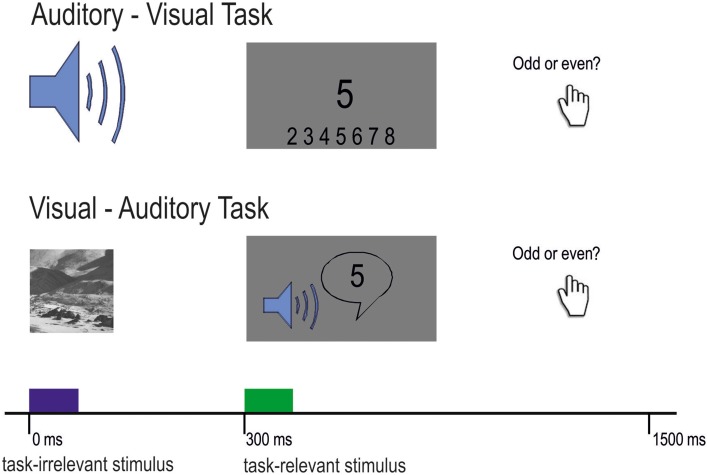
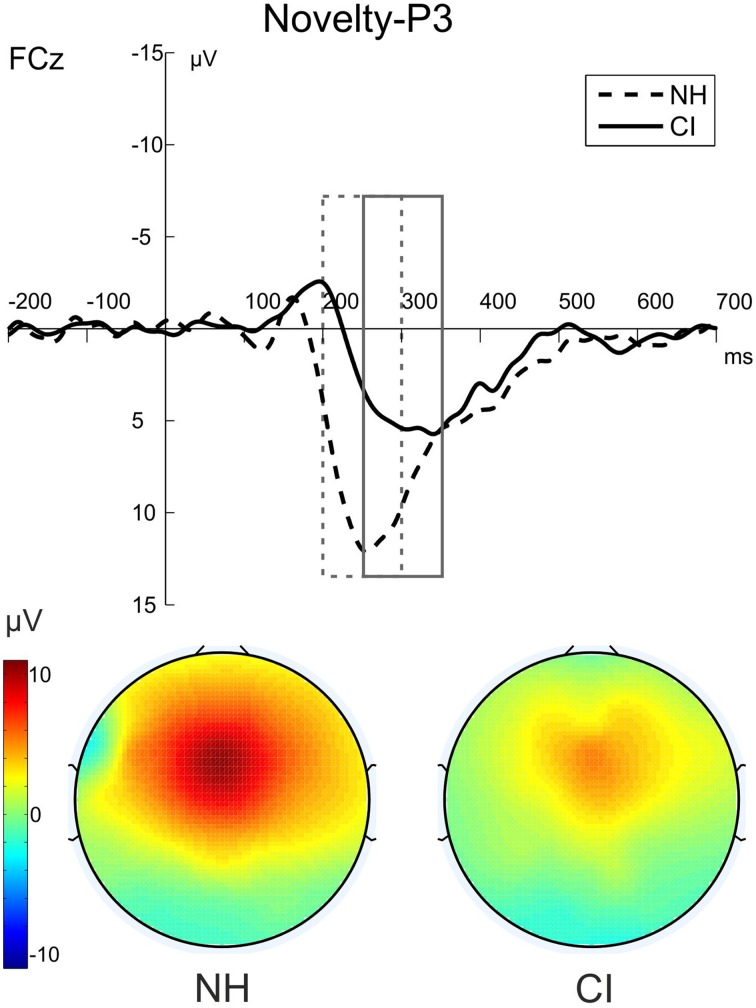
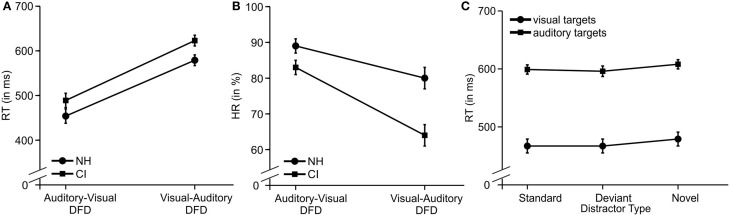
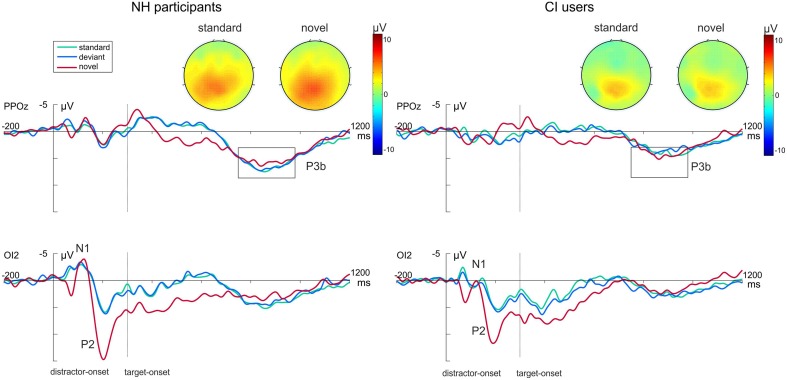
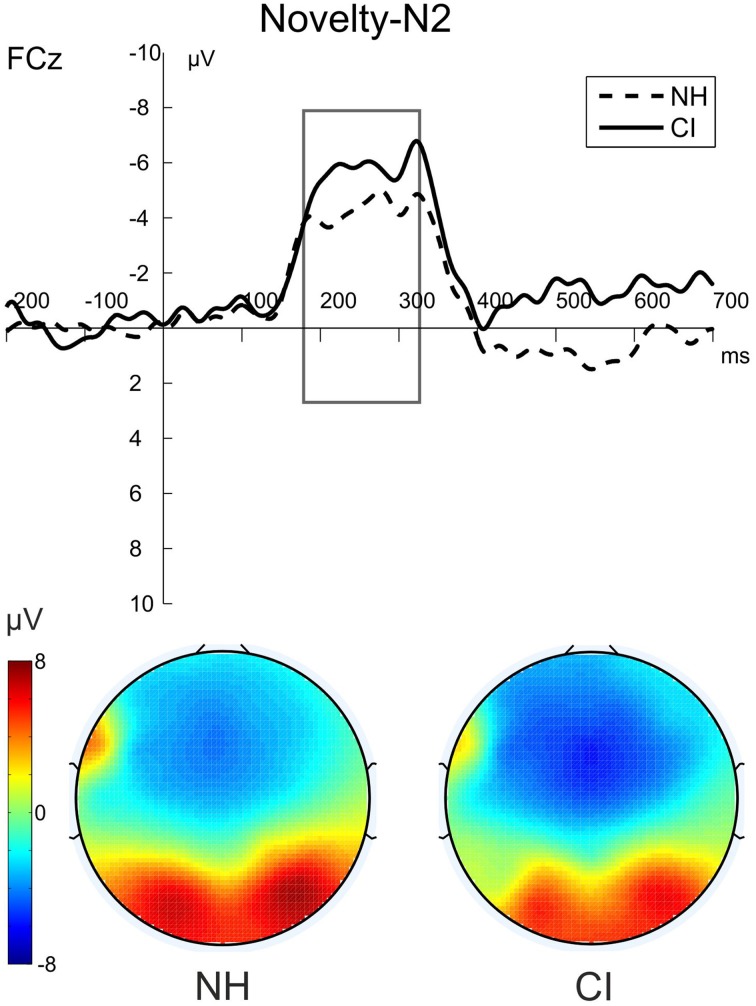
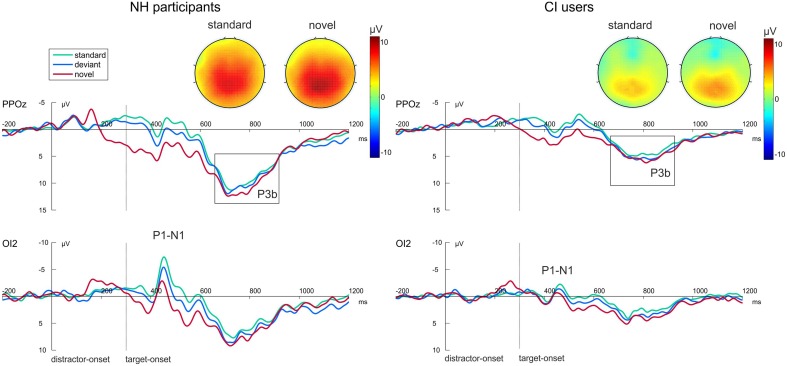
Cochlear implants (CIs) are auditory prostheses which restore hearing via electrical stimulation of the auditory nerve. The successful adaptation of auditory cognition to the CI input depends to a substantial degree on individual factors. We pursued an electrophysiological approach toward an analysis of cortical responses that reflect perceptual processing stages and higher-level responses to CI input. Performance and event-related potentials on two cross-modal discrimination-following-distraction (DFD) tasks from CI users and normal-hearing (NH) individuals were compared. The visual-auditory distraction task combined visual distraction with following auditory discrimination performance. Here, we observed similar cortical responses to visual distractors (Novelty-N2) and slowed, less accurate auditory discrimination performance in CI users when compared to NH individuals. Conversely, the auditory-visual distraction task was used to combine auditory distraction with visual discrimination performance. In this task we found attenuated cortical responses to auditory distractors (Novelty-P3), slowed visual discrimination performance, and attenuated cortical P3-responses to visual targets in CI users compared to NH individuals. These results suggest that CI users process auditory distractors differently than NH individuals and that the presence of auditory CI input has an adverse effect on the processing of visual targets and the visual discrimination ability in implanted individuals. We propose that this attenuation of the visual modality occurs through the allocation of neural resources to the CI input.
人工耳蜗是一种通过电刺激听神经来恢复听力的听觉假体。听觉认知对人工耳蜗输入的成功适应在很大程度上取决于个体因素。我们采用电生理方法分析反映感知处理阶段和对人工耳蜗输入的高级反应的皮质反应。我们比较了人工耳蜗使用者和正常听力(NH)个体在两个跨模态辨别-跟随分散(DFD)任务中的表现和事件相关电位。视觉-听觉分散任务将视觉分散与随后的听觉辨别性能相结合。在这里,我们观察到与 NH 个体相比,人工耳蜗使用者对视觉分散器(新颖性-N2)的皮质反应相似,并且听觉辨别性能较慢,准确性较低。相反,听觉-视觉分散任务用于结合听觉分散和视觉辨别性能。在这项任务中,我们发现人工耳蜗使用者对听觉分散器(新颖性-P3)的皮质反应减弱,视觉辨别性能减慢,以及对视觉目标的皮质 P3 反应减弱,与 NH 个体相比。这些结果表明,人工耳蜗使用者对听觉分散器的处理方式与 NH 个体不同,并且听觉人工耳蜗输入的存在对植入个体的视觉目标处理和视觉辨别能力有不利影响。我们提出,这种视觉方式的衰减是通过将神经资源分配给人工耳蜗输入来实现的。