Kotini Andriana G, Chang Chan-Jung, Boussaad Ibrahim, Delrow Jeffrey J, Dolezal Emily K, Nagulapally Abhinav B, Perna Fabiana, Fishbein Gregory A, Klimek Virginia M, Hawkins R David, Huangfu Danwei, Murry Charles E, Graubert Timothy, Nimer Stephen D, Papapetrou Eirini P
1] Department of Oncological Sciences, Icahn School of Medicine at Mount Sinai, New York, New York, USA. [2] The Tisch Cancer Institute, Icahn School of Medicine at Mount Sinai, New York, New York, USA. [3] The Black Family Stem Cell Institute, Icahn School of Medicine at Mount Sinai, New York, New York, USA.
1] Division of Hematology, Department of Medicine, University of Washington, Seattle, Washington, USA. [2] Institute for Stem Cell and Regenerative Medicine, University of Washington, Seattle, Washington, USA.
Nat Biotechnol. 2015 Jun;33(6):646-55. doi: 10.1038/nbt.3178. Epub 2015 Mar 23.
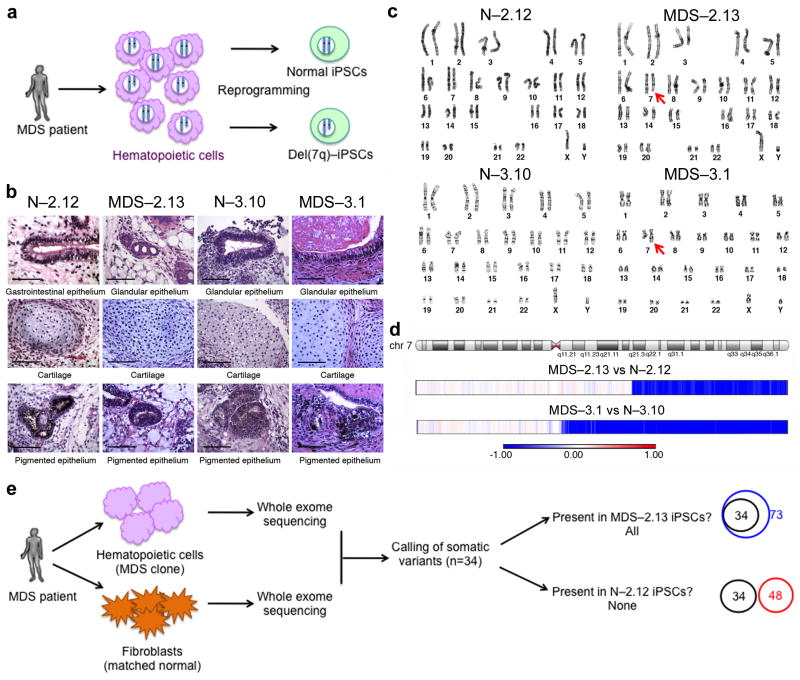
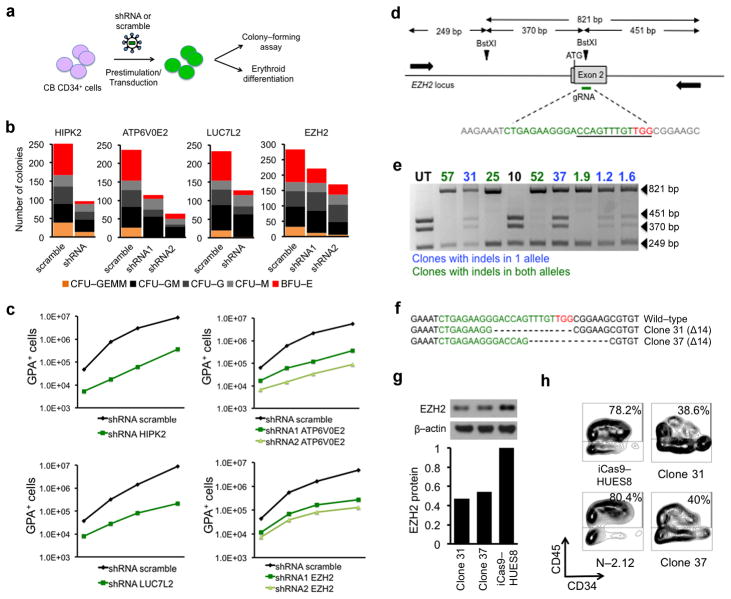
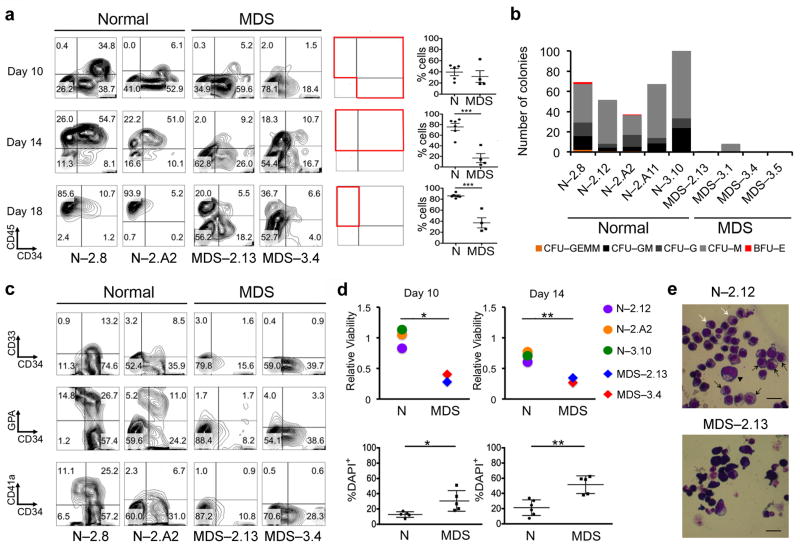
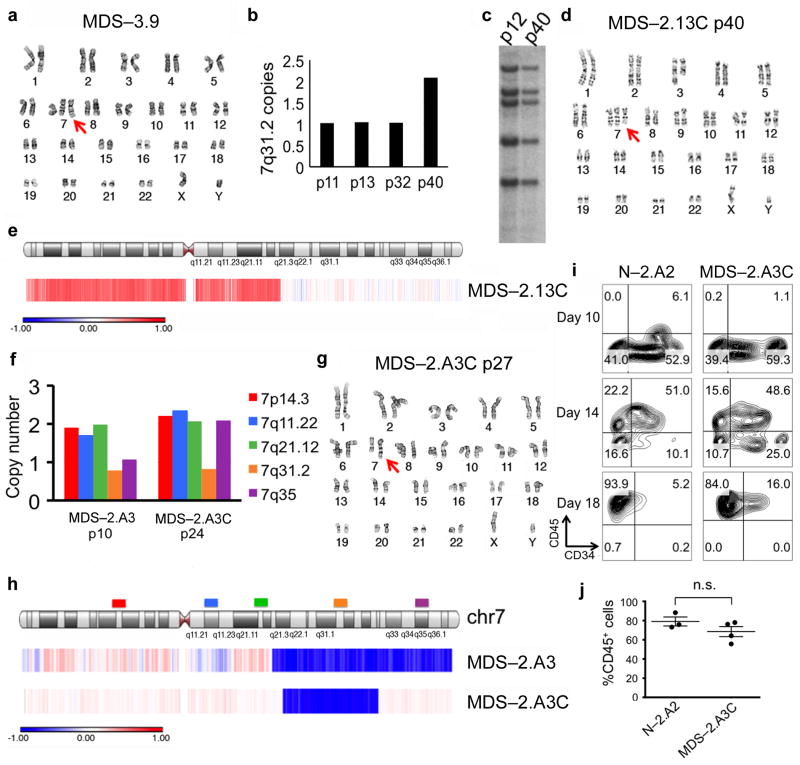
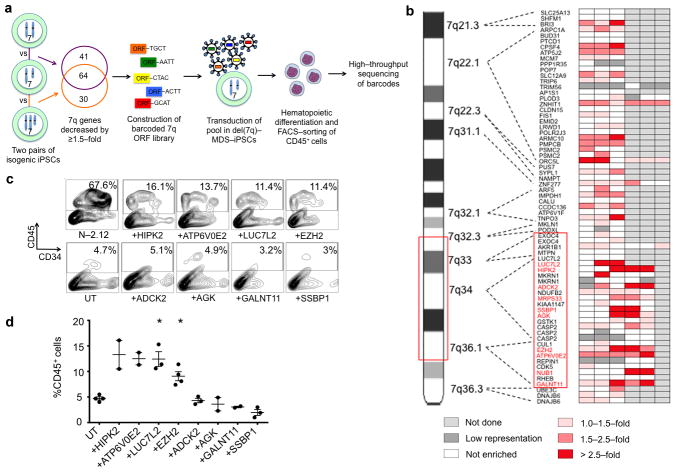
Chromosomal deletions associated with human diseases, such as cancer, are common, but synteny issues complicate modeling of these deletions in mice. We use cellular reprogramming and genome engineering to functionally dissect the loss of chromosome 7q (del(7q)), a somatic cytogenetic abnormality present in myelodysplastic syndromes (MDS). We derive del(7q)- and isogenic karyotypically normal induced pluripotent stem cells (iPSCs) from hematopoietic cells of MDS patients and show that the del(7q) iPSCs recapitulate disease-associated phenotypes, including impaired hematopoietic differentiation. These disease phenotypes are rescued by spontaneous dosage correction and can be reproduced in karyotypically normal cells by engineering hemizygosity of defined chr7q segments in a 20-Mb region. We use a phenotype-rescue screen to identify candidate haploinsufficient genes that might mediate the del(7q)- hematopoietic defect. Our approach highlights the utility of human iPSCs both for functional mapping of disease-associated large-scale chromosomal deletions and for discovery of haploinsufficient genes.
与人类疾病(如癌症)相关的染色体缺失很常见,但同线性问题使在小鼠中对这些缺失进行建模变得复杂。我们利用细胞重编程和基因组工程技术,对7号染色体长臂缺失(del(7q))进行功能剖析,这是骨髓增生异常综合征(MDS)中存在的一种体细胞细胞遗传学异常。我们从MDS患者的造血细胞中获得了del(7q)和同基因核型正常的诱导多能干细胞(iPSC),并表明del(7q) iPSC重现了与疾病相关的表型,包括造血分化受损。这些疾病表型可通过自发的剂量校正得到挽救,并且可以通过在一个20兆碱基区域构建特定7号染色体长臂片段的半合子状态,在核型正常的细胞中重现。我们使用表型挽救筛选来鉴定可能介导del(7q)造血缺陷的单倍剂量不足候选基因。我们的方法突出了人类iPSC在疾病相关大规模染色体缺失的功能定位以及单倍剂量不足基因发现方面的实用性。