Nguyen Kathy C, Rippstein Peter, Tayabali Azam F, Willmore William G
*Biotechnology Laboratory, Mechanistic Studies Division, Environmental Health Science Research Bureau, HECSB, Health Canada, Ottawa, Ontario, Canada K1A 0K9, Department of Biology and Institute of Biochemistry, Carleton University, Ottawa, Ontario, Canada K1S 5B6 and The University of Ottawa, Heart Institute, Ottawa, Ontario, Canada K1Y 4W7 *Biotechnology Laboratory, Mechanistic Studies Division, Environmental Health Science Research Bureau, HECSB, Health Canada, Ottawa, Ontario, Canada K1A 0K9, Department of Biology and Institute of Biochemistry, Carleton University, Ottawa, Ontario, Canada K1S 5B6 and The University of Ottawa, Heart Institute, Ottawa, Ontario, Canada K1Y 4W7.
*Biotechnology Laboratory, Mechanistic Studies Division, Environmental Health Science Research Bureau, HECSB, Health Canada, Ottawa, Ontario, Canada K1A 0K9, Department of Biology and Institute of Biochemistry, Carleton University, Ottawa, Ontario, Canada K1S 5B6 and The University of Ottawa, Heart Institute, Ottawa, Ontario, Canada K1Y 4W7.
Toxicol Sci. 2015 Jul;146(1):31-42. doi: 10.1093/toxsci/kfv068. Epub 2015 Mar 25.
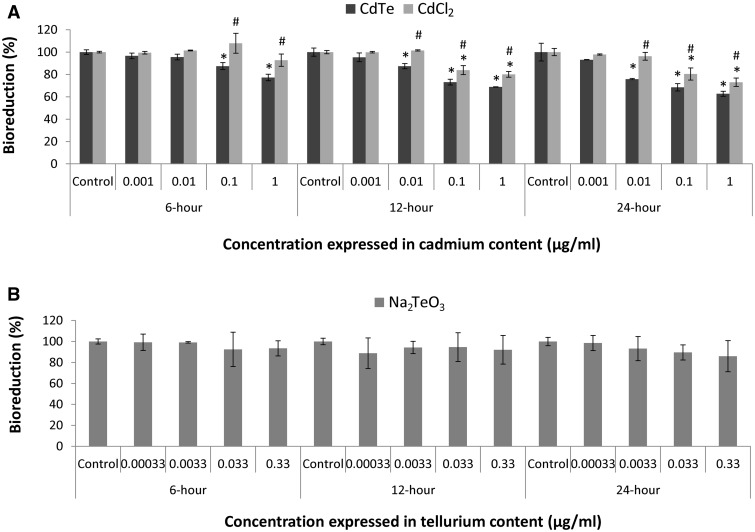
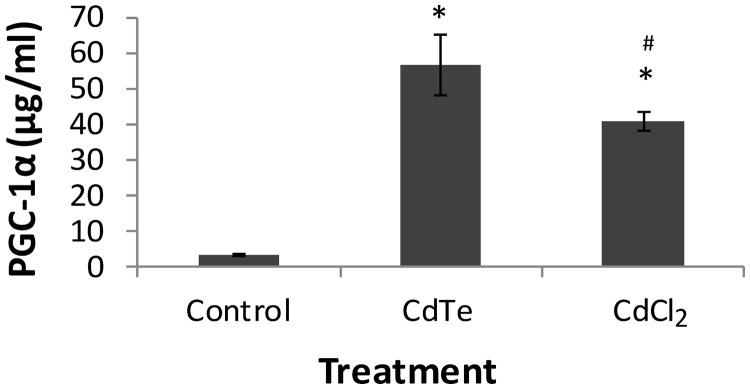
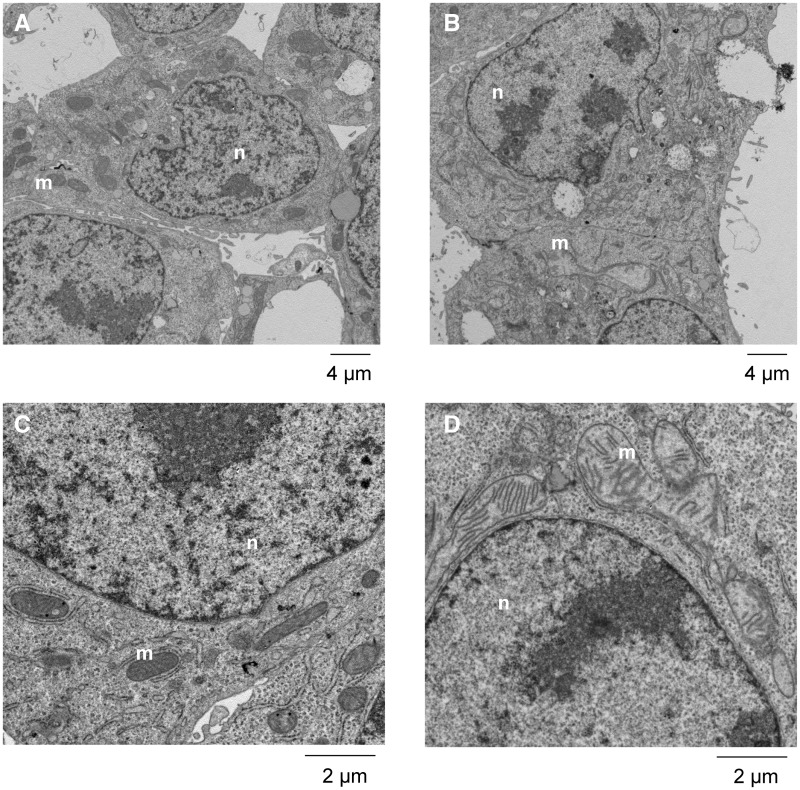
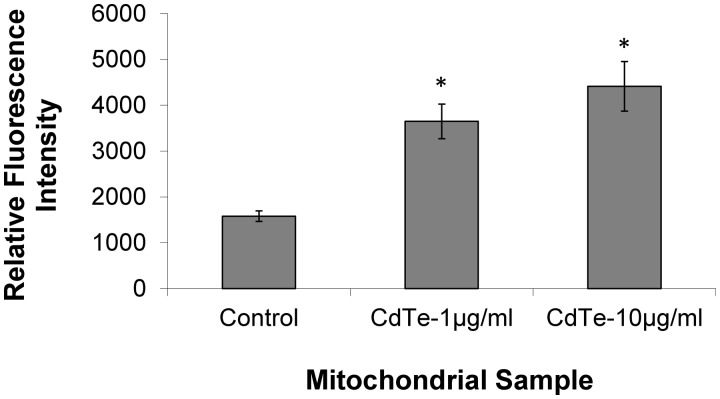
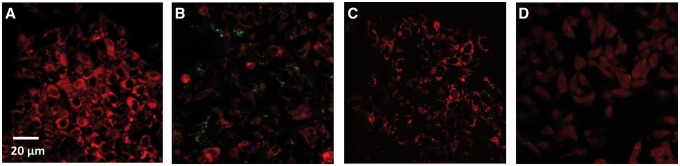
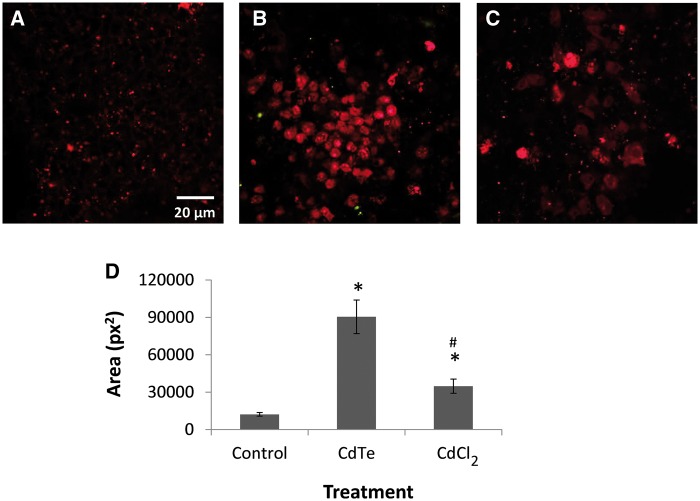
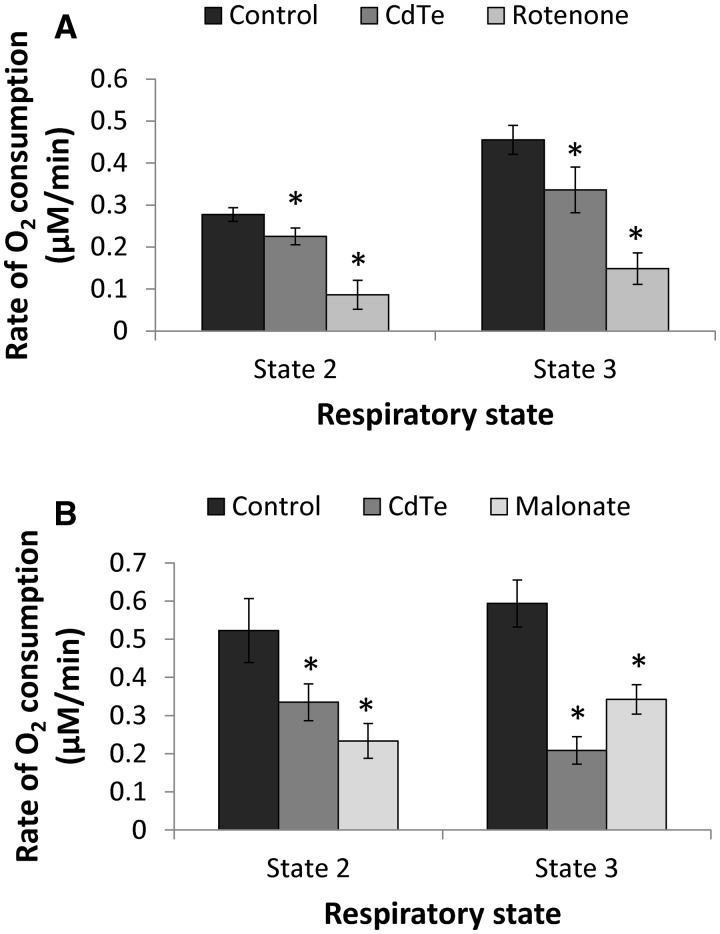
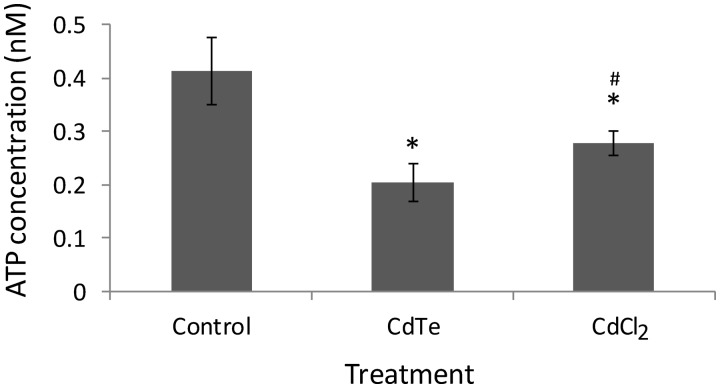
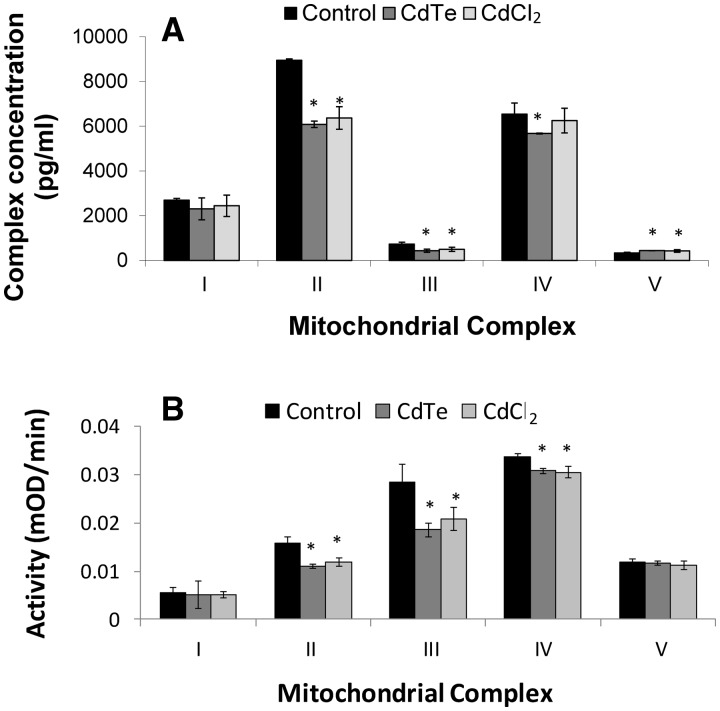
There are an increasing number of studies indicating that mitochondria are relevant targets in nanomaterial-induced toxicity. However, the underlying mechanisms by which nanoparticles (NPs) interact with these organelles and affect their functions are unknown. The aim of this study was to investigate the effects of cadmium telluride quantum dot (CdTe-QD) NPs on mitochondria in human hepatocellular carcinoma HepG2 cells. CdTe-QD treatment resulted in the enlargement of mitochondria as examined with transmission electron microscopy and confocal microscopy. CdTe-QDs appeared to associate with the isolated mitochondria as detected by their inherent fluorescence. Further analyses revealed that CdTe-QD caused disruption of mitochondrial membrane potential, increased intracellular calcium levels, impaired cellular respiration, and decreased adenosine triphosphate synthesis. The effects of CdTe-QDs on mitochondrial oxidative phosphorylation were evidenced by changes in levels and activities of the enzymes of the electron transport chain. Elevation of peroxisome proliferator-activated receptor-γ coactivator levels after CdTe-QD treatment suggested the effects of CdTe-QDs on mitochondrial biogenesis. Our results also showed that the effects of CdTe-QDs were similar or greater to those of cadmium chloride at equivalent concentrations of cadmium, suggesting that the toxic effects of CdTe-QDs were not solely due to cadmium released from the NPs. Overall, the study demonstrated that CdTe-QDs induced multifarious toxicity by causing changes in mitochondrial morphology and structure, as well as impairing their function and stimulating their biogenesis.
越来越多的研究表明,线粒体是纳米材料诱导毒性的相关靶点。然而,纳米颗粒(NPs)与这些细胞器相互作用并影响其功能的潜在机制尚不清楚。本研究的目的是探讨碲化镉量子点(CdTe-QD)NPs对人肝癌HepG2细胞中线粒体的影响。透射电子显微镜和共聚焦显微镜检查显示,CdTe-QD处理导致线粒体增大。通过其固有荧光检测发现,CdTe-QDs似乎与分离的线粒体相关联。进一步分析表明,CdTe-QD导致线粒体膜电位破坏、细胞内钙水平升高、细胞呼吸受损以及三磷酸腺苷合成减少。电子传递链酶的水平和活性变化证明了CdTe-QDs对线粒体氧化磷酸化的影响。CdTe-QD处理后过氧化物酶体增殖物激活受体-γ共激活因子水平升高,表明CdTe-QDs对线粒体生物发生有影响。我们的结果还表明,在镉浓度相等时,CdTe-QDs的影响与氯化镉相似或更大,这表明CdTe-QDs的毒性作用并非仅归因于从NPs中释放的镉。总体而言,该研究表明,CdTe-QDs通过引起线粒体形态和结构变化、损害其功能以及刺激其生物发生,诱导了多种毒性。