Agrillo Christian, Gori Simone, Beran Michael J
Department of General Psychology, University of Padova, Via Venezia 8, 35131, Padova, Italy,
Anim Cogn. 2015 Jul;18(4):895-910. doi: 10.1007/s10071-015-0860-6. Epub 2015 Mar 27.
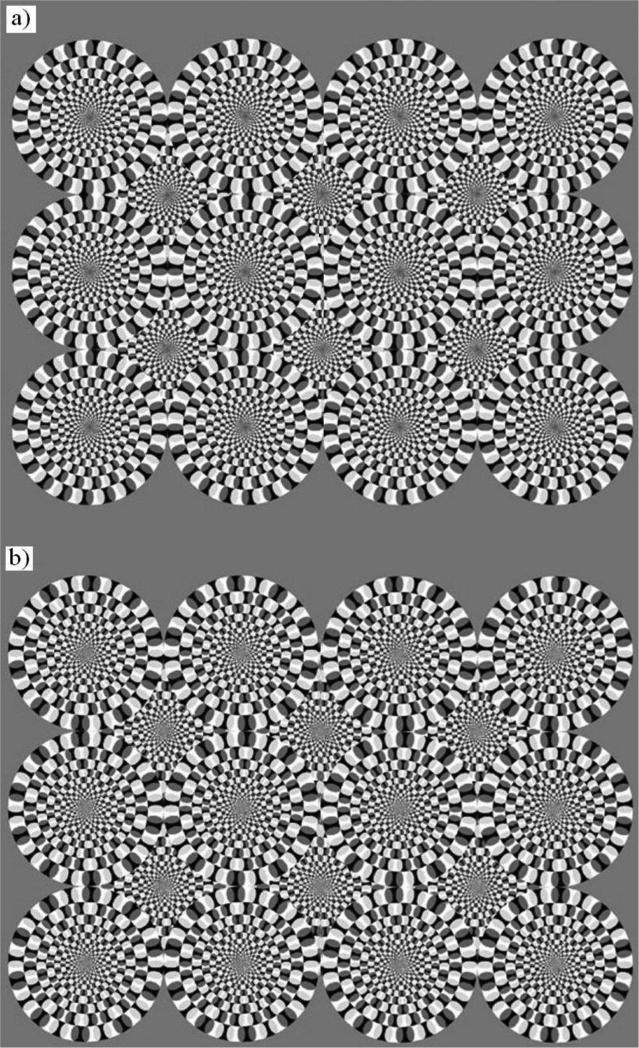
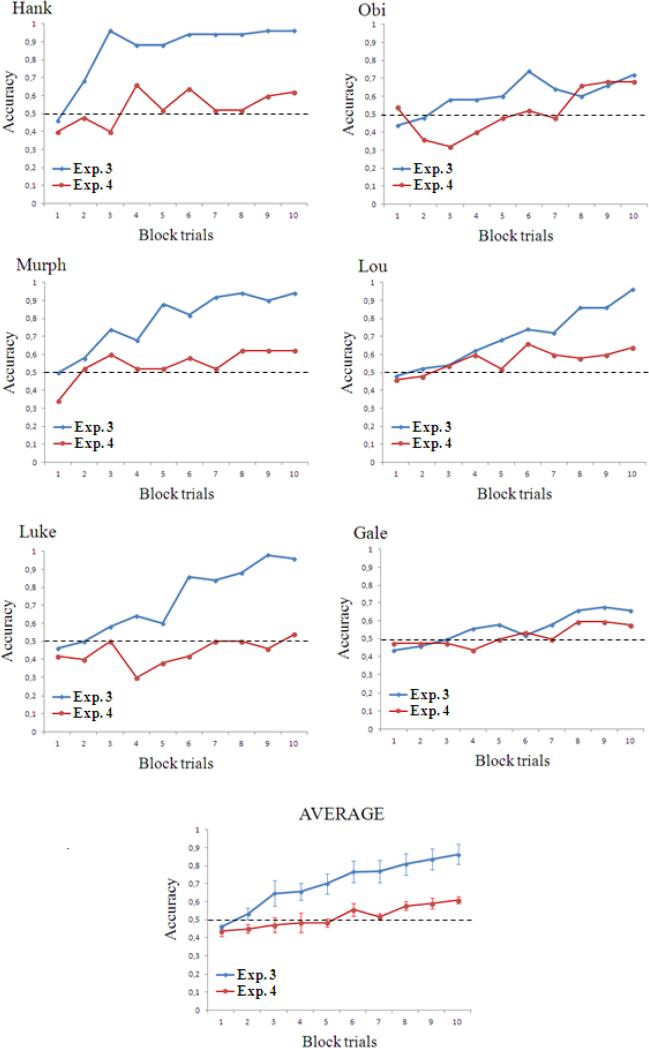
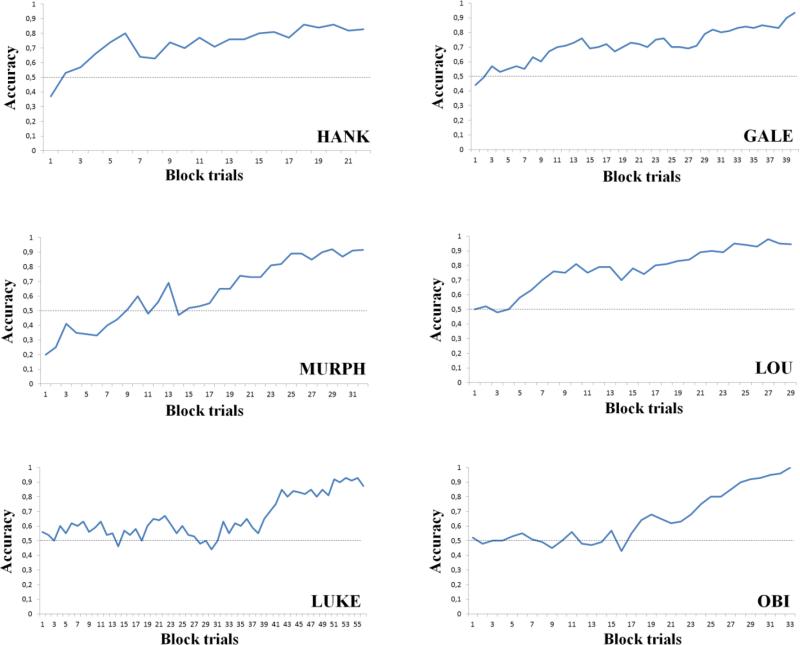
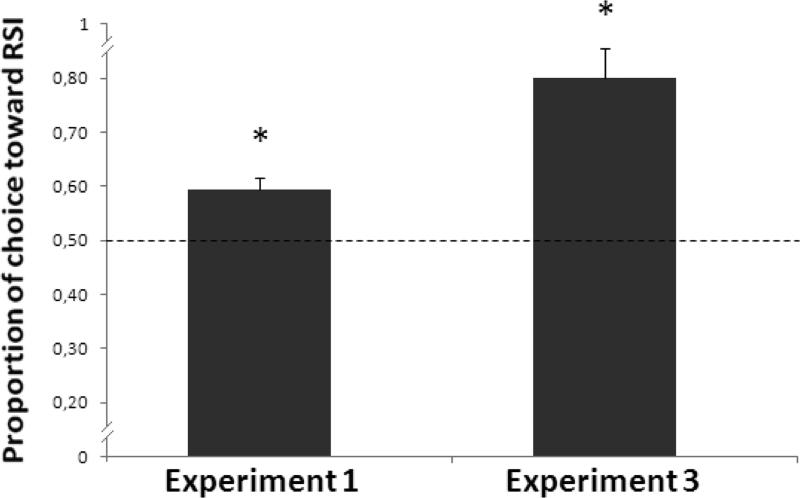
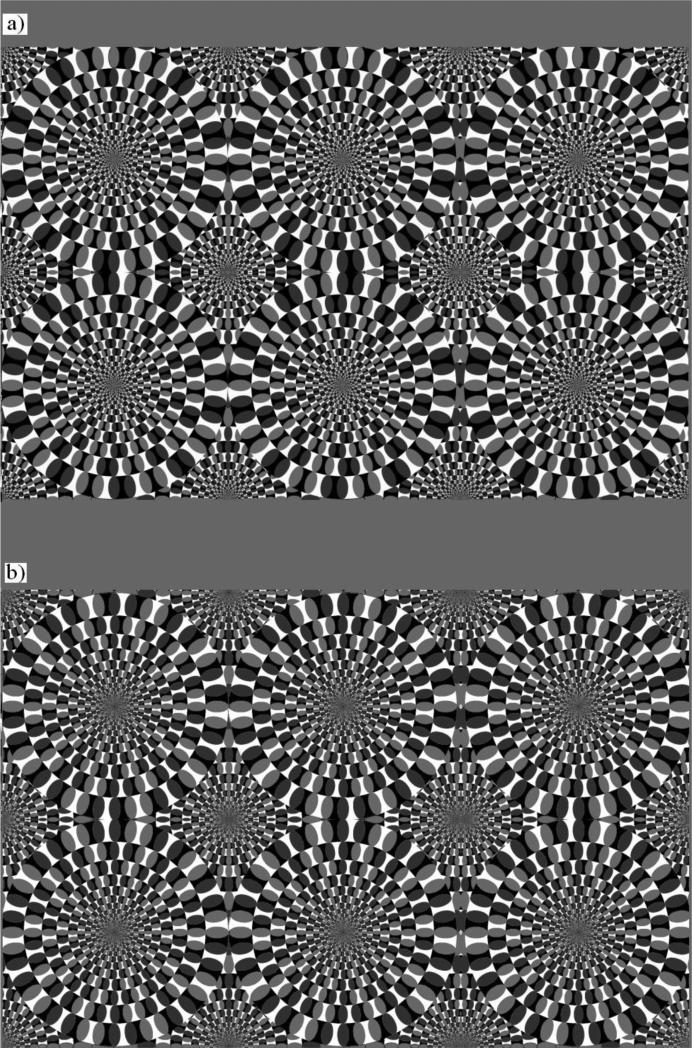
During the last decade, visual illusions have been used repeatedly to understand similarities and differences in visual perception of human and non-human animals. However, nearly all studies have focused only on illusions not related to motion perception, and to date, it is unknown whether non-human primates perceive any kind of motion illusion. In the present study, we investigated whether rhesus monkeys (Macaca mulatta) perceived one of the most popular motion illusions in humans, the Rotating Snake illusion (RSI). To this purpose, we set up four experiments. In Experiment 1, subjects initially were trained to discriminate static versus dynamic arrays. Once reaching the learning criterion, they underwent probe trials in which we presented the RSI and a control stimulus identical in overall configuration with the exception that the order of the luminance sequence was changed in a way that no apparent motion is perceived by humans. The overall performance of monkeys indicated that they spontaneously classified RSI as a dynamic array. Subsequently, we tested adult humans in the same task with the aim of directly comparing the performance of human and non-human primates (Experiment 2). In Experiment 3, we found that monkeys can be successfully trained to discriminate between the RSI and a control stimulus. Experiment 4 showed that a simple change in luminance sequence in the two arrays could not explain the performance reported in Experiment 3. These results suggest that some rhesus monkeys display a human-like perception of this motion illusion, raising the possibility that the neurocognitive systems underlying motion perception may be similar between human and non-human primates.
在过去十年中,视觉错觉被反复用于理解人类和非人类动物视觉感知的异同。然而,几乎所有研究都仅聚焦于与运动感知无关的错觉,迄今为止,尚不清楚非人类灵长类动物是否能感知任何类型的运动错觉。在本研究中,我们调查了恒河猴(猕猴)是否能感知人类中最流行的运动错觉之一,即旋转蛇错觉(RSI)。为此,我们设置了四个实验。在实验1中,首先训练受试者区分静态和动态阵列。一旦达到学习标准,它们就会接受探测试验,在试验中我们呈现了RSI和一个总体配置相同的对照刺激,但亮度序列的顺序有所改变,使得人类无法感知到明显的运动。猴子的总体表现表明它们自发地将RSI归类为动态阵列。随后,我们让成年人执行相同任务,旨在直接比较人类和非人类灵长类动物的表现(实验2)。在实验3中,我们发现猴子可以成功训练以区分RSI和对照刺激。实验4表明,两个阵列中亮度序列的简单变化无法解释实验3中报告的表现。这些结果表明,一些恒河猴对这种运动错觉表现出类似人类的感知,这增加了人类和非人类灵长类动物运动感知背后的神经认知系统可能相似的可能性。