Department of Integrative Biology, University of Colorado Denver, Campus Box 171, PO Box 173364, Denver, CO 80217 USA.
Department of Integrative Biology, University of Colorado Denver, Campus Box 171, PO Box 173364, Denver, CO 80217 USA ; Paul G. Allen School for Global Animal Health, College of Veterinary Medicine, Washington State University, Pullman, WA 99164 USA ; School of Molecular Biosciences, College of Veterinary Medicine, Washington State University, Pullman, WA 99164 USA.
Microbiome. 2015 Mar 3;3:6. doi: 10.1186/s40168-015-0069-6. eCollection 2015.
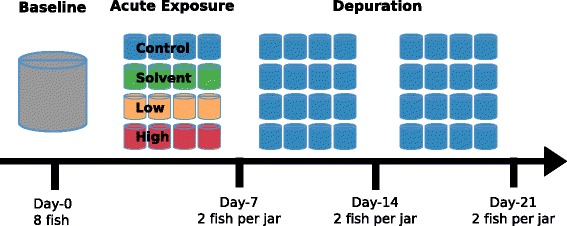
Triclosan is a widely used antimicrobial compound and emerging environmental contaminant. Although the role of the gut microbiome in health and disease is increasingly well established, the interaction between environmental contaminants and host microbiome is largely unexplored, with unknown consequences for host health. This study examined the effects of low, environmentally relevant levels of triclosan exposure on the fish gut microbiome. Developing fathead minnows (Pimephales promelas) were exposed to two low levels of triclosan over a 7-day exposure. Fish gastrointestinal tracts from exposed and control fish were harvested at four time points: immediately preceding and following the 7-day exposure and after 1 and 2 weeks of depuration.
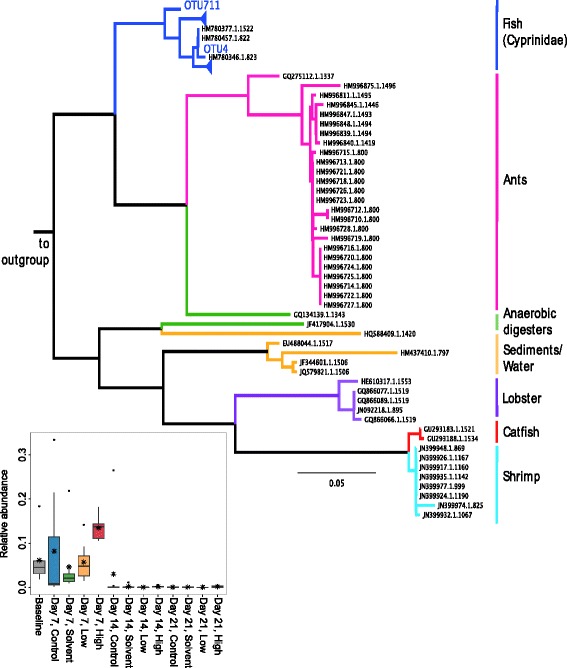
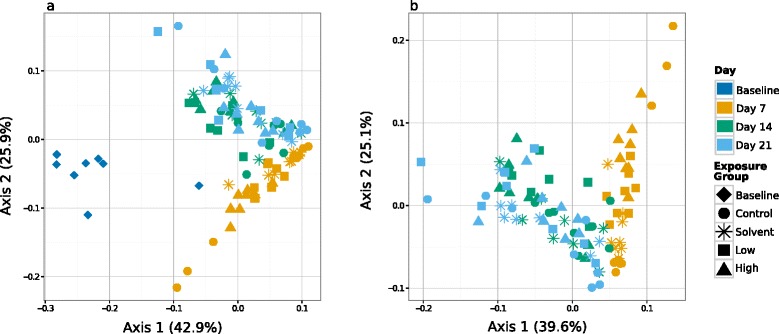
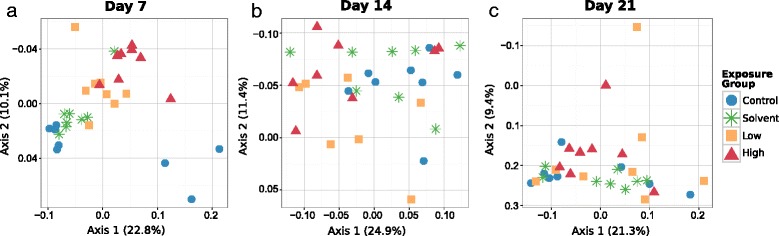
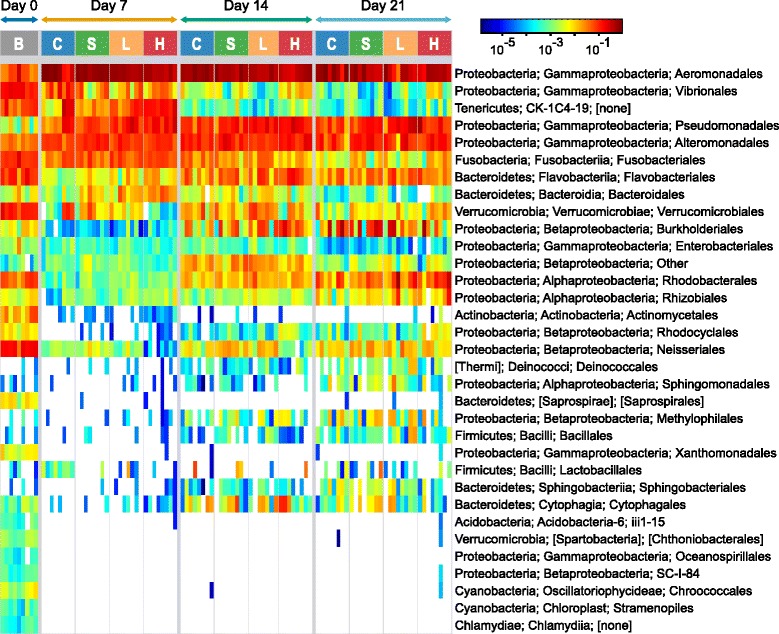
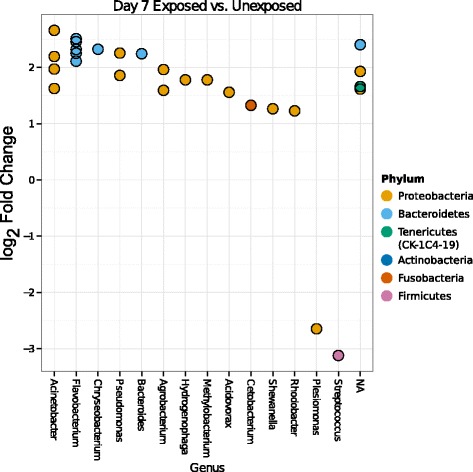
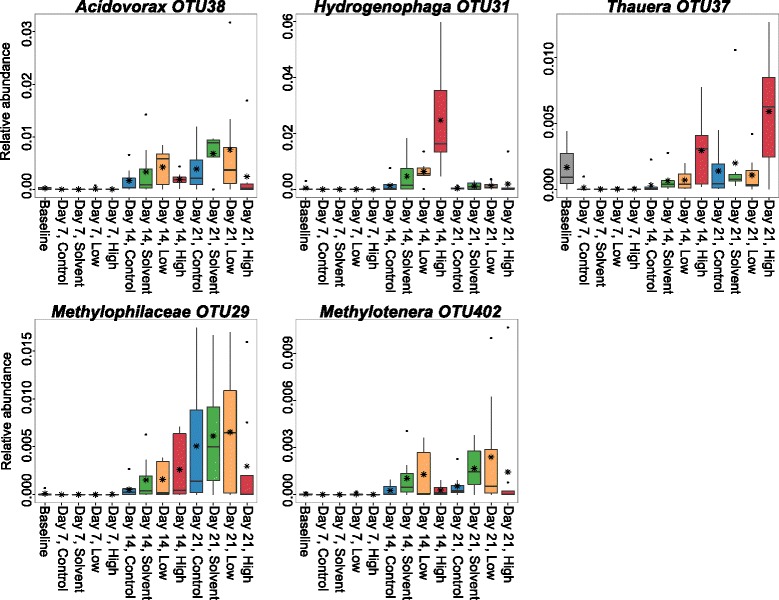
A total of 103 fish gut bacterial communities were characterized by high-throughput sequencing and analysis of the V3-V4 region of the 16S rRNA gene. By measures of both alpha and beta diversity, gut microbial communities were significantly differentiated by exposure history immediately following triclosan exposure. After 2 weeks of depuration, these differences disappear. Independent of exposure history, communities were also significantly structured by time. This first detailed census of the fathead minnow gut microbiome shows a bacterial community that is similar in composition to those of zebrafish and other freshwater fish. Among the triclosan-resilient members of this host-associated community are taxa associated with denitrification in wastewater treatment, taxa potentially able to degrade triclosan, and taxa from an unstudied host-associated candidate division.
The fathead minnow gut microbiome is rapidly and significantly altered by exposure to low, environmentally relevant levels of triclosan, yet largely recovers from this short-term perturbation over an equivalently brief time span. These results suggest that even low-level environmental exposure to a common antimicrobial compound can induce significant short-term changes to the gut microbiome, followed by restoration, demonstrating both the sensitivity and resilience of the gut flora to challenges by environmental toxicants. This short-term disruption in a developing organism may have important long-term consequences for host health. The identification of multiple taxa not often reported in the fish gut suggests that microbial nitrogen metabolism in the fish gut may be more complex than previously appreciated.
三氯生是一种广泛使用的抗菌化合物和新兴的环境污染物。尽管肠道微生物组在健康和疾病中的作用越来越被充分证实,但环境污染物与宿主微生物组之间的相互作用在很大程度上仍未得到探索,这对宿主健康的后果未知。本研究检测了低水平、环境相关浓度的三氯生暴露对鱼类肠道微生物组的影响。在为期 7 天的暴露过程中,研究人员对发育中的黑头呆鱼(Pimephales promelas)进行了两种低水平的三氯生暴露。在暴露和对照鱼的胃肠道中,分别在 7 天暴露之前和之后以及暴露后 1 周和 2 周收获 4 个时间点的样本。
通过高通量测序和 16S rRNA 基因 V3-V4 区分析,共对 103 个鱼肠道细菌群落进行了特征描述。通过 alpha 和 beta 多样性的衡量,肠道微生物群落在三氯生暴露后立即因暴露史而显著分化。在 2 周的净化后,这些差异消失了。独立于暴露史,群落也因时间而显著结构。这是对黑头呆鱼肠道微生物组的首次详细普查,显示出一种与斑马鱼和其他淡水鱼相似的组成的细菌群落。在这个宿主相关群落中,有一些三氯生抗性成员与废水处理中的反硝化作用有关,有一些潜在的能够降解三氯生的分类群,还有一些来自未被研究的宿主相关候选分类群。
暴露于低水平、环境相关浓度的三氯生会迅速且显著地改变黑头呆鱼的肠道微生物组,但在相当短的时间内,这种短期的干扰会得到很大程度的恢复。这些结果表明,即使是低水平的环境暴露于一种常见的抗菌化合物也能在肠道微生物组中引起显著的短期变化,随后恢复,这表明肠道菌群对环境毒物的挑战具有敏感性和恢复力。这种在发育中的生物体中的短期破坏可能对宿主健康产生重要的长期后果。在鱼类肠道中发现的多个通常未被报道的分类群表明,鱼类肠道中的微生物氮代谢可能比以前认为的更为复杂。