Chen Hui, Tang Qiu-Ling, Wu Xiao-Ying, Xie Li-Chun, Lin Li-Min, Ho Gu-Yu, Ma Lian
Department of Neurosurgery, The Second Affiliated Hospital of Shantou University Medical College, Shantou, Guangdong 515041, P.R. China.
Department of Pediatrics, The Second Affiliated Hospital of Shantou University Medical College, Shantou, Guangdong 515041, P.R. China.
Mol Med Rep. 2015 Jul;12(1):819-28. doi: 10.3892/mmr.2015.3528. Epub 2015 Mar 23.
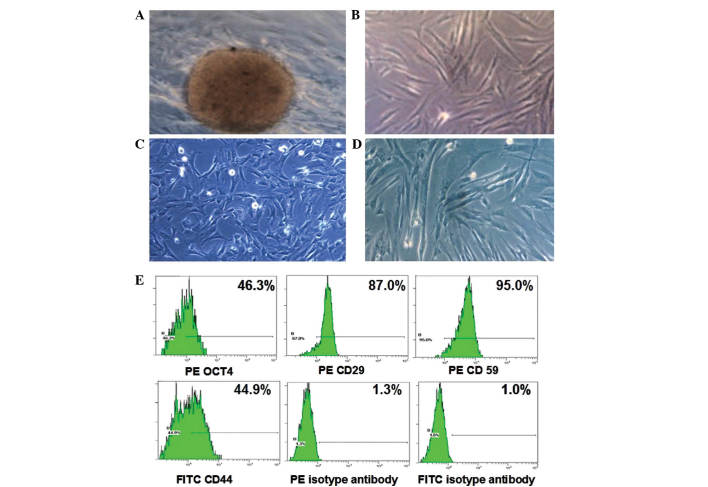
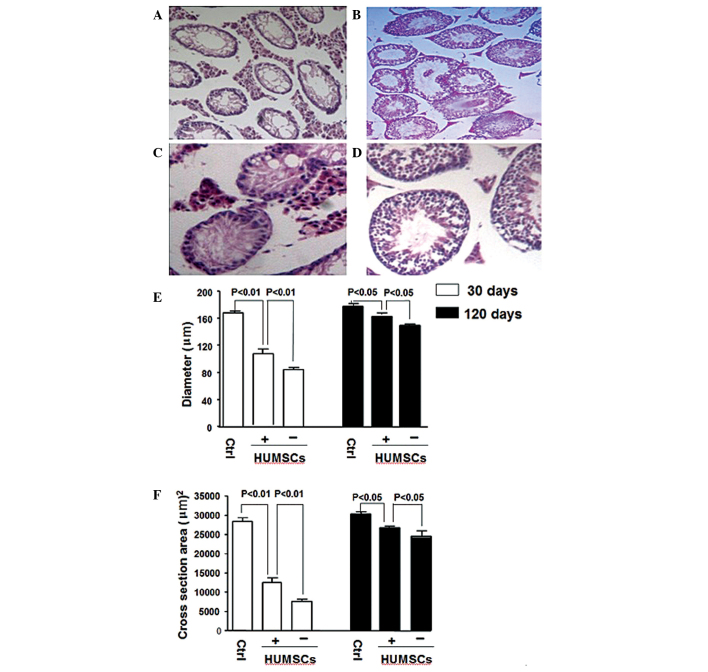
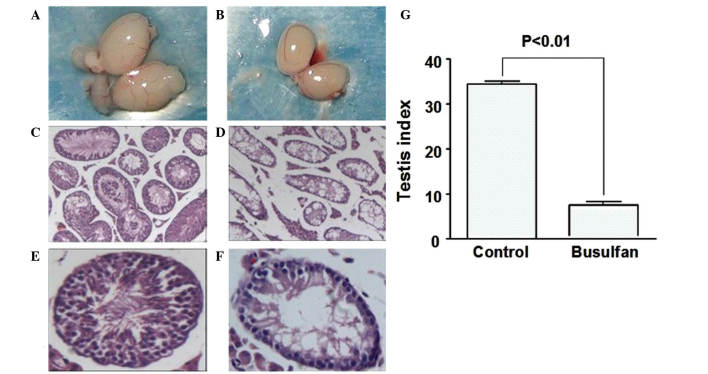
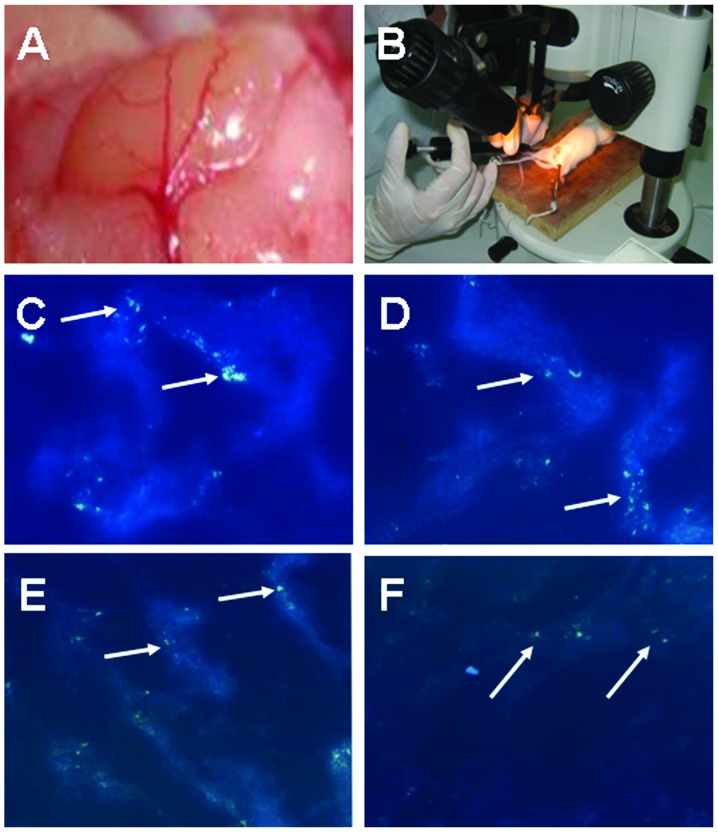
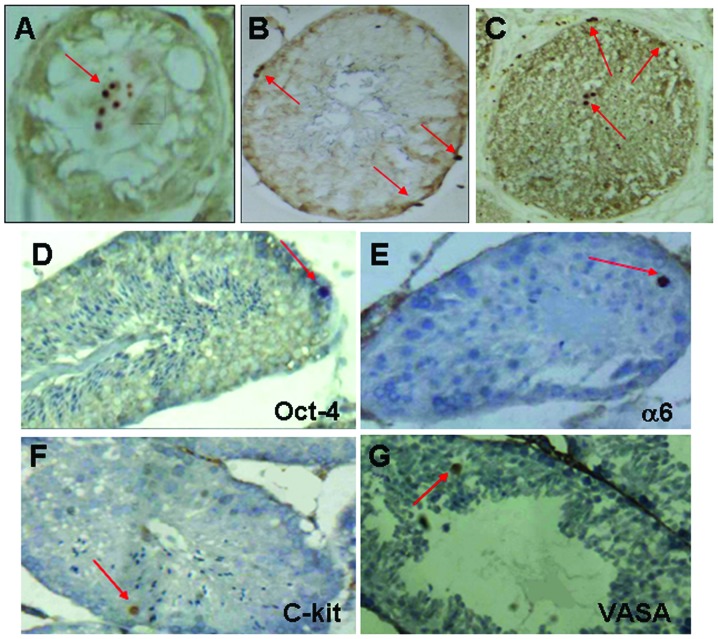
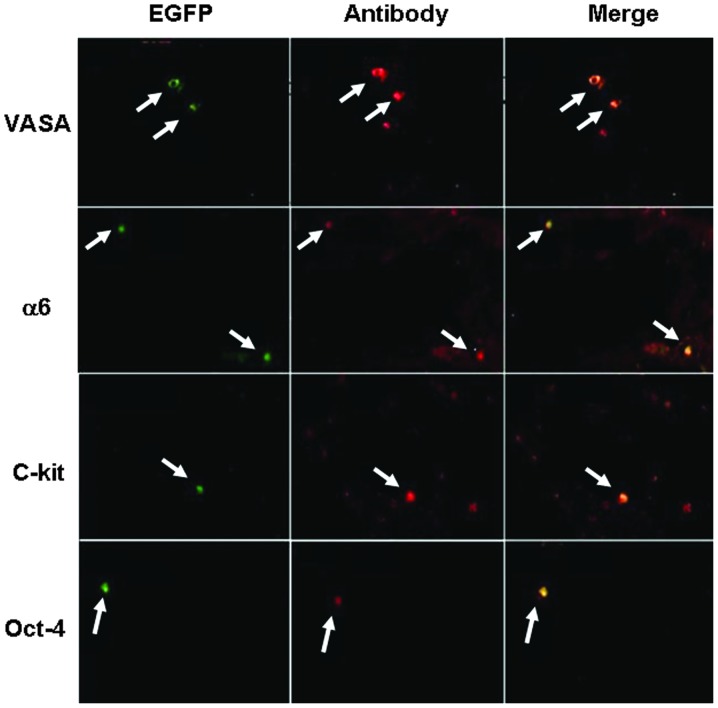
Our previous study demonstrated that human umbilical cord mesenchymal stem cells (HUMSCs) were capable of differentiation into germ cells in vitro. To assess this potential in vivo, HUMSCs were microinjected into the lumen of seminiferous tubules of immunocompetent mice, which were treated with busulfan to destroy endogenous spermatogenesis. Bromodeoxyuridine labeling studies demonstrated that HUMSCs survived in the tubule for at least 120 days, exhibited a round cell shape typical of proliferating or differentiating germ cells, migrated to the basement of the tubule, where proliferating spermatogonia reside and returned to the luminal compartment, where differentiating spermatids and spermatozoa reside. The migration pattern resembled that of germ cell development in vivo. Immunohistochemical and colocalization studies revealed that transplanted HUMSCs expressed the germ cell markers octamer-binding transcription factor 4, α6 integrin, C-kit and VASA, confirming the germ cell differentiation. In addition, it was observed that tubules transplanted with HUMSCs exhibited marked improvement in the histological features damaged by the chemotherapeutic busulfan, as judged by morphology and quantitative histology. Taken together, these data demonstrated the capacity of HUMSCs to form germ cells in the testes and to repair testicular tissue. These findings suggest a potential utility of HUMSCs to treat the infertility and testicular insufficiency caused by cancer therapeutics.
我们之前的研究表明,人脐带间充质干细胞(HUMSCs)在体外能够分化为生殖细胞。为了在体内评估这种潜能,将HUMSCs显微注射到免疫功能正常小鼠的生精小管腔内,这些小鼠用白消安处理以破坏内源性精子发生。溴脱氧尿苷标记研究表明,HUMSCs在小管中存活至少120天,呈现出增殖或分化生殖细胞典型的圆形细胞形态,迁移到增殖精原细胞所在的小管基底,并回到分化精子细胞和精子所在的管腔隔室。这种迁移模式类似于体内生殖细胞的发育。免疫组织化学和共定位研究显示,移植的HUMSCs表达生殖细胞标志物八聚体结合转录因子4、α6整合素、C-试剂盒和VASA,证实了生殖细胞分化。此外,观察到移植了HUMSCs的小管在组织学特征上因化疗药物白消安造成的损伤有显著改善,这通过形态学和定量组织学判断得出。综上所述,这些数据证明了HUMSCs在睾丸中形成生殖细胞以及修复睾丸组织的能力。这些发现提示HUMSCs在治疗由癌症治疗引起的不孕症和睾丸功能不全方面具有潜在用途。