
比较基因组分析揭示了从头核苷酸生物合成对酿酒酵母毒力的关键作用。
Comparative genomic analysis reveals a critical role of de novo nucleotide biosynthesis for Saccharomyces cerevisiae virulence.
作者信息
Pérez-Torrado Roberto, Llopis Silvia, Perrone Benedetta, Gómez-Pastor Rocío, Hube Bernhard, Querol Amparo
机构信息
Instituto de Agroquímica y Tecnología de los Alimentos, CSIC, Valencia, Spain.
Instituto de Agroquímica y Tecnología de los Alimentos, CSIC, Valencia, Spain; Department of Agricultural, Forest and Food Sciences Microbiology and Food Technologies Unit University of Torino, Torino, Italy.
出版信息
PLoS One. 2015 Mar 27;10(3):e0122382. doi: 10.1371/journal.pone.0122382. eCollection 2015.
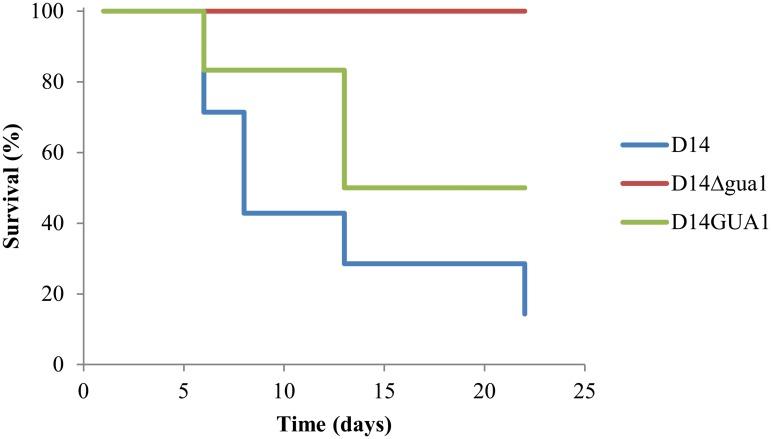
In recent years, the number of human infection cases produced by the food related species Saccharomyces cerevisiae has increased. Whereas many strains of this species are considered safe, other 'opportunistic' strains show a high degree of potential virulence attributes and can cause infections in immunocompromised patients. Here we studied the genetic characteristics of selected opportunistic strains isolated from dietary supplements and also from patients by array comparative genomic hybridization. Our results show increased copy numbers of IMD genes in opportunistic strains, which are implicated in the de novo biosynthesis of the purine nucleotides pathway. The importance of this pathway for virulence of S. cerevisiae was confirmed by infections in immunodeficient murine models using a GUA1 mutant, a key gene of this pathway. We show that exogenous guanine, an end product of this pathway in its triphosphorylated form, increases the survival of yeast strains in ex vivo blood infections. Finally, we show the importance of the DNA damage response that activates dNTP biosynthesis in yeast cells during ex vivo blood infections. We conclude that opportunistic yeasts may use an enhanced de novo biosynthesis of the purine nucleotides pathway to increase survival and favor infections in the host.
近年来,与食品相关的酿酒酵母导致的人类感染病例数量有所增加。尽管该物种的许多菌株被认为是安全的,但其他“机会性”菌株表现出高度的潜在毒力属性,可导致免疫功能低下的患者感染。在这里,我们通过阵列比较基因组杂交研究了从膳食补充剂和患者中分离出的选定机会性菌株的遗传特征。我们的结果表明,机会性菌株中IMD基因的拷贝数增加,这些基因与嘌呤核苷酸途径的从头生物合成有关。使用该途径的关键基因GUA1突变体在免疫缺陷小鼠模型中进行感染,证实了该途径对酿酒酵母毒力的重要性。我们表明,外源鸟嘌呤(该途径三磷酸化形式的终产物)可提高酵母菌株在体外血液感染中的存活率。最后,我们展示了DNA损伤反应在体外血液感染期间激活酵母细胞中dNTP生物合成的重要性。我们得出结论,机会性酵母可能利用增强的嘌呤核苷酸途径从头生物合成来提高存活率并促进在宿主体内的感染。


 Zotero 插件