Tang Yiting, Geng Yangyang, Luo Judong, Shen Wenhao, Zhu Wei, Meng Cuicui, Li Ming, Zhou Xifa, Zhang Shuyu, Cao Jianping
1] School of Radiation Medicine and Protection and Jiangsu Provincial Key Laboratory of Radiation Medicine and Protection, Medical College of Soochow University, Suzhou 215123, China [2] Collaborative Innovation Center of Radiation Medicine of Jiangsu Higher Education Institutions and School for Radiological and Interdisciplinary Sciences (RAD-X), Soochow University, Suzhou 215123, China [3] Department of Radiotherapy, Changzhou Tumor Hospital, Soochow University, Changzhou. 213001, China.
1] School of Radiation Medicine and Protection and Jiangsu Provincial Key Laboratory of Radiation Medicine and Protection, Medical College of Soochow University, Suzhou 215123, China [2] Collaborative Innovation Center of Radiation Medicine of Jiangsu Higher Education Institutions and School for Radiological and Interdisciplinary Sciences (RAD-X), Soochow University, Suzhou 215123, China.
Sci Rep. 2015 Mar 30;5:9476. doi: 10.1038/srep09476.
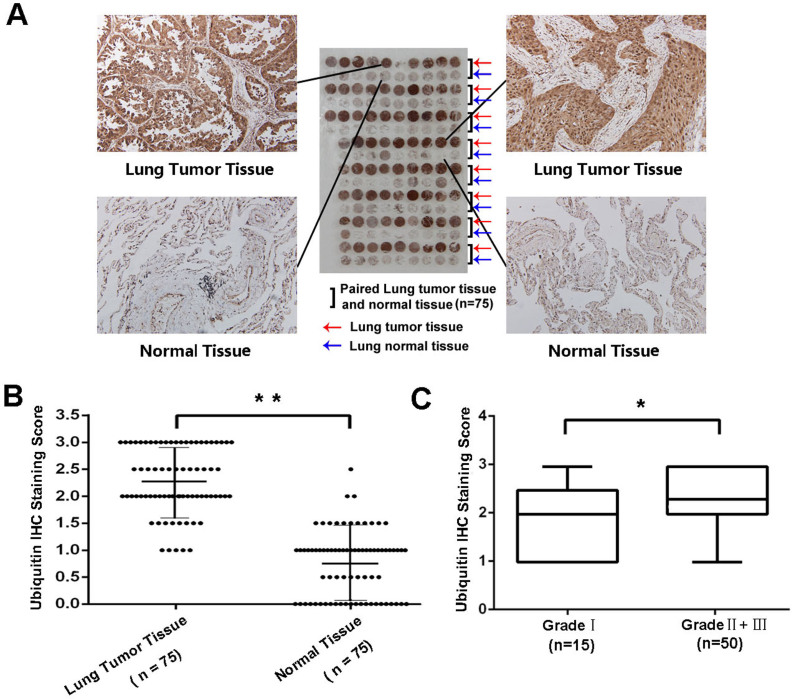
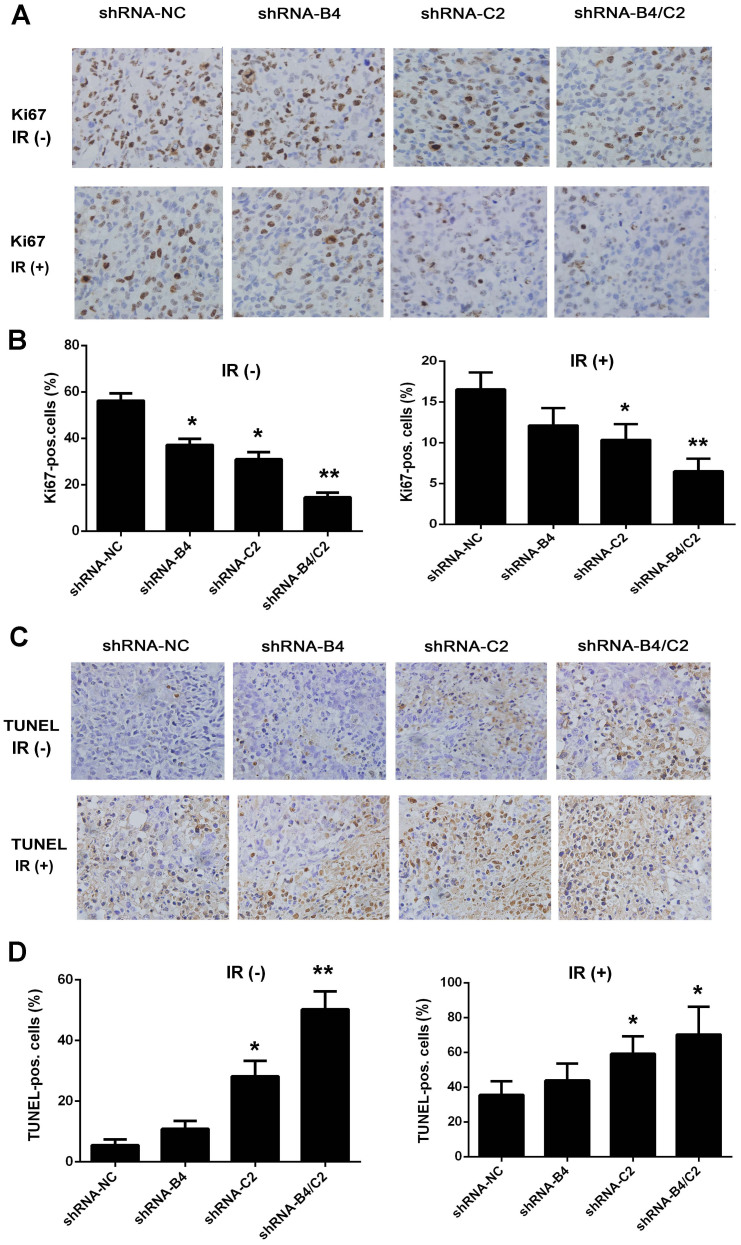
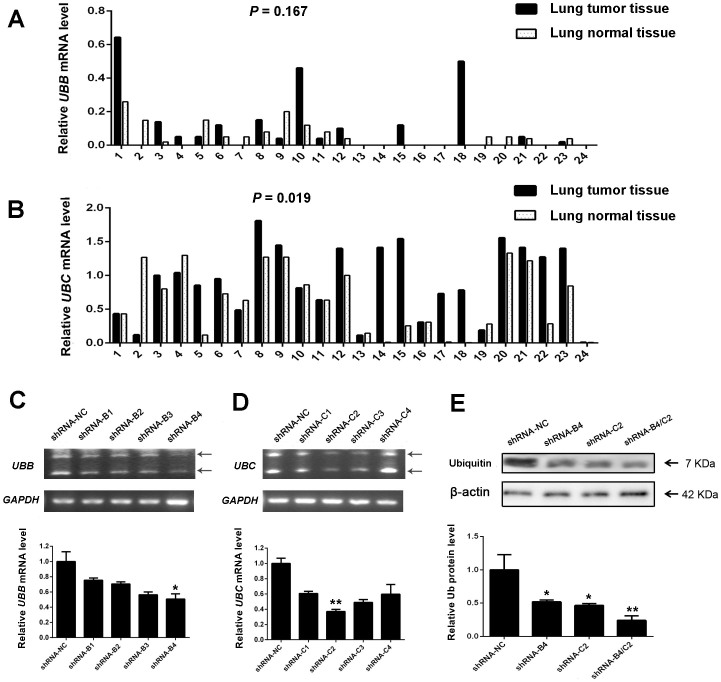
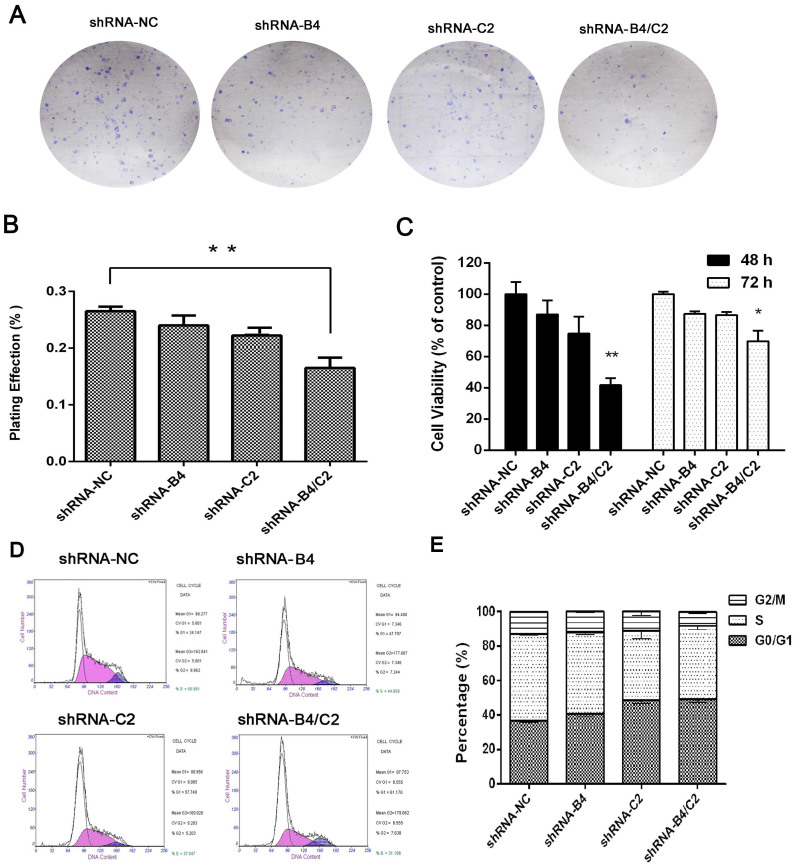
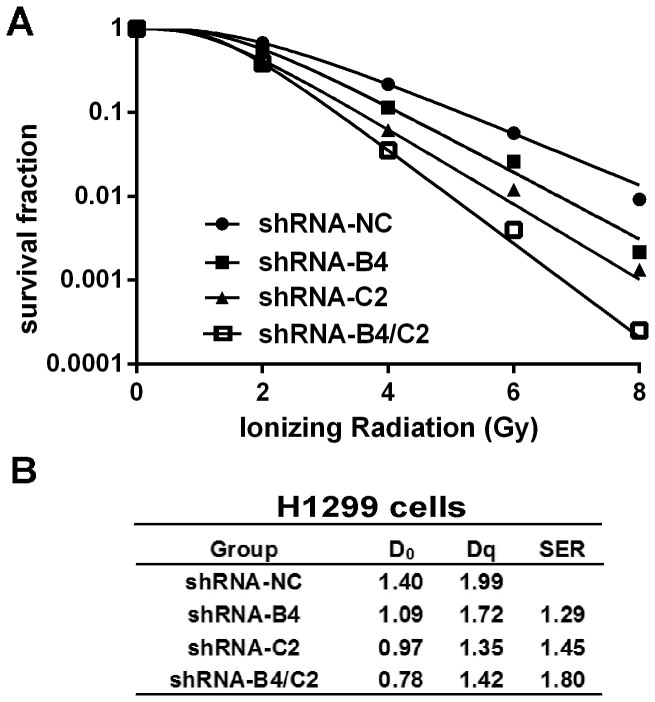
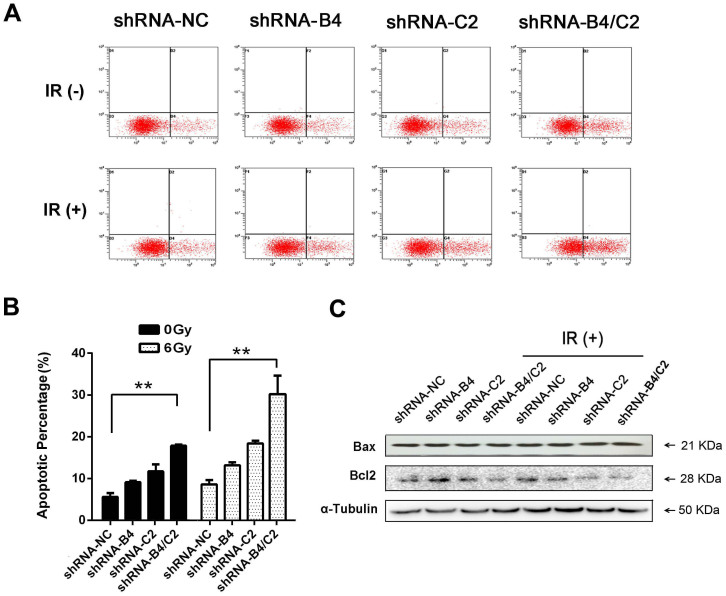
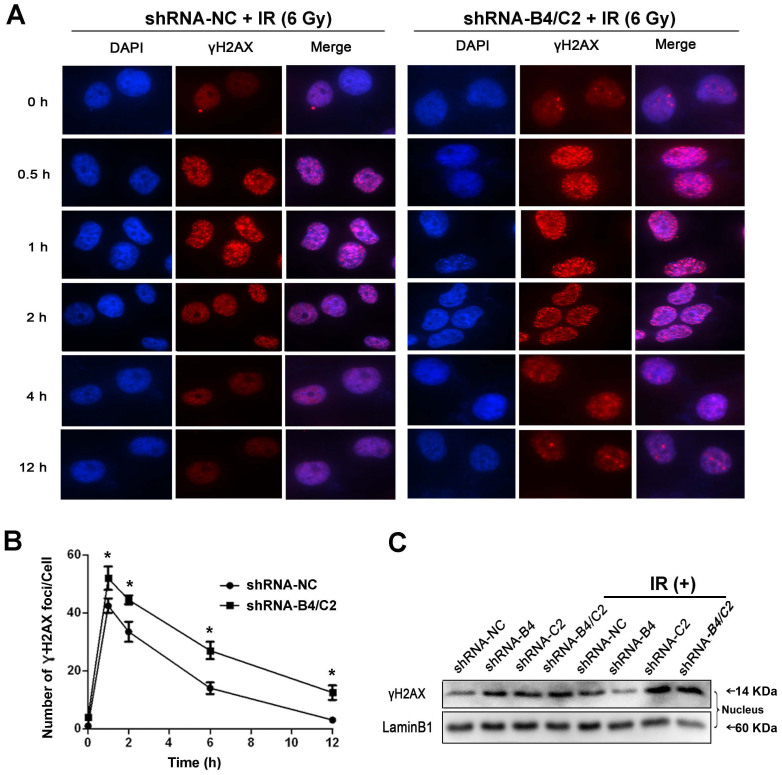
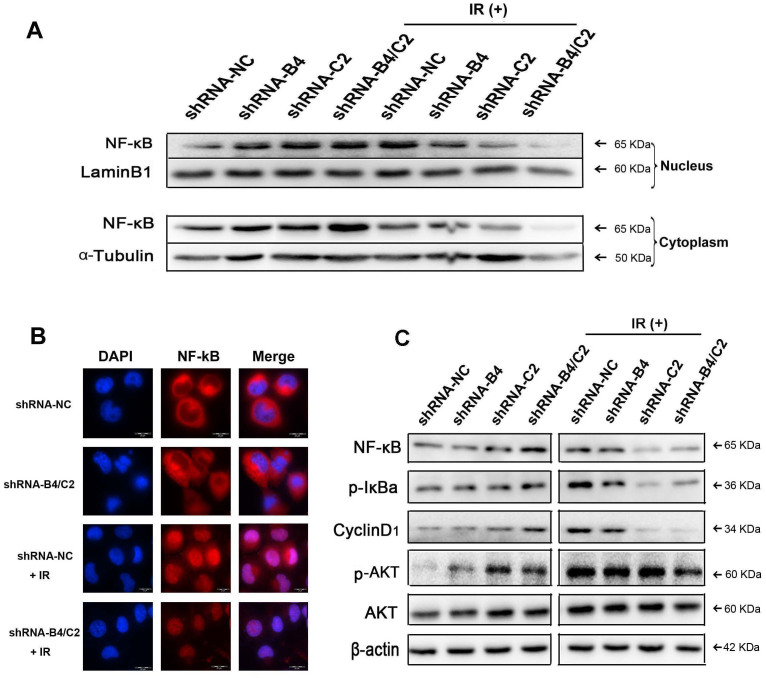
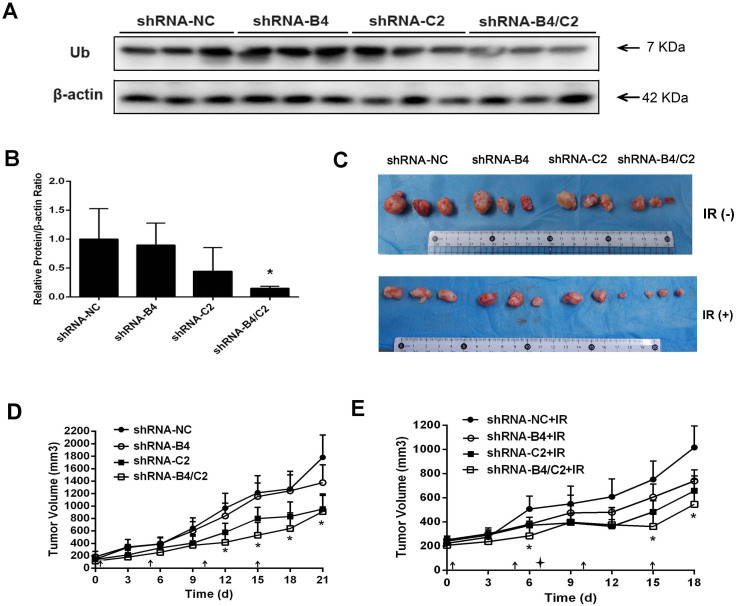
Radioresistance has been an important factor in restricting efficacy of radiotherapy for non-small cell lung cancer (NSCLC) patients and new approaches to inhibit cancer growth and sensitize irradiation were warranted. Despite the important role of ubiquitin/proteasome system (UPS) during cancer progression and treatment, the expression and biological role of ubiquitin (Ub) in human NSCLC has not been characterized. In this study, we found that ubiquitin was significantly overexpressed in 75 NSCLC tissues, compared to their respective benign tissues by immunohistochemistry (P < 0.0001). Knock-down of ubiquitin by mixed shRNAs targeting its coding genes ubiquitin B (UBB) and ubiquitin C (UBC) suppressed the growth and increased the radiosensitivity in NSCLC H1299 cells. Apoptosis and γ H2AX foci induced by X-ray irradiation were enhanced by knock-down of ubiquitin. Western blot and immunostaining showed that knock-down of ubiquitin decreased the expression and translocation of NF-κB to the nucleus by reduced phospho-IκBα after irradiation. Suppression of ubiquitin decreased the proliferation and radioresistance of H1299 transplanted xenografts in nude mice by promoting apoptosis. Taken together, our results demonstrate the critical role of ubiquitin in NSCLC proliferation and radiosensitivity. Targeting ubiquitin may serve as a potentially important and novel approach for NSCLC prevention and therapy.
放射抗性一直是限制非小细胞肺癌(NSCLC)患者放疗疗效的重要因素,因此需要新的方法来抑制癌症生长并提高放疗敏感性。尽管泛素/蛋白酶体系统(UPS)在癌症进展和治疗过程中发挥着重要作用,但泛素(Ub)在人类NSCLC中的表达和生物学作用尚未得到明确。在本研究中,通过免疫组织化学方法,我们发现与相应的良性组织相比,75例NSCLC组织中泛素显著过表达(P < 0.0001)。通过靶向泛素编码基因泛素B(UBB)和泛素C(UBC)的混合短发夹RNA(shRNAs)敲低泛素,可抑制NSCLC H1299细胞的生长并提高其放射敏感性。敲低泛素可增强X射线照射诱导的细胞凋亡和γH2AX焦点。蛋白质免疫印迹和免疫染色显示,敲低泛素可通过降低照射后磷酸化IκBα的水平,减少NF-κB的表达及其向细胞核的转位。抑制泛素可通过促进凋亡降低H1299移植裸鼠异种移植物的增殖和放射抗性。综上所述,我们的结果证明了泛素在NSCLC增殖和放射敏感性中的关键作用。靶向泛素可能成为NSCLC预防和治疗的一种潜在重要且新颖的方法。