Blouw Barbara, Patel Manishha, Iizuka Shinji, Abdullah Christopher, You Weon Kyoo, Huang Xiayu, Li Jian-Liang, Diaz Begoña, Stallcup William B, Courtneidge Sara A
Tumor Microenvironment and Metastasis Program, NCI Cancer Center, Sanford-Burnham Medical Research Institute, La Jolla, California, United States of America.
PLoS One. 2015 Mar 31;10(3):e0121003. doi: 10.1371/journal.pone.0121003. eCollection 2015.
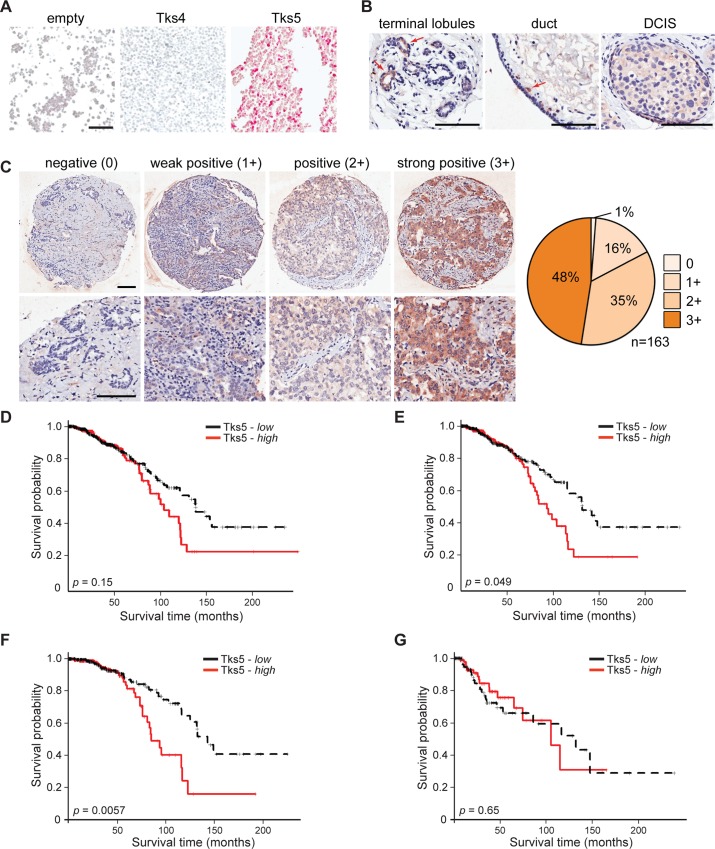
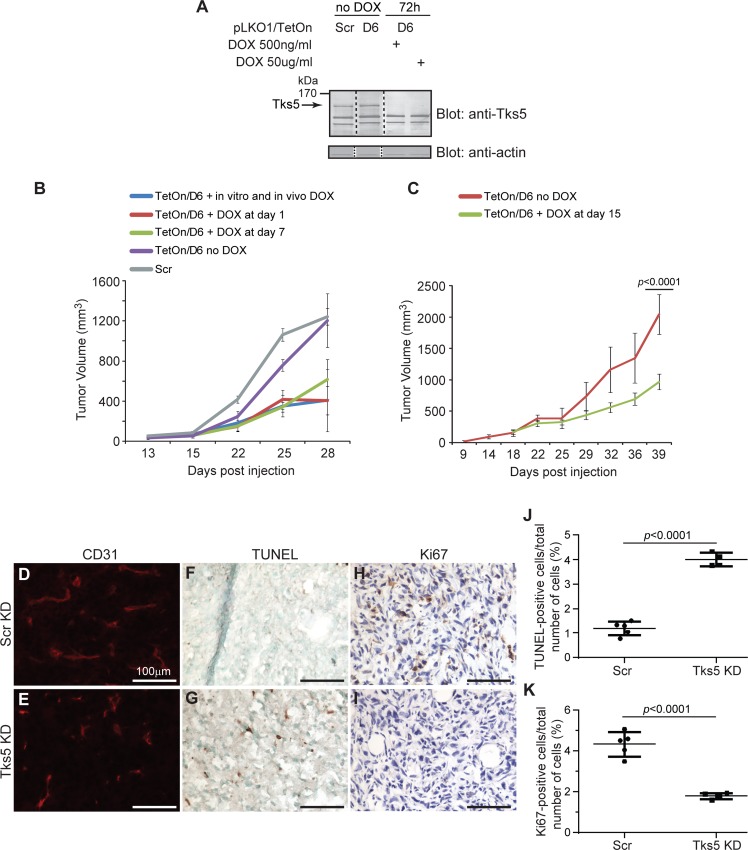
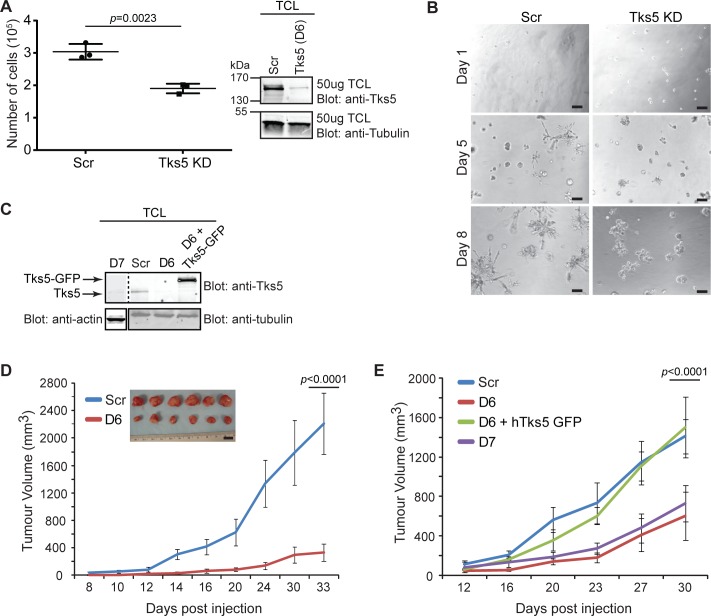
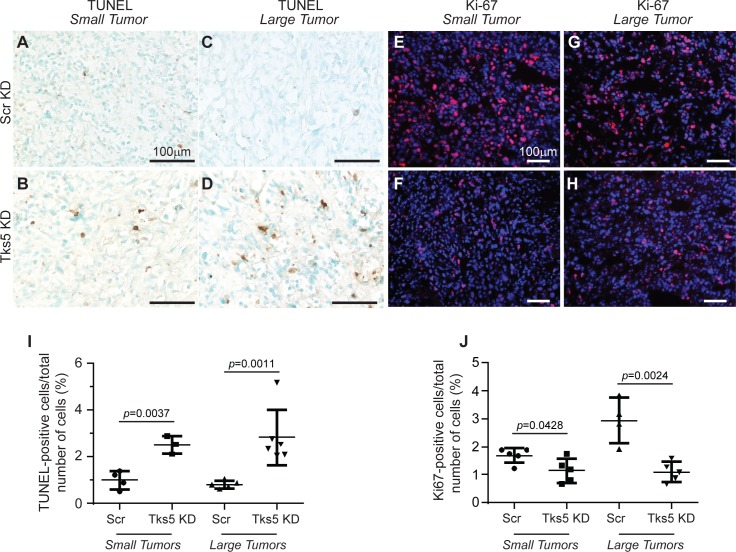
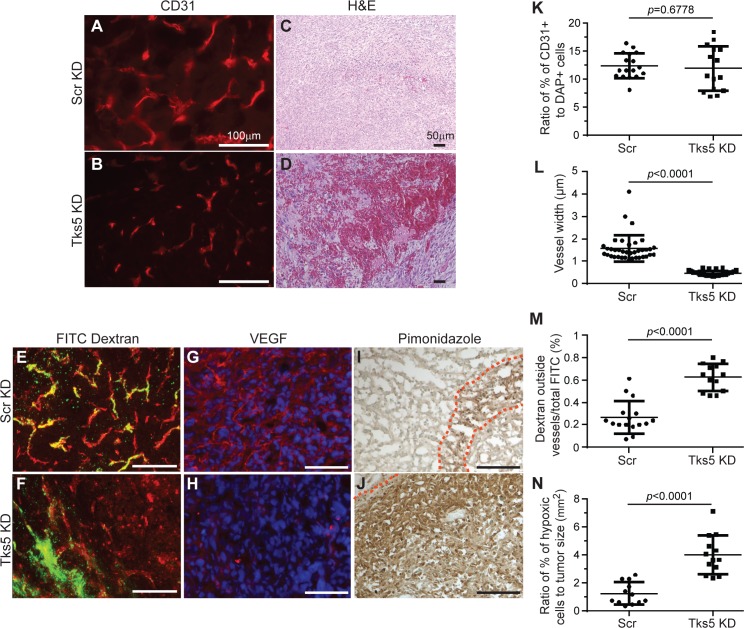
The ability of cancer cells to invade underlies metastatic progression. One mechanism by which cancer cells can become invasive is through the formation of structures called invadopodia, which are dynamic, actin-rich membrane protrusions that are sites of focal extracellular matrix degradation. While there is a growing consensus that invadopodia are instrumental in tumor metastasis, less is known about whether they are involved in tumor growth, particularly in vivo. The adaptor protein Tks5 is an obligate component of invadopodia, and is linked molecularly to both actin-remodeling proteins and pericellular proteases. Tks5 appears to localize exclusively to invadopodia in cancer cells, and in vitro studies have demonstrated its critical requirement for the invasive nature of these cells, making it an ideal surrogate to investigate the role of invadopodia in vivo. In this study, we examined how Tks5 contributes to human breast cancer progression. We used immunohistochemistry and RNA sequencing data to evaluate Tks5 expression in clinical samples, and we characterized the role of Tks5 in breast cancer progression using RNA interference and orthotopic implantation in SCID-Beige mice. We found that Tks5 is expressed to high levels in approximately 50% of primary invasive breast cancers. Furthermore, high expression was correlated with poor outcome, particularly in those patients with late relapse of stage I/II disease. Knockdown of Tks5 expression in breast cancer cells resulted in decreased growth, both in 3D in vitro cultures and in vivo. Moreover, our data also suggest that Tks5 is important for the integrity and permeability of the tumor vasculature. Together, this work establishes an important role for Tks5 in tumor growth in vivo, and suggests that invadopodia may play broad roles in tumor progression.
癌细胞的侵袭能力是转移进展的基础。癌细胞能够变得具有侵袭性的一种机制是通过形成称为侵袭伪足的结构,侵袭伪足是动态的、富含肌动蛋白的膜突出物,是细胞外基质局部降解的部位。虽然越来越多的人认为侵袭伪足在肿瘤转移中起作用,但对于它们是否参与肿瘤生长,尤其是在体内,了解较少。衔接蛋白Tks5是侵袭伪足的必需成分,在分子水平上与肌动蛋白重塑蛋白和细胞周围蛋白酶都有关联。Tks5似乎仅定位于癌细胞中的侵袭伪足,体外研究已经证明它对于这些细胞的侵袭特性至关重要,使其成为研究侵袭伪足在体内作用的理想替代物。在这项研究中,我们研究了Tks5如何促进人类乳腺癌进展。我们使用免疫组织化学和RNA测序数据来评估临床样本中Tks5的表达,并使用RNA干扰和在SCID-米色小鼠中的原位植入来表征Tks5在乳腺癌进展中的作用。我们发现,在大约50%的原发性浸润性乳腺癌中,Tks5表达水平较高。此外,高表达与不良预后相关,尤其是在那些I/II期疾病晚期复发的患者中。在乳腺癌细胞中敲低Tks5表达导致在体外三维培养和体内生长均减少。此外,我们的数据还表明,Tks5对于肿瘤脉管系统的完整性和通透性很重要。总之,这项工作确立了Tks5在体内肿瘤生长中的重要作用,并表明侵袭伪足可能在肿瘤进展中发挥广泛作用。