Department of Oncology, Kagoshima University Graduate School of Medical and Dental Sciences, 8-35-1, Sakuragaoka, Kagoshima 890-8544, Japan ; Department of Space Environmental Medicine, Kagoshima University Graduate School of Medical and Dental Sciences, 8-35-1, Sakuragaoka, Kagoshima 890-8544, Japan ; Graduate Center of Toxicology and Markey Cancer Center, University of Kentucky College of Medicine, Lexington, Kentucky 40506, USA.
Department of Medical Biotechnology and Laboratory Science, College of Medicine, Chang Gung University, Kwei-Shan, Tao-Yuan 333, Taiwan.
J Clin Biochem Nutr. 2015 Jan;56(1):1-7. doi: 10.3164/jcbn.14-42. Epub 2014 Dec 23.
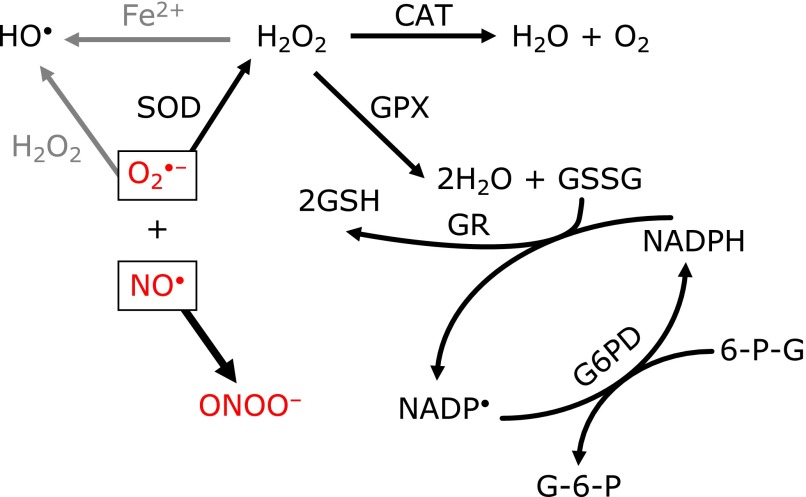
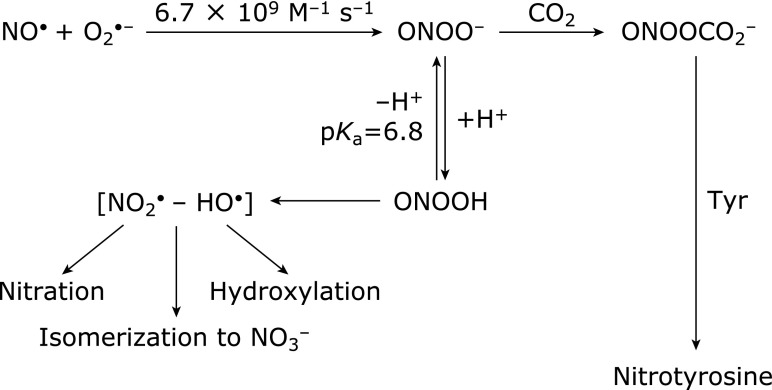
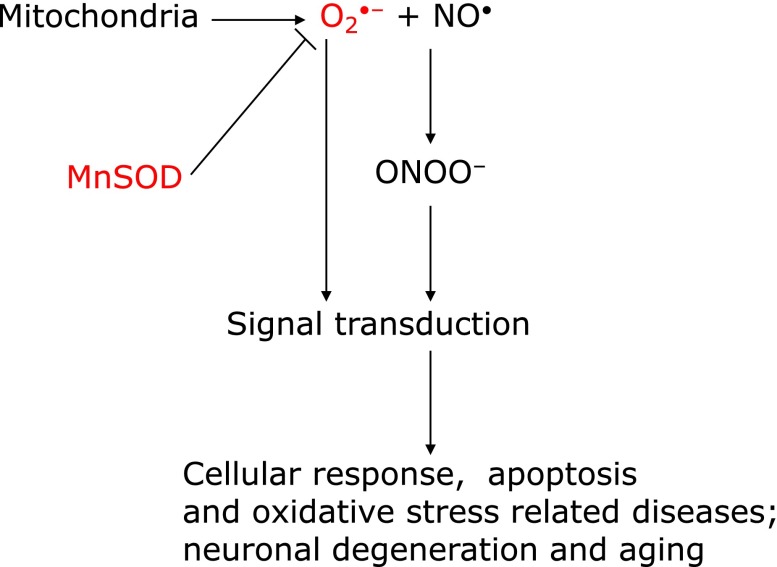
Fridovich identified CuZnSOD in 1969 and manganese superoxide dismutase (MnSOD) in 1973, and proposed "the Superoxide Theory," which postulates that superoxide (O2 (•-)) is the origin of most reactive oxygen species (ROS) and that it undergoes a chain reaction in a cell, playing a central role in the ROS producing system. Increased oxidative stress on an organism causes damage to cells, the smallest constituent unit of an organism, which can lead to the onset of a variety of chronic diseases, such as Alzheimer's, Parkinson's, amyotrophic lateral sclerosis and other neurological diseases caused by abnormalities in biological defenses or increased intracellular reactive oxygen levels. Oxidative stress also plays a role in aging. Antioxidant systems, including non-enzyme low-molecular-weight antioxidants (such as, vitamins A, C and E, polyphenols, glutathione, and coenzyme Q10) and antioxidant enzymes, fight against oxidants in cells. Superoxide is considered to be a major factor in oxidant toxicity, and mitochondrial MnSOD enzymes constitute an essential defense against superoxide. Mitochondria are the major source of superoxide. The reaction of superoxide generated from mitochondria with nitric oxide is faster than SOD catalyzed reaction, and produces peroxynitrite. Thus, based on research conducted after Fridovich's seminal studies, we now propose a modified superoxide theory; i.e., superoxide is the origin of reactive oxygen and nitrogen species (RONS) and, as such, causes various redox related diseases and aging.
弗里多维奇于 1969 年鉴定出 CuZnSOD,于 1973 年鉴定出锰过氧化物歧化酶(MnSOD),并提出了“超氧化物理论”,该理论假定超氧化物(O2(•-))是大多数活性氧(ROS)的来源,并且在细胞中发生链式反应,在 ROS 产生系统中发挥核心作用。生物体的氧化应激增加会导致细胞损伤,细胞是生物体的最小组成单位,这可能导致各种慢性疾病的发作,如阿尔茨海默病、帕金森病、肌萎缩侧索硬化症和其他由生物防御异常或细胞内活性氧水平增加引起的神经系统疾病。氧化应激也与衰老有关。抗氧化系统包括非酶低分子量抗氧化剂(如维生素 A、C 和 E、多酚、谷胱甘肽和辅酶 Q10)和抗氧化酶,在细胞中与氧化剂作斗争。超氧化物被认为是氧化剂毒性的主要因素,而线粒体 MnSOD 酶构成了对抗超氧化物的重要防御。线粒体是超氧化物的主要来源。线粒体产生的超氧化物与一氧化氮的反应速度快于 SOD 催化反应,产生过氧亚硝酸盐。因此,基于弗里多维奇开创性研究之后的研究,我们现在提出了一个改良的超氧化物理论;即超氧化物是活性氧和氮物质(RONS)的来源,因此导致各种氧化还原相关疾病和衰老。