Kitada Munehiro, Xu Jing, Ogura Yoshio, Monno Itaru, Koya Daisuke
Department of Diabetology and Endocrinology, Kanazawa Medical University, Uchinada, Japan.
Division of Anticipatory Molecular Food Science and Technology, Medical Research Institute, Kanazawa Medical University, Uchinada, Japan.
Front Physiol. 2020 Jul 14;11:755. doi: 10.3389/fphys.2020.00755. eCollection 2020.
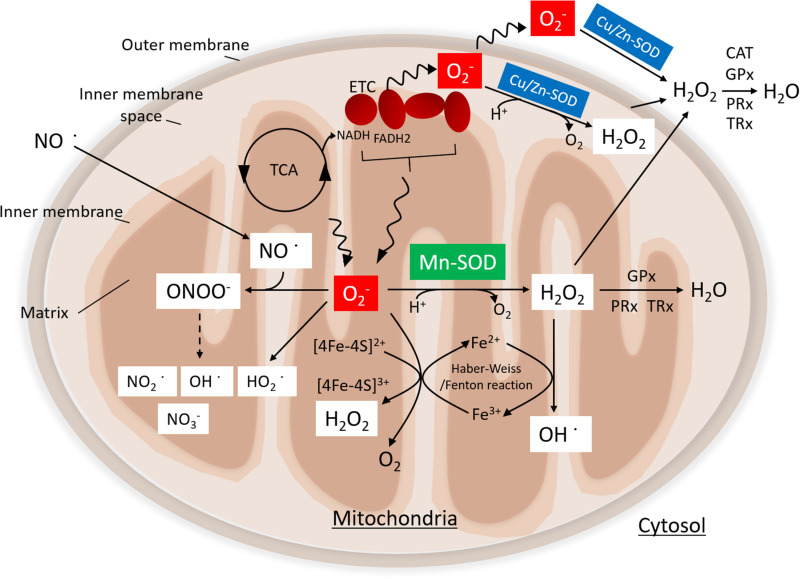
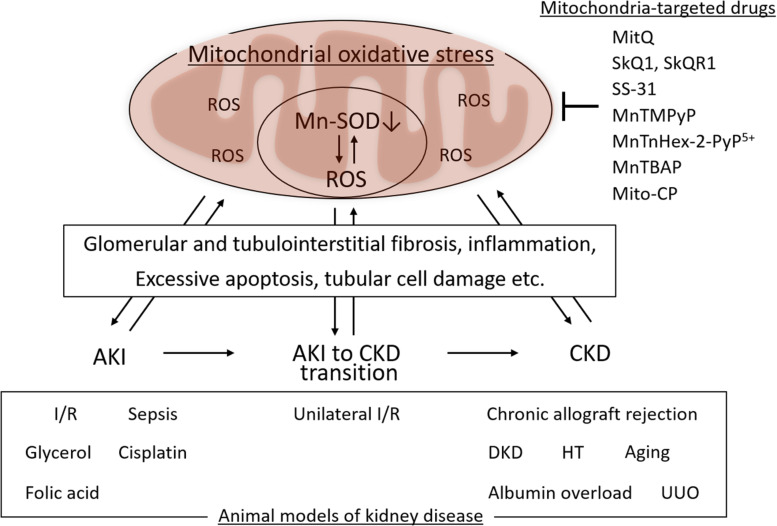
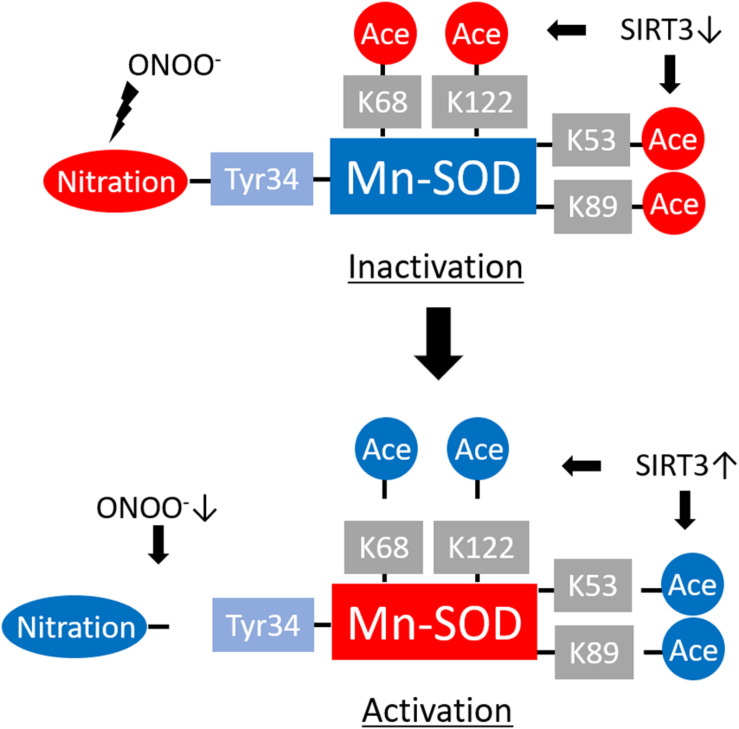
The mitochondria are a major source of reactive oxygen species (ROS). Superoxide anion (O ) is produced by the process of oxidative phosphorylation associated with glucose, amino acid, and fatty acid metabolism, resulting in the production of adenosine triphosphate (ATP) in the mitochondria. Excess production of reactive oxidants in the mitochondria, including O , and its by-product, peroxynitrite (ONOO), which is generated by a reaction between O with nitric oxide (NO), alters cellular function via oxidative modification of proteins, lipids, and nucleic acids. Mitochondria maintain an antioxidant enzyme system that eliminates excess ROS; manganese superoxide dismutase (Mn-SOD) is one of the major components of this system, as it catalyzes the first step involved in scavenging ROS. Reduced expression and/or the activity of Mn-SOD results in diminished mitochondrial antioxidant capacity; this can impair the overall health of the cell by altering mitochondrial function and may lead to the development and progression of kidney disease. Targeted therapeutic agents may protect mitochondrial proteins, including Mn-SOD against oxidative stress-induced dysfunction, and this may consequently lead to the protection of renal function. Here, we describe the biological function and regulation of Mn-SOD and review the significance of mitochondrial oxidative stress concerning the pathogenesis of kidney diseases, including chronic kidney disease (CKD) and acute kidney injury (AKI), with a focus on Mn-SOD dysfunction.
线粒体是活性氧(ROS)的主要来源。超氧阴离子(O )由与葡萄糖、氨基酸和脂肪酸代谢相关的氧化磷酸化过程产生,在线粒体中导致三磷酸腺苷(ATP)的生成。线粒体中活性氧化剂的过量产生,包括O 及其副产物过氧亚硝酸根(ONOO)(由O 与一氧化氮(NO)反应生成),通过对蛋白质、脂质和核酸的氧化修饰改变细胞功能。线粒体维持一个消除过量ROS的抗氧化酶系统;锰超氧化物歧化酶(Mn-SOD)是该系统的主要成分之一,因为它催化清除ROS的第一步。Mn-SOD表达降低和/或活性降低会导致线粒体抗氧化能力下降;这可能通过改变线粒体功能损害细胞的整体健康,并可能导致肾脏疾病的发生和进展。靶向治疗药物可能保护包括Mn-SOD在内的线粒体蛋白免受氧化应激诱导的功能障碍,这可能进而保护肾功能。在此,我们描述Mn-SOD的生物学功能和调节,并综述线粒体氧化应激在包括慢性肾脏病(CKD)和急性肾损伤(AKI)在内的肾脏疾病发病机制中的意义,重点关注Mn-SOD功能障碍。