McGrath Jillian, Kman Nicholas, Danforth Douglas, Bahner David P, Khandelwal Sorabh, Martin Daniel R, Nagel Rollin, Verbeck Nicole, Way David P, Nelson Richard
The Ohio State University Wexner Medical Center, Department of Emergency Medicine, Columbus, Ohio.
The Ohio State University Wexner Medical Center, Department of Obstetrics & Gynecology, Columbus, Ohio.
West J Emerg Med. 2015 Mar;16(2):336-43. doi: 10.5811/westjem.2015.1.24344. Epub 2015 Feb 25.
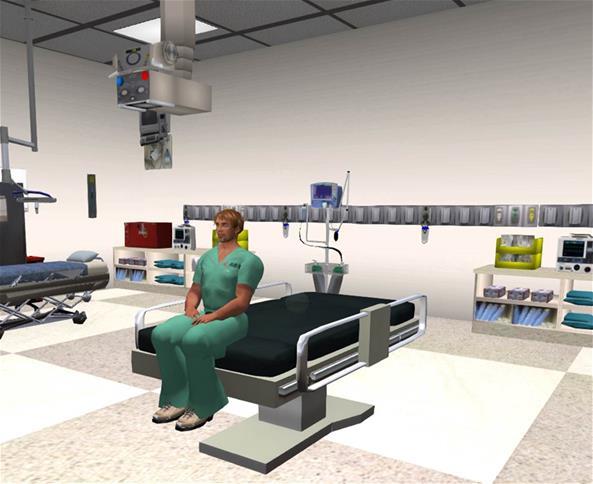
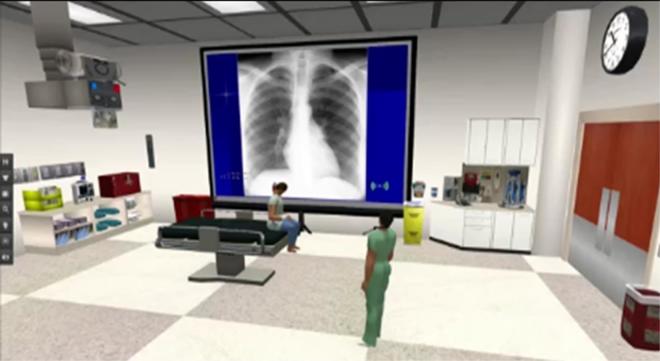
The oral examination is a traditional method for assessing the developing physician's medical knowledge, clinical reasoning and interpersonal skills. The typical oral examination is a face-to-face encounter in which examiners quiz examinees on how they would confront a patient case. The advantage of the oral exam is that the examiner can adapt questions to the examinee's response. The disadvantage is the potential for examiner bias and intimidation. Computer-based virtual simulation technology has been widely used in the gaming industry. We wondered whether virtual simulation could serve as a practical format for delivery of an oral examination. For this project, we compared the attitudes and performance of emergency medicine (EM) residents who took our traditional oral exam to those who took the exam using virtual simulation.
EM residents (n=35) were randomized to a traditional oral examination format (n=17) or a simulated virtual examination format (n=18) conducted within an immersive learning environment, Second Life (SL). Proctors scored residents using the American Board of Emergency Medicine oral examination assessment instruments, which included execution of critical actions and ratings on eight competency categories (1-8 scale). Study participants were also surveyed about their oral examination experience.
We observed no differences between virtual and traditional groups on critical action scores or scores on eight competency categories. However, we noted moderate effect sizes favoring the Second Life group on the clinical competence score. Examinees from both groups thought that their assessment was realistic, fair, objective, and efficient. Examinees from the virtual group reported a preference for the virtual format and felt that the format was less intimidating.
The virtual simulated oral examination was shown to be a feasible alternative to the traditional oral examination format for assessing EM residents. Virtual environments for oral examinations should continue to be explored, particularly since they offer an inexpensive, more comfortable, yet equally rigorous alternative.
口试是评估实习医生医学知识、临床推理能力和人际沟通技巧的传统方法。典型的口试是面对面的交流,考官就如何处理病例对考生进行提问。口试的优点是考官可以根据考生的回答调整问题。缺点是存在考官偏见和威慑的可能性。基于计算机的虚拟模拟技术已在游戏行业广泛应用。我们想知道虚拟模拟是否可作为口试的一种实用形式。对于本项目,我们比较了参加传统口试的急诊医学住院医师与参加虚拟模拟口试的住院医师的态度和表现。
35名急诊医学住院医师被随机分为传统口试组(n = 17)或在沉浸式学习环境“第二人生”(SL)中进行的模拟虚拟口试组(n = 18)。监考人员使用美国急诊医学委员会口试评估工具对住院医师进行评分,该工具包括关键操作的执行情况以及八个能力类别的评分(1 - 8分制)。研究参与者还被调查了他们的口试体验。
我们观察到虚拟组和传统组在关键操作得分或八个能力类别得分上没有差异。然而,我们注意到在临床能力得分方面有中等效应量有利于“第二人生”组。两组考生都认为他们的评估是现实、公平、客观且高效的。虚拟组的考生表示更喜欢虚拟形式,并认为这种形式不那么令人生畏。
虚拟模拟口试被证明是评估急诊医学住院医师的传统口试形式的可行替代方案。口试的虚拟环境应继续探索,特别是因为它们提供了一种廉价、更舒适但同样严格的选择。