Jat Tej Ram, Deo Prakash R, Goicolea Isabel, Hurtig Anna-Karin, San Sebastian Miguel
United Nations Population Fund, Bhopal, India.
Division of Epidemiology and Global Health, Department of Public Health and Clinical Medicine, Umeå University, Umeå, Sweden.
Glob Health Action. 2015 Apr 1;8:24976. doi: 10.3402/gha.v8.24976. eCollection 2015.
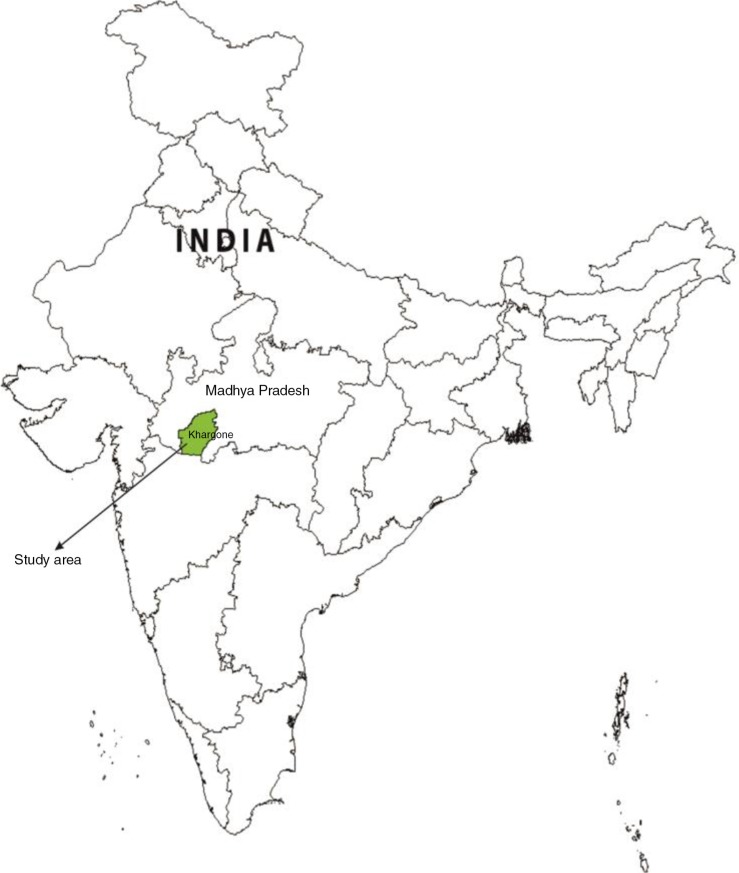
Despite the avoidable nature of maternal mortality, unacceptably high numbers of maternal deaths occur in developing countries. Considering its preventability, maternal mortality is being increasingly recognised as a human rights issue. Integration of a human rights perspective in maternal health programmes could contribute positively in eliminating avertable maternal deaths. This study was conducted to explore socio-cultural and service delivery-related dimensions of maternal deaths in rural central India using a human rights lens.
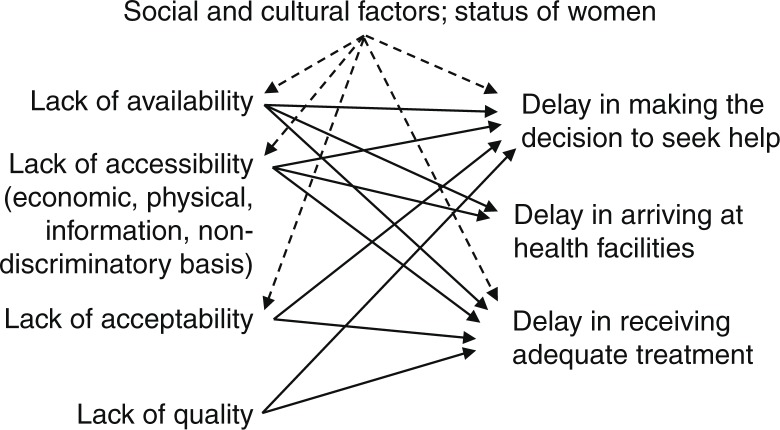
Social autopsies were conducted for 22 maternal deaths during 2011 in Khargone district in central India. The data were analysed using thematic analysis. The factors associated with maternal deaths were classified by using the 'three delays' framework and were examined by using a human rights lens.
All 22 women tried to access medical assistance, but various factors delayed their access to appropriate care. The underestimation of the severity of complications by family members, gender inequity, and perceptions of low-quality delivery services delayed decisions to seek care. Transportation problems and care seeking at multiple facilities delayed reaching appropriate health facilities. Negligence by health staff and unavailability of blood and emergency obstetric care services delayed receiving adequate care after reaching a health facility.
The study highlighted various socio-cultural and service delivery-related factors which are violating women's human rights and resulting in maternal deaths in rural central India. This study highlights that, despite the health system's conscious effort to improve maternal health, normative elements of a human rights approach to maternal health (i.e. availability, accessibility, acceptability, and quality of maternal health services) were not upheld. The data and analysis suggest that the deceased women and their relatives were unable to claim their entitlements and that the duty bearers were not successful in meeting their obligations. Based on the findings of our study, we conclude that to prevent maternal deaths, further concentrated efforts are required for better community education, women's empowerment, and health systems strengthening to provide appropriate and timely services, including emergency obstetric care, with good quality.
尽管孕产妇死亡具有可避免性,但发展中国家孕产妇死亡人数高得令人无法接受。鉴于其可预防性,孕产妇死亡日益被视为一个人权问题。将人权视角纳入孕产妇保健计划可能会对消除可避免的孕产妇死亡产生积极作用。本研究旨在从人权角度探讨印度中部农村地区孕产妇死亡的社会文化和服务提供相关层面。
对2011年印度中部卡尔古纳区22例孕产妇死亡病例进行了社会解剖。采用主题分析法对数据进行分析。使用“三个延误”框架对与孕产妇死亡相关的因素进行分类,并从人权角度进行审视。
所有22名妇女都试图获得医疗救助,但各种因素延误了她们获得适当护理的时间。家庭成员对并发症严重程度的低估、性别不平等以及对低质量分娩服务 的认知延误了寻求护理的决定。交通问题以及在多个医疗机构寻求护理延误了到达适当的卫生设施的时间。医护人员的疏忽以及血液和紧急产科护理服务的缺乏延误了在到达卫生设施后获得充分护理的时间。
该研究突出了各种与社会文化和服务提供相关的因素,这些因素侵犯了妇女的人权,导致印度中部农村地区的孕产妇死亡。本研究强调,尽管卫生系统有意识地努力改善孕产妇健康,但孕产妇保健人权方法的规范性要素(即孕产妇保健服务的可及性、可获得性、可接受性和质量)并未得到维护。数据和分析表明,已故妇女及其亲属无法主张自己的权利,而责任承担者未能履行其义务。根据我们的研究结果,我们得出结论,为预防孕产妇死亡,需要进一步集中努力,加强社区教育、增强妇女权能并强化卫生系统,以提供包括高质量紧急产科护理在内的适当和及时的服务。