Department of Statistics, North Carolina State University, 2311 Stinson Drive, Raleigh, 27695 USA.
Quintiles, 4820 Emperor Blvd, Durham, 27703 USA.
Int J Bipolar Disord. 2015 Apr 3;3:7. doi: 10.1186/s40345-014-0018-5. eCollection 2015.
There is substantial uncertainty regarding the efficacy of antidepressants in the treatment of bipolar disorders.
Traditional randomized controlled trials and statistical methods are not designed to discover if, when, and to whom an intervention should be applied; thus, other methodological approaches are needed that allow for the practice of personalized, evidence-based medicine with patients with bipolar depression.
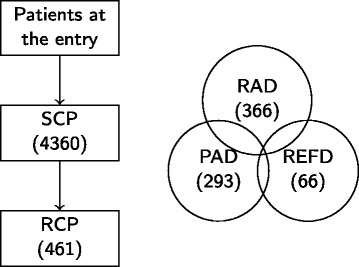
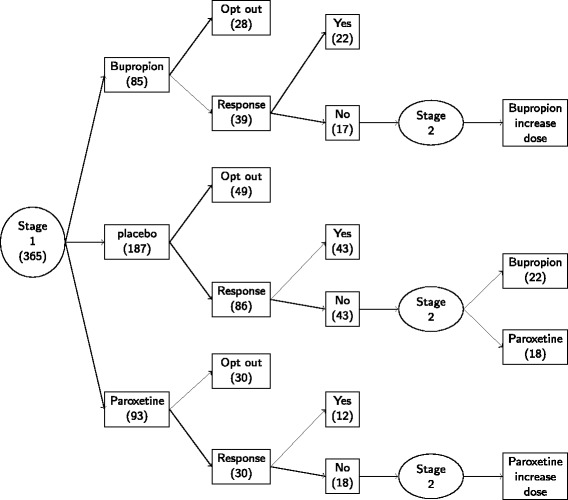
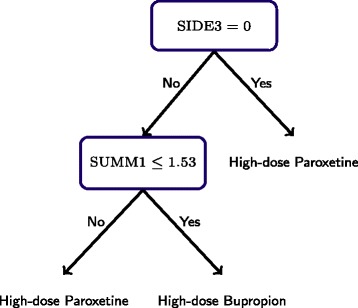
Dynamic treatment regimes operationalize clinical decision-making as a sequence of decision rules, one per stage of clinical intervention, that map patient information to a recommended treatment. Using data from the acute depression randomized care (RAD) pathway of the Systematic Treatment Enhancement Program for Bipolar Disorder (STEP-BD) study, we estimate an optimal dynamic treatment regime via Q-learning.
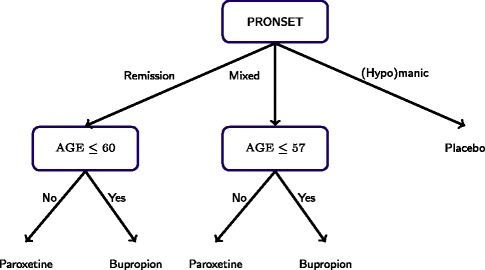
The estimated optimal treatment regime presents some evidence that patients in the RAD pathway of STEP-BD who experienced a (hypo)manic episode before the depressive episode may do better to forgo adding an antidepressant to a mandatory mood stabilizer.
抗抑郁药治疗双相情感障碍的疗效存在很大的不确定性。
传统的随机对照试验和统计方法并不是为了发现干预措施应该在何时、对谁应用而设计的;因此,需要其他方法学方法,以便在治疗双相情感障碍抑郁患者时采用个性化的、基于证据的医学方法。
动态治疗方案将临床决策操作化为一系列决策规则,每个规则对应临床干预的一个阶段,将患者信息映射到推荐的治疗方案。我们使用来自双相情感障碍系统治疗增强计划(STEP-BD)研究的急性抑郁随机治疗(RAD)途径的数据,通过 Q 学习来估计最优的动态治疗方案。
估计的最优治疗方案表明,STEP-BD 的 RAD 途径中,在抑郁发作前经历过(轻)躁狂发作的患者,放弃在强制性情绪稳定剂上加用抗抑郁药可能会有更好的效果。