Fairbairn Catharine E, Sayette Michael A, Wright Aidan G C, Levine John M, Cohn Jeffrey F, Creswell Kasey G
J Abnorm Psychol. 2015 Aug;124(3):660-73. doi: 10.1037/abn0000024.
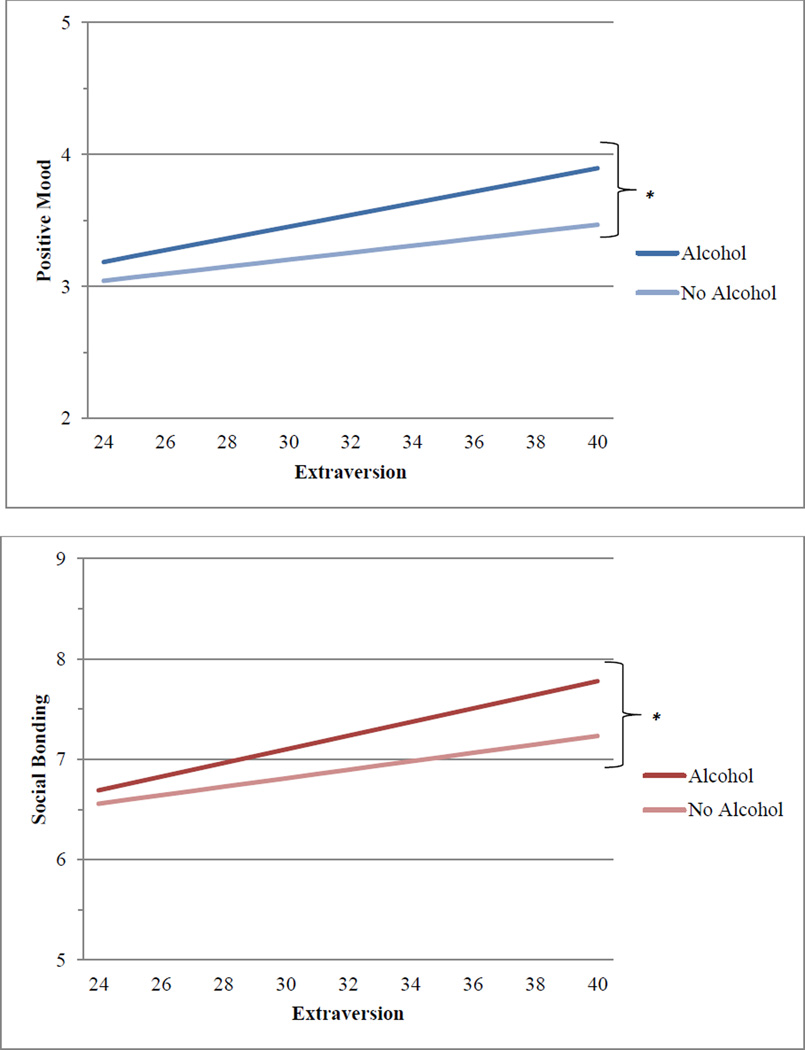
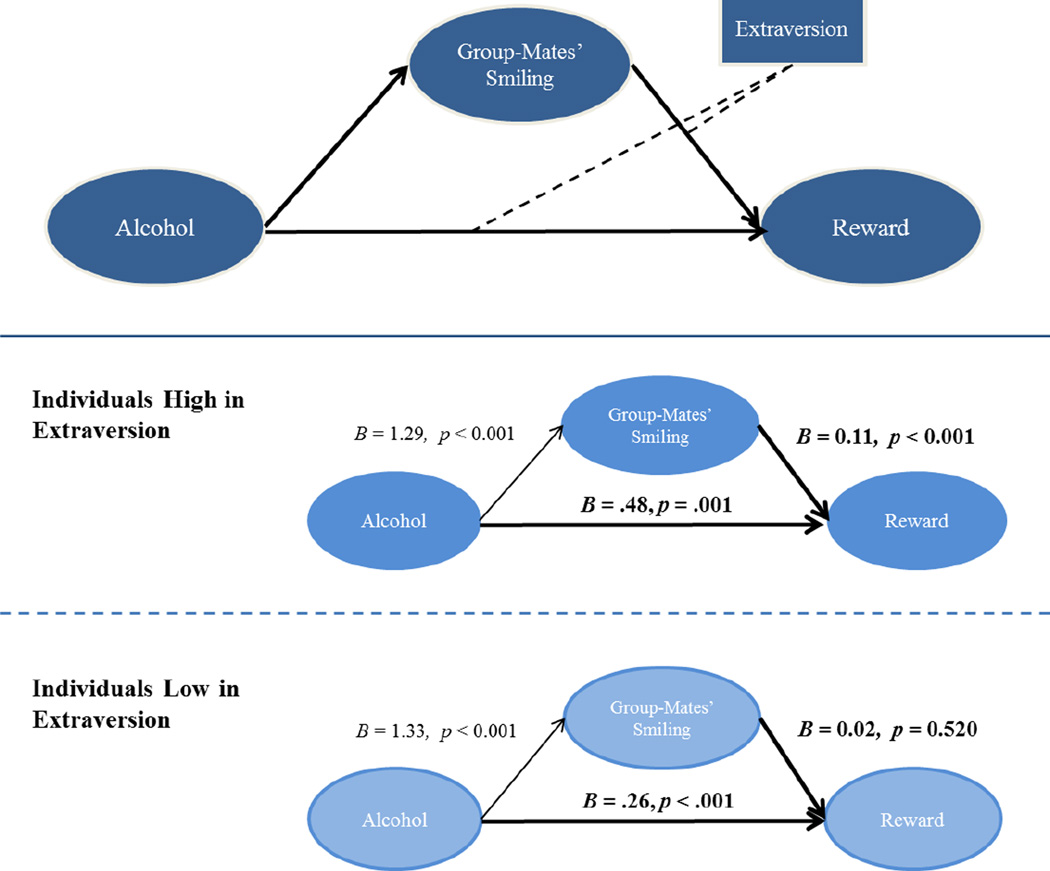
The personality trait of extraversion has been linked to problematic drinking patterns. Researchers have long hypothesized that such associations are attributable to increased alcohol-reward sensitivity among extraverted individuals, and surveys suggest that individuals high in extraversion gain greater mood enhancement from alcohol than those low in extraversion. Surprisingly, however, alcohol administration studies have not found individuals high in extraversion to experience enhanced mood following alcohol consumption. Of note, prior studies have examined extraverted participants-individuals who self-identify as being highly social-consuming alcohol in isolation. In the present research, we used a group drinking paradigm to examine whether individuals high in extraversion gained greater reward from alcohol than did those low in extraversion and, further, whether a particular social mechanism (partners’ Duchenne smiling) might underlie alcohol reward sensitivity among extraverted individuals. Social drinkers (n 720) consumed a moderate dose of alcohol, placebo, or control beverage in groups of 3 over the course of 36 min. This social interaction was video-recorded, and Duchenne smiling was coded using the Facial Action Coding System. Results indicated that participants high in extraversion reported significantly more mood enhancement from alcohol than did those low in extraversion. Further, mediated moderation analyses focusing on Duchenne smiling of group members indicated that social processes fully and uniquely accounted for alcohol reward-sensitivity among individuals high in extraversion. Results provide initial experimental evidence that individuals high in extraversion experience increased mood-enhancement from alcohol and further highlight the importance of considering social processes in the etiology of alcohol use disorder.
外向型人格特质与问题饮酒模式有关。长期以来,研究人员一直假设这种关联归因于外向型个体对酒精奖励的敏感度增加,并且调查表明,外向性得分高的个体比外向性得分低的个体从酒精中获得更大的情绪提升。然而,令人惊讶的是,酒精给药研究并未发现外向性得分高的个体在饮酒后情绪得到增强。值得注意的是,先前的研究考察的是外向型参与者——那些自我认定为高度社交型的个体单独饮酒的情况。在本研究中,我们采用群体饮酒范式来检验外向性得分高的个体是否比外向性得分低的个体从酒精中获得更大的奖励,以及是否有特定的社会机制(伴侣的杜兴微笑)可能是外向型个体酒精奖励敏感度的潜在原因。社交饮酒者(n = 720)在36分钟内以3人一组的形式饮用适量的酒精饮料、安慰剂或对照饮料。这种社交互动被录像,并且使用面部动作编码系统对杜兴微笑进行编码。结果表明,外向性得分高的参与者报告称,与外向性得分低的参与者相比,酒精带来的情绪提升明显更多。此外,聚焦于群体成员杜兴微笑的中介调节分析表明,社会过程完全且独特地解释了外向性得分高的个体对酒精奖励的敏感度。研究结果提供了初步的实验证据,表明外向性得分高的个体从酒精中获得的情绪提升增加,并进一步凸显了在酒精使用障碍病因学中考虑社会过程的重要性。