Holve Erin
AcademyHealth.
EGEMS (Wash DC). 2013 Jan 17;1(1):1005. doi: 10.13063/2327-9214.1005. eCollection 2013.
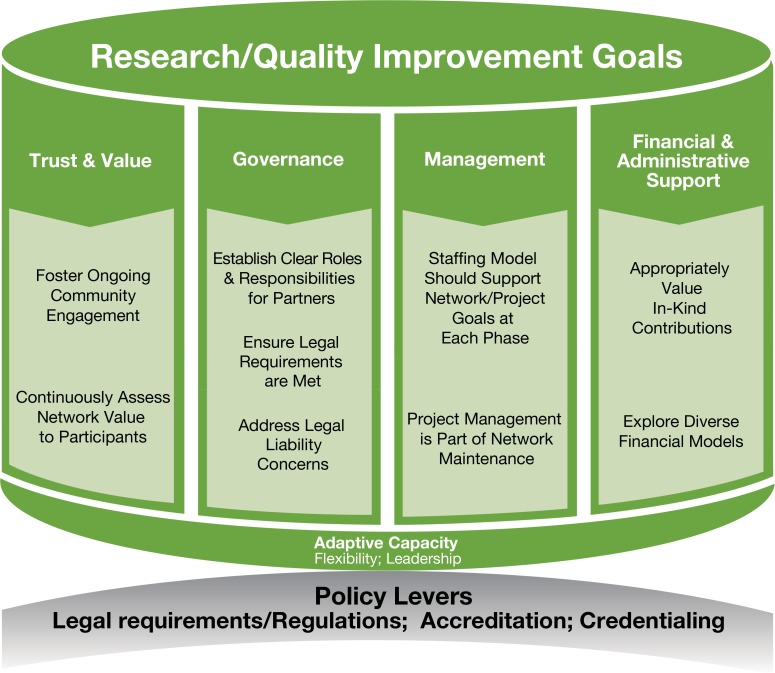
Multi-institutional research and quality improvement (QI) projects using electronic clinical data (ECD) hold great promise for improving quality of care and patient outcomes but typically require significant infrastructure investments both to initiate and maintain the project over its duration. Consequently, it is important for these projects to think holistically about sustainability to ensure their long-term success. Four "pillars" of sustainability are discussed based on the experiences of EDM Forum grantees and other research and QI networks. These include trust and value, governance, management, and financial and administrative support. Two "foundational considerations," adaptive capacity and policy levers, are also discussed.
利用电子临床数据(ECD)开展的多机构研究和质量改进(QI)项目,在改善医疗质量和患者预后方面具有巨大潜力,但通常需要在项目启动和持续期间投入大量基础设施。因此,这些项目从整体上考虑可持续性以确保长期成功非常重要。基于电子数据管理(EDM)论坛受资助者以及其他研究和质量改进网络的经验,讨论了可持续性的四个“支柱”。这些包括信任与价值、治理、管理以及财务和行政支持。还讨论了两个“基本考虑因素”,即适应能力和政策杠杆。