Wells Christina E, Vendramin Elisa, Jimenez Tarodo Sergio, Verde Ignazio, Bielenberg Douglas G
BMC Plant Biol. 2015 Feb 7;15:41. doi: 10.1186/s12870-015-0436-2.
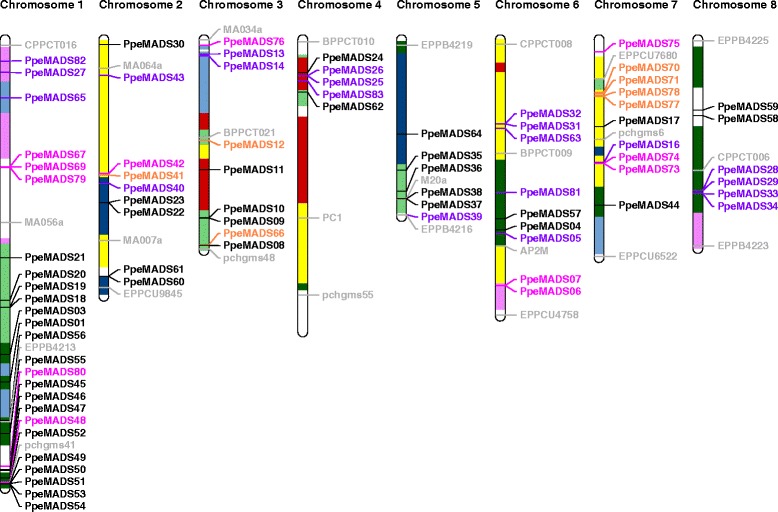
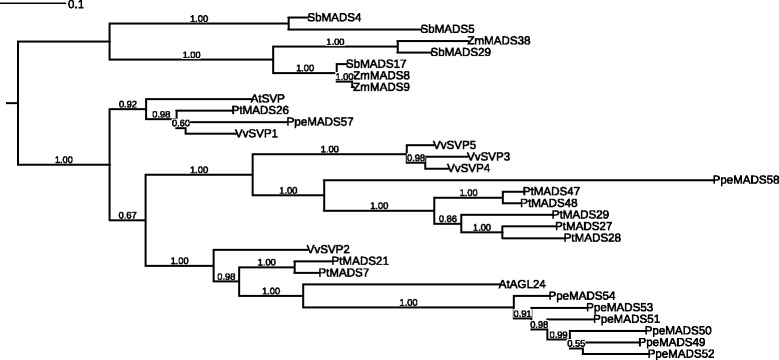
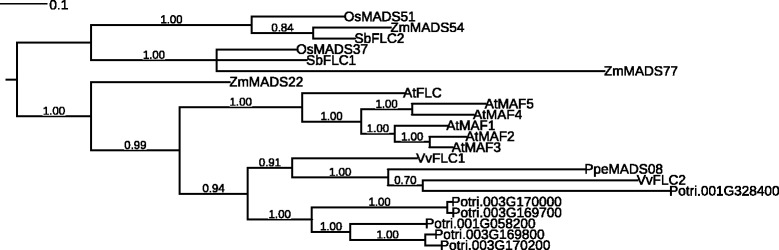
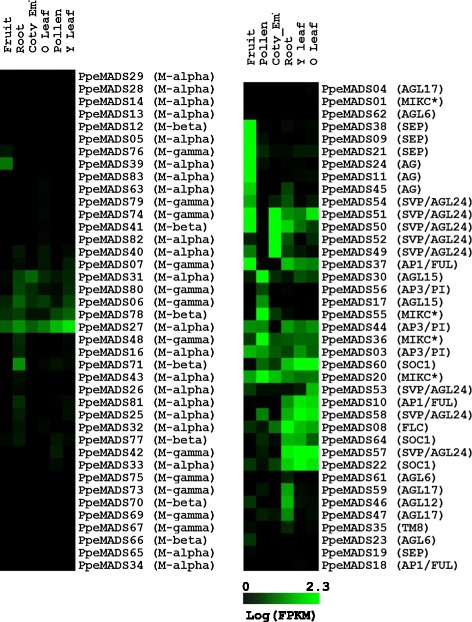
MADS-box genes encode a family of eukaryotic transcription factors distinguished by the presence of a highly-conserved ~58 amino acid DNA-binding and dimerization domain (the MADS-box). The central role played by MADS-box genes in peach endodormancy regulation led us to examine this large gene family in more detail. We identified the locations and sequences of 79 MADS-box genes in peach, separated them into established subfamilies, and broadly surveyed their tissue-specific and dormancy-induced expression patterns using next-generation sequencing. We then focused on the dormancy-related SVP/AGL24 and FLC subfamilies, comparing their numbers and phylogenetic relationships with those of other sequenced woody perennial genomes.
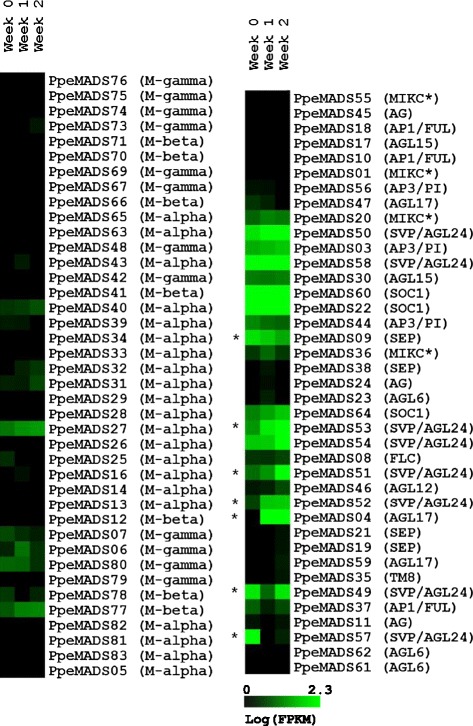
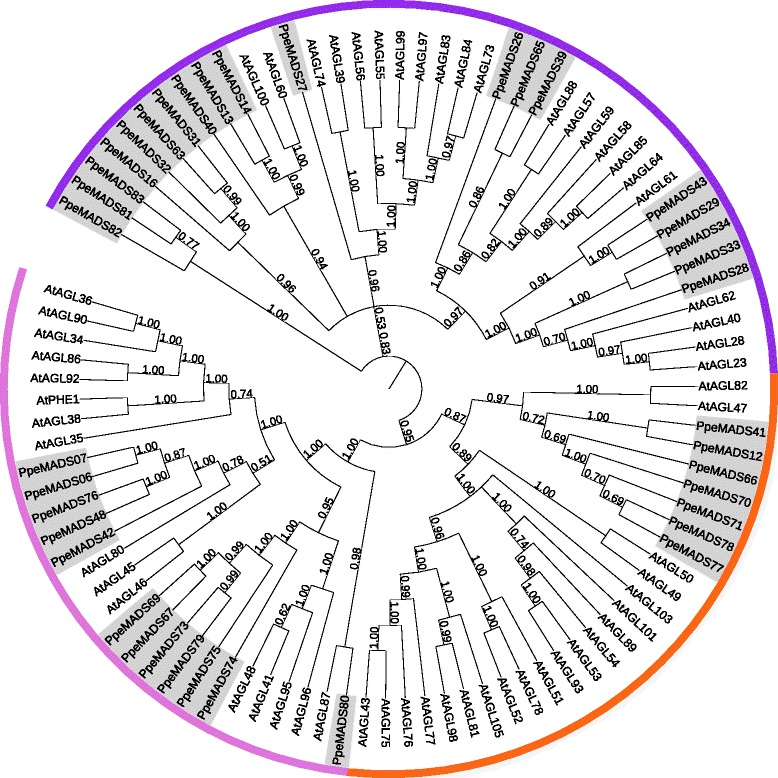
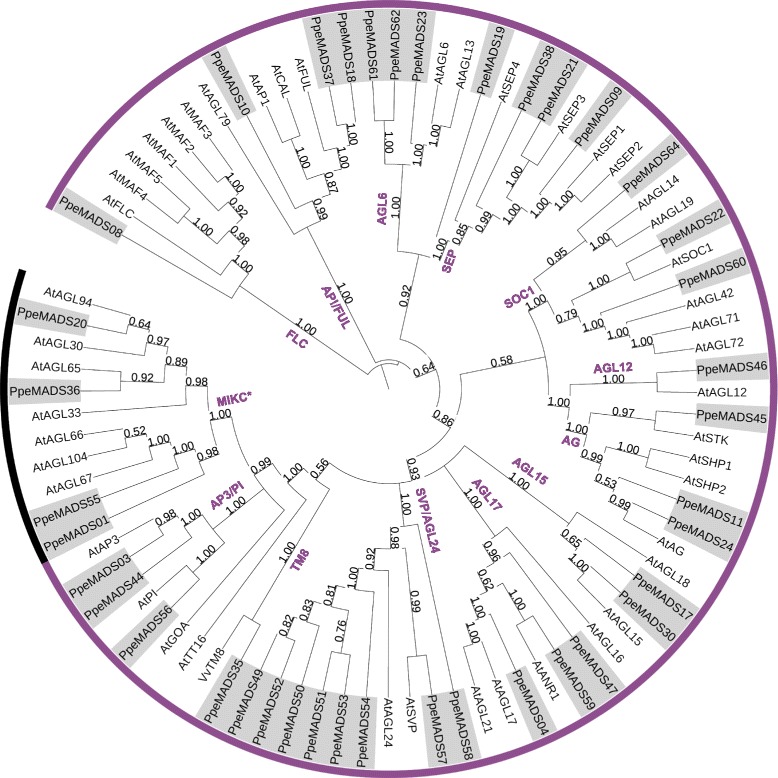
We identified 79 MADS-box genes distributed across all eight peach chromosomes and frequently located in clusters of two or more genes. They encode proteins with a mean length of 248 ± 72 amino acids and include representatives from most of the thirteen Type II (MIKC) subfamilies, as well as members of the Type I Mα, Mβ, and Mγ subfamilies. Most Type I genes were present in species-specific monophyletic lineages, and their expression in the peach sporophyte was low or absent. Most Type II genes had Arabidopsis orthologs and were expressed at much higher levels throughout vegetative and fruit tissues. During short-day-induced growth cessation, seven Type II genes from the SVP/AGL24, AGL17, and SEP subfamilies showed significant changes in expression. Phylogenetic analyses indicated that multiple, independent expansions have taken place within the SVP/AGL24 and FLC lineages in woody perennial species.
Most Type I genes appear to have arisen through tandem duplications after the divergence of the Arabidopsis and peach lineages, whereas Type II genes appear to have increased following whole genome duplication events. An exception to the latter rule occurs in the FLC and SVP/AGL24 Type II subfamilies, in which species-specific tandem duplicates have been retained in a number of perennial species. These subfamilies comprise part of a genetic toolkit that regulates endodormancy transitions, but phylogenetic and expression data suggest that individual orthologs may not function identically across all species.
MADS-box基因编码一类真核转录因子家族,其特征是存在一个高度保守的约58个氨基酸的DNA结合和二聚化结构域(MADS-box)。MADS-box基因在桃的内休眠调控中发挥的核心作用促使我们更详细地研究这个庞大的基因家族。我们确定了桃中79个MADS-box基因的位置和序列,将它们分为已确定的亚家族,并使用下一代测序技术广泛调查了它们的组织特异性和休眠诱导表达模式。然后,我们重点研究了与休眠相关的SVP/AGL24和FLC亚家族,比较了它们与其他已测序木本多年生植物基因组的数量和系统发育关系。
我们鉴定出79个MADS-box基因,分布在桃的所有8条染色体上,并且经常位于两个或更多基因的簇中。它们编码的蛋白质平均长度为248±72个氨基酸,包括来自13个II型(MIKC)亚家族中的大多数亚家族的代表,以及I型Mα、Mβ和Mγ亚家族的成员。大多数I型基因存在于物种特异性的单系谱系中,并且它们在桃孢子体中的表达很低或没有表达。大多数II型基因有拟南芥直系同源基因,并且在整个营养组织和果实组织中的表达水平要高得多。在短日照诱导的生长停止期间,来自SVP/AGL24、AGL17和SEP亚家族的7个II型基因的表达发生了显著变化。系统发育分析表明,在木本多年生植物物种的SVP/AGL24和FLC谱系中发生了多次独立的扩增。
大多数I型基因似乎是在拟南芥和桃的谱系分化后通过串联重复产生的,而II型基因似乎是在全基因组复制事件后增加的。后一条规则的一个例外发生在FLC和SVP/AGL24 II型亚家族中,其中物种特异性串联重复在许多多年生植物物种中得以保留。这些亚家族构成了调节内休眠转变的遗传工具包的一部分,但系统发育和表达数据表明,单个直系同源基因在所有物种中的功能可能并不相同。