Miao Ji, Ling Alisha V, Manthena Praveen V, Gearing Mary E, Graham Mark J, Crooke Rosanne M, Croce Kevin J, Esquejo Ryan M, Clish Clary B, Vicent David, Biddinger Sudha B
Division of Endocrinology, Boston Children's Hospital, Harvard Medical School, Boston, Massachusetts, USA.
Isis Pharmaceuticals, Carlsbad, California, USA.
Nat Commun. 2015 Apr 7;6:6498. doi: 10.1038/ncomms7498.
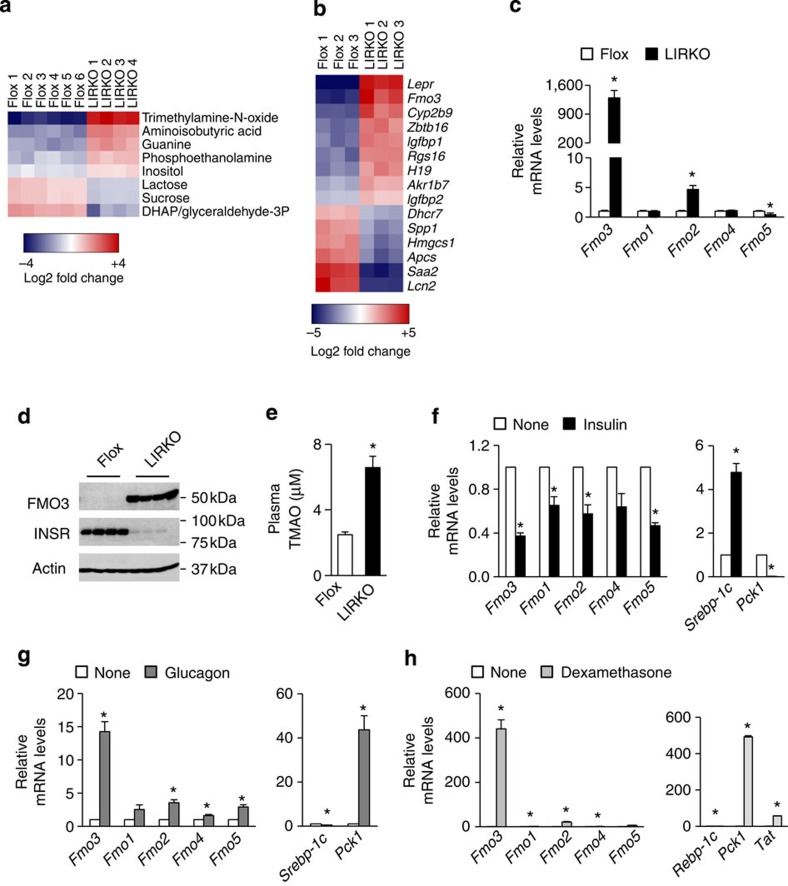
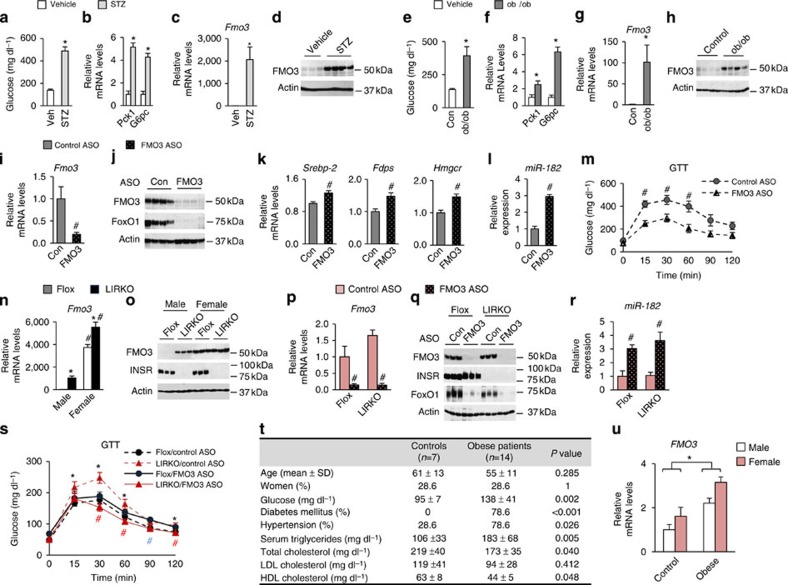
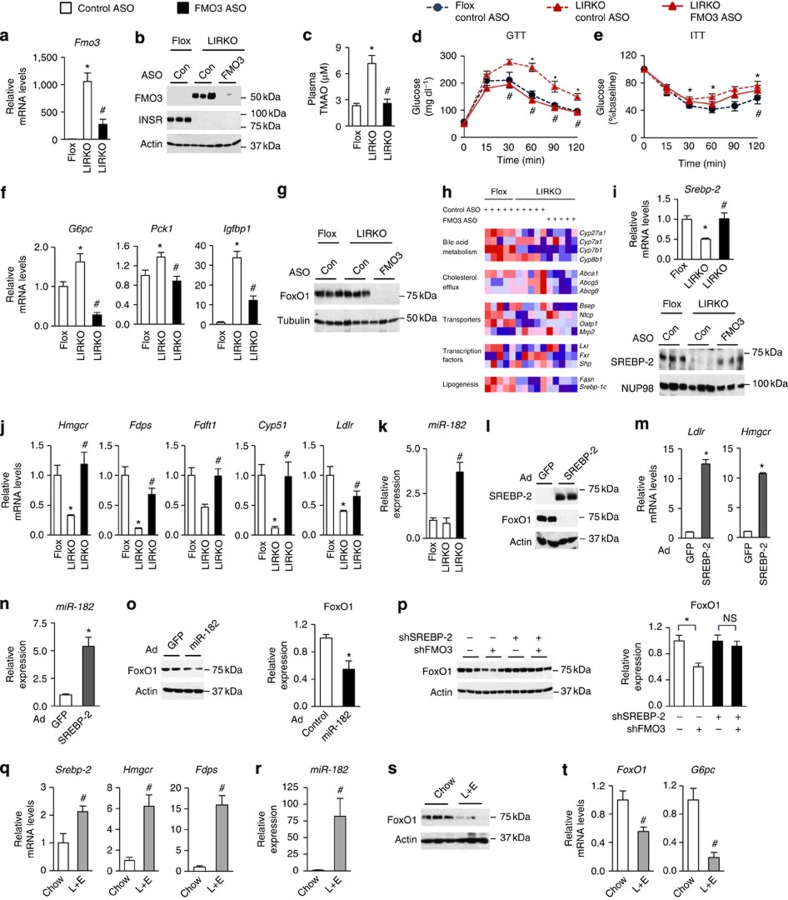
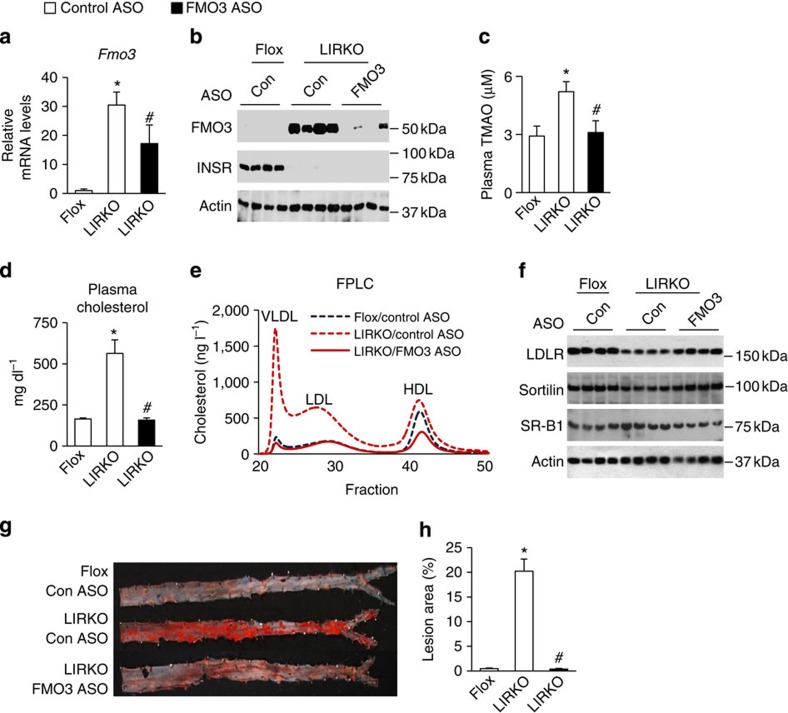
Despite the well-documented association between insulin resistance and cardiovascular disease, the key targets of insulin relevant to the development of cardiovascular disease are not known. Here, using non-biased profiling methods, we identify the enzyme flavin-containing monooxygenase 3 (Fmo3) to be a target of insulin. FMO3 produces trimethylamine N-oxide (TMAO), which has recently been suggested to promote atherosclerosis in mice and humans. We show that FMO3 is suppressed by insulin in vitro, increased in obese/insulin resistant male mice and increased in obese/insulin-resistant humans. Knockdown of FMO3 in insulin-resistant mice suppresses FoxO1, a central node for metabolic control, and entirely prevents the development of hyperglycaemia, hyperlipidemia and atherosclerosis. Taken together, these data indicate that FMO3 is required for FoxO1 expression and the development of metabolic dysfunction.
尽管胰岛素抵抗与心血管疾病之间的关联已有充分记录,但与心血管疾病发生相关的胰岛素关键靶点尚不清楚。在此,我们使用无偏倚的分析方法,确定含黄素单加氧酶3(Fmo3)是胰岛素的一个靶点。FMO3产生氧化三甲胺(TMAO),最近有研究表明TMAO可促进小鼠和人类的动脉粥样硬化。我们发现,FMO3在体外被胰岛素抑制,在肥胖/胰岛素抵抗的雄性小鼠中增加,在肥胖/胰岛素抵抗的人类中也增加。在胰岛素抵抗小鼠中敲低FMO3可抑制FoxO1(代谢控制的核心节点),并完全预防高血糖、高脂血症和动脉粥样硬化的发生。综上所述,这些数据表明FMO3是FoxO1表达和代谢功能障碍发生所必需的。