Elmore Monica R P, Lee Rafael J, West Brian L, Green Kim N
Department of Neurobiology and Behavior, Institute for Memory Impairments and Neurological Disorders (UCI MIND), University of California, Irvine, Irvine, California, United States of America.
Plexxikon Inc., Berkeley, California, United States of America.
PLoS One. 2015 Apr 7;10(4):e0122912. doi: 10.1371/journal.pone.0122912. eCollection 2015.
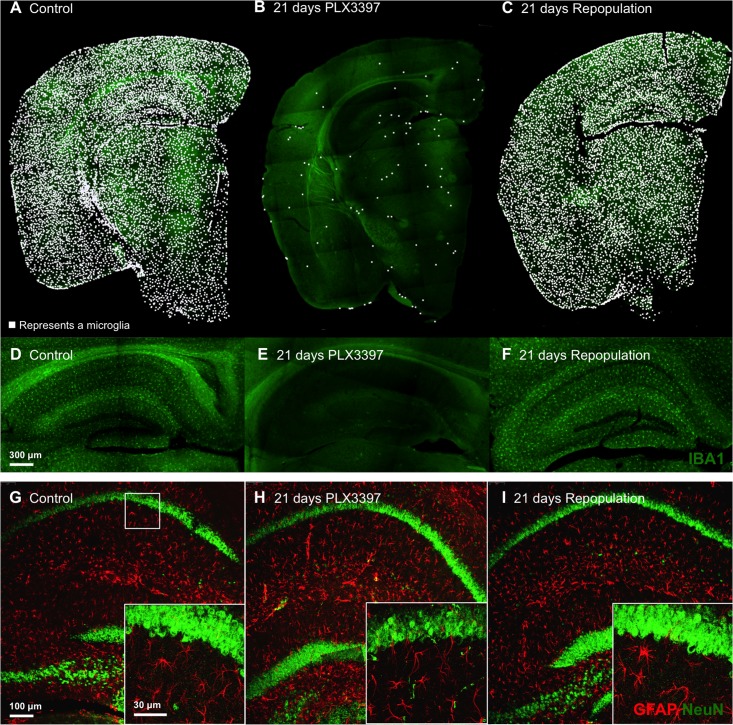
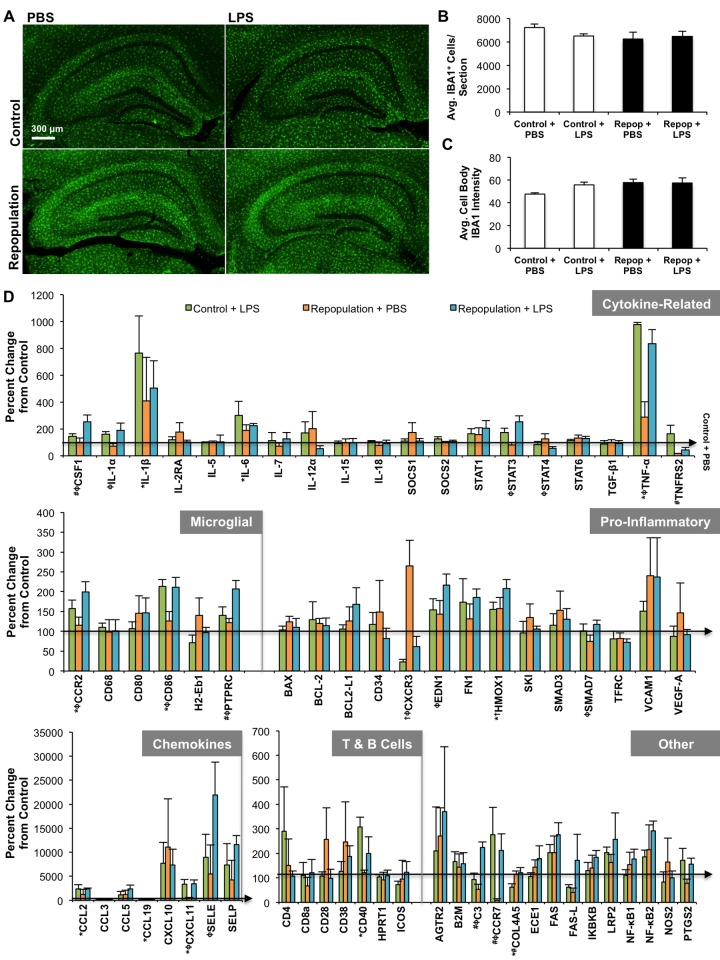
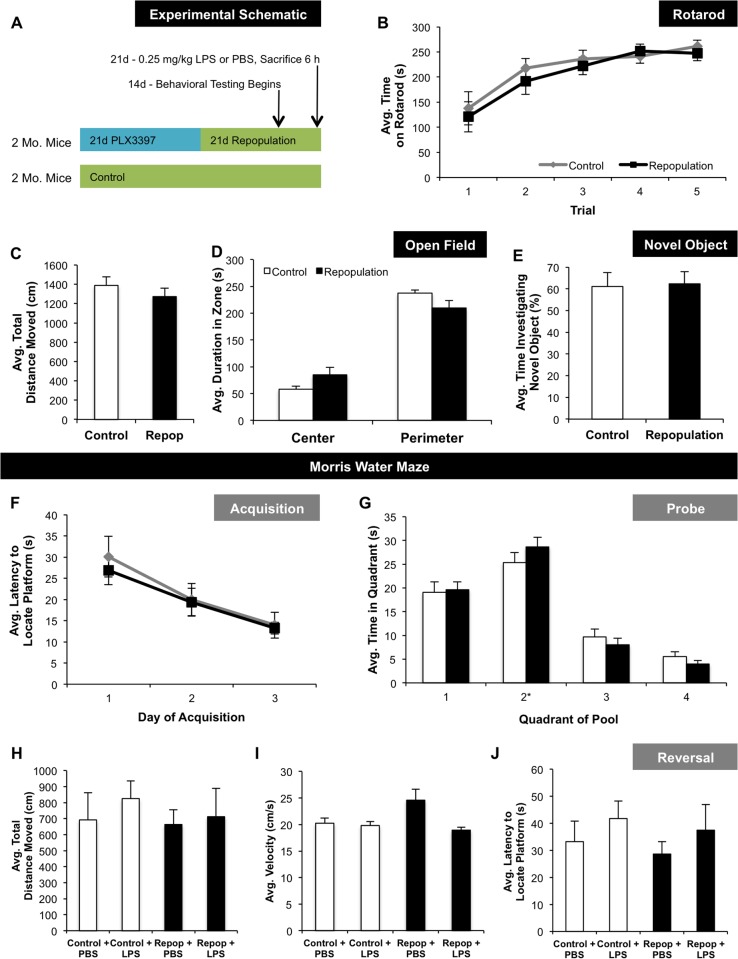
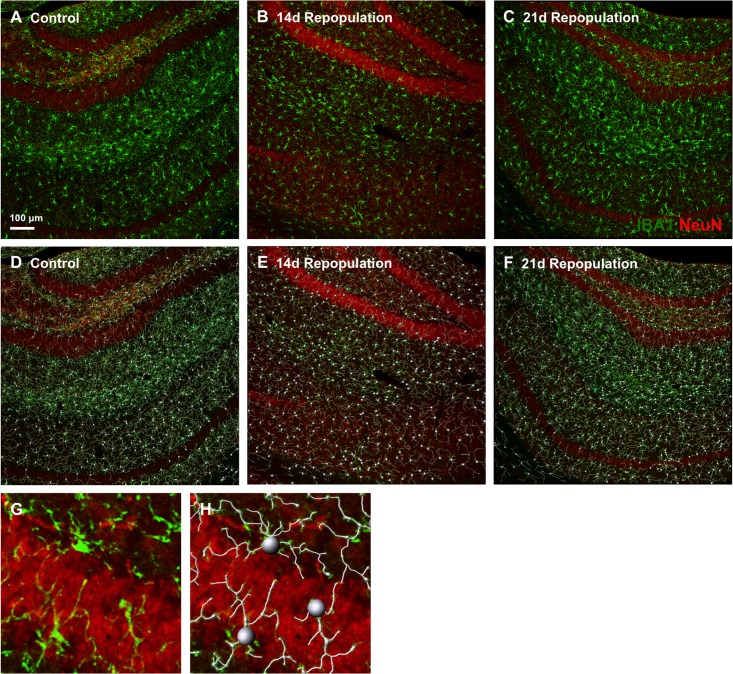
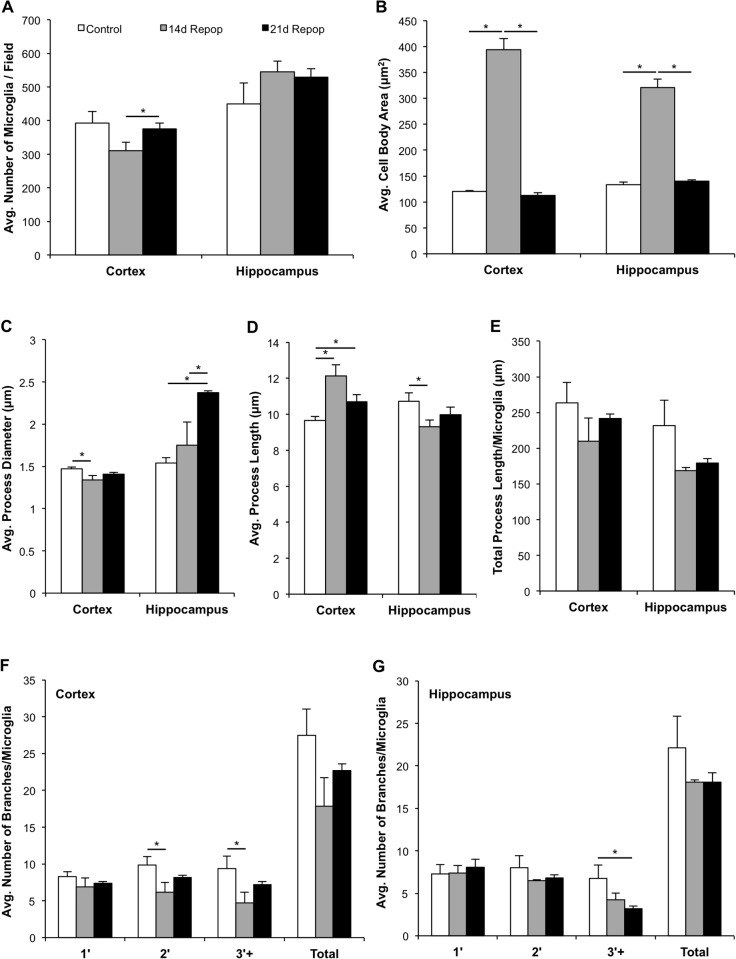
Microglia are the primary immune cell in the brain and are postulated to play important roles outside of immunity. Administration of the dual colony-stimulating factor 1 receptor (CSF1R)/c-Kit kinase inhibitor, PLX3397, to adult mice results in the elimination of ~99% of microglia, which remain eliminated for as long as treatment continues. Upon removal of the inhibitor, microglia rapidly repopulate the entire adult brain, stemming from a central nervous system (CNS) resident progenitor cell. Using this method of microglial elimination and repopulation, the role of microglia in both healthy and diseased states can be explored. Here, we examine the responsiveness of newly repopulated microglia to an inflammatory stimulus, as well as determine the impact of these cells on behavior, cognition, and neuroinflammation. Two month-old wild-type mice were placed on either control or PLX3397 diet for 21 d to eliminate microglia. PLX3397 diet was then removed in a subset of animals to allow microglia to repopulate and behavioral testing conducted beginning at 14 d repopulation. Finally, inflammatory profiling of the microglia-repopulated brain in response to lipopolysaccharide (LPS; 0.25 mg/kg) or phosphate buffered saline (PBS) was determined 21 d after inhibitor removal using quantitative real time polymerase chain reaction (RT-PCR), as well as detailed analyses of microglial morphologies. We find mice with repopulated microglia to perform similarly to controls by measures of behavior, cognition, and motor function. Compared to control/resident microglia, repopulated microglia had larger cell bodies and less complex branching in their processes, which resolved over time after inhibitor removal. Inflammatory profiling revealed that the mRNA gene expression of repopulated microglia was similar to normal resident microglia and that these new cells appear functional and responsive to LPS. Overall, these data demonstrate that newly repopulated microglia function similarly to the original resident microglia without any apparent adverse effects in healthy adult mice.
小胶质细胞是大脑中的主要免疫细胞,据推测在免疫之外还发挥着重要作用。给成年小鼠施用双集落刺激因子1受体(CSF1R)/c-Kit激酶抑制剂PLX3397,可导致约99%的小胶质细胞被清除,只要持续治疗,小胶质细胞就会一直保持被清除的状态。去除抑制剂后,小胶质细胞会迅速重新填充整个成年大脑,其来源是中枢神经系统(CNS)中的常驻祖细胞。利用这种小胶质细胞清除和重新填充的方法,可以探究小胶质细胞在健康和患病状态下的作用。在此,我们研究了新重新填充的小胶质细胞对炎症刺激的反应性,并确定这些细胞对行为、认知和神经炎症的影响。将两个月大的野生型小鼠置于对照或PLX3397饮食中21天以清除小胶质细胞。然后在一部分动物中去除PLX3397饮食,以使小胶质细胞重新填充,并在重新填充14天后开始进行行为测试。最后,在去除抑制剂21天后,使用定量实时聚合酶链反应(RT-PCR)测定小胶质细胞重新填充的大脑对脂多糖(LPS;0.25mg/kg)或磷酸盐缓冲盐水(PBS)的炎症特征分析,并对小胶质细胞形态进行详细分析。我们发现,通过行为、认知和运动功能测量,重新填充了小胶质细胞的小鼠表现与对照组相似。与对照/常驻小胶质细胞相比,重新填充的小胶质细胞具有更大的细胞体,其突起中的分支较少,在去除抑制剂后,这种情况会随着时间的推移而得到缓解。炎症特征分析显示,重新填充的小胶质细胞的mRNA基因表达与正常常驻小胶质细胞相似,并且这些新细胞看起来具有功能且对LPS有反应。总体而言,这些数据表明,新重新填充的小胶质细胞的功能与原始常驻小胶质细胞相似,在健康成年小鼠中没有任何明显的不良影响。