Furnari Frank B, Cloughesy Timothy F, Cavenee Webster K, Mischel Paul S
Ludwig Institute for Cancer Research and the Department of Pathology, University of California San Diego, La Jolla, California 92093, USA.
Department of Neurology, David Geffen School of Medicine, University of California Los Angeles, California 90095, USA.
Nat Rev Cancer. 2015 May;15(5):302-10. doi: 10.1038/nrc3918. Epub 2015 Apr 9.
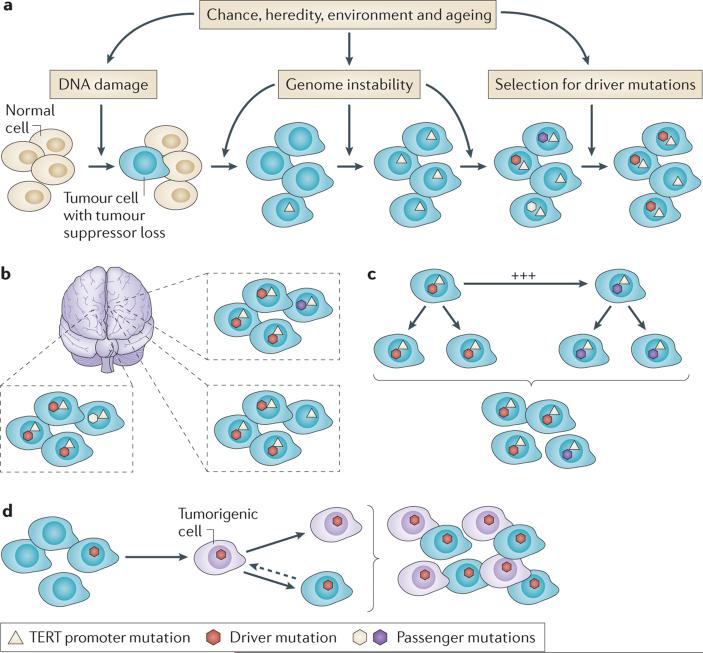
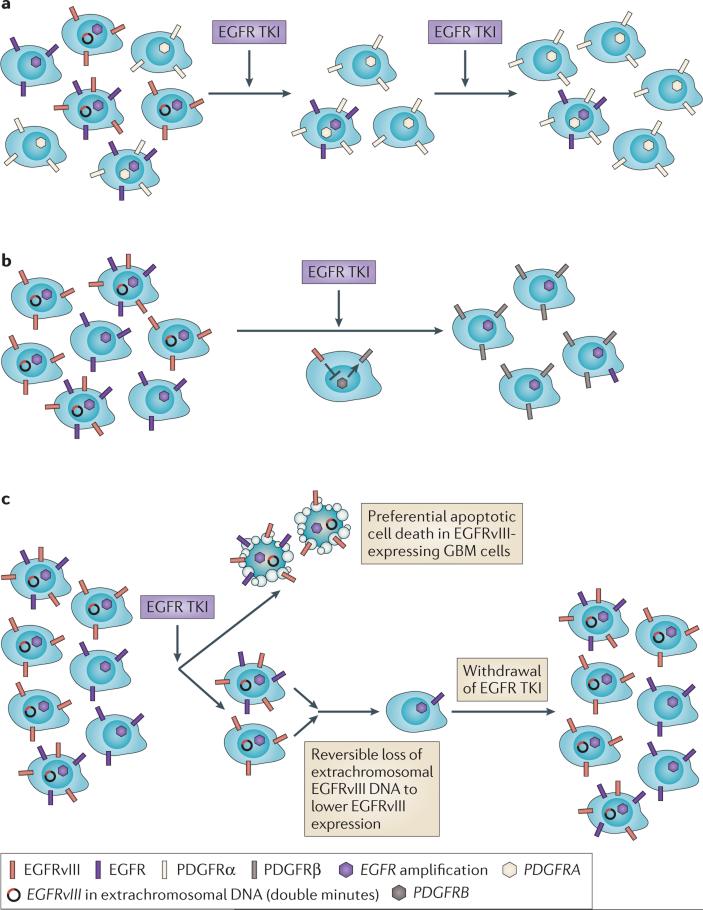
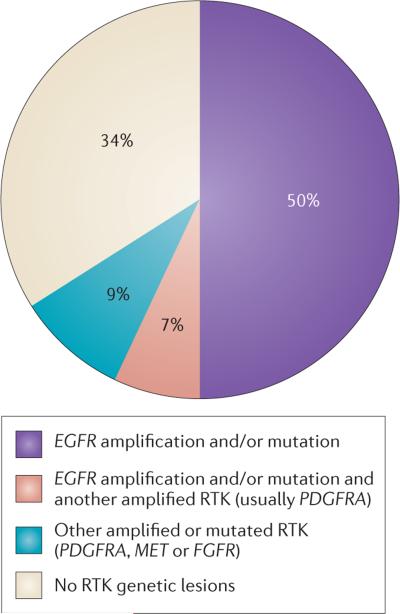
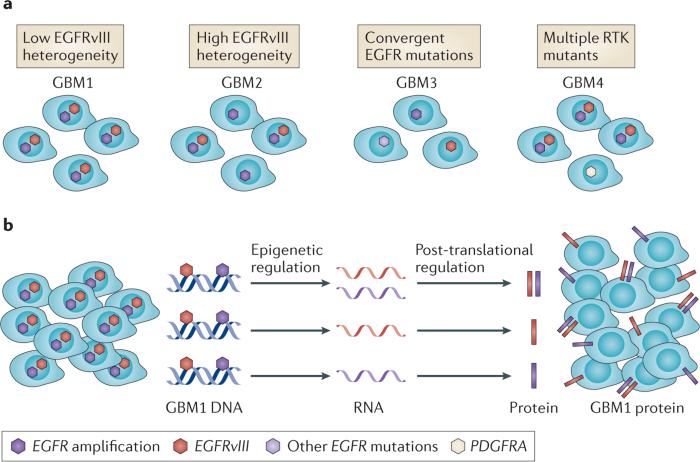
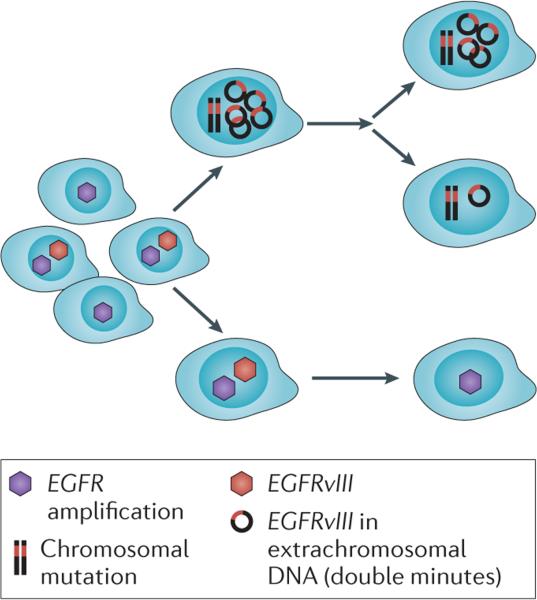
As tumours evolve, the daughter cells of the initiating cell often become molecularly heterogeneous and develop different functional properties and therapeutic vulnerabilities. In glioblastoma (GBM), a lethal form of brain cancer, the heterogeneous expression of the epidermal growth factor receptor (EGFR) poses a substantial challenge for the effective use of EGFR-targeted therapies. Understanding the mechanisms that cause EGFR heterogeneity in GBM should provide better insights into how they, and possibly other amplified receptor tyrosine kinases, affect cellular signalling, metabolism and drug resistance.
随着肿瘤的演变,起始细胞的子代细胞往往在分子水平上变得异质性,并发展出不同的功能特性和治疗易损性。在胶质母细胞瘤(GBM)这种致命的脑癌形式中,表皮生长因子受体(EGFR)的异质性表达对有效使用EGFR靶向疗法构成了重大挑战。了解导致GBM中EGFR异质性的机制,应能更好地洞察它们以及可能其他扩增的受体酪氨酸激酶如何影响细胞信号传导、代谢和耐药性。