Barteková Monika, Šimončíková Petra, Fogarassyová Mária, Ivanová Monika, Okruhlicová Ľudmila, Tribulová Narcisa, Dovinová Ima, Barančík Miroslav
Institute for Heart Research, Slovak Academy of Sciences, Bratislava 84005, Slovakia.
Institute of Normal and Pathological Physiology, Slovak Academy of Sciences, Bratislava 84005, Slovakia.
Int J Mol Sci. 2015 Apr 13;16(4):8168-85. doi: 10.3390/ijms16048168.
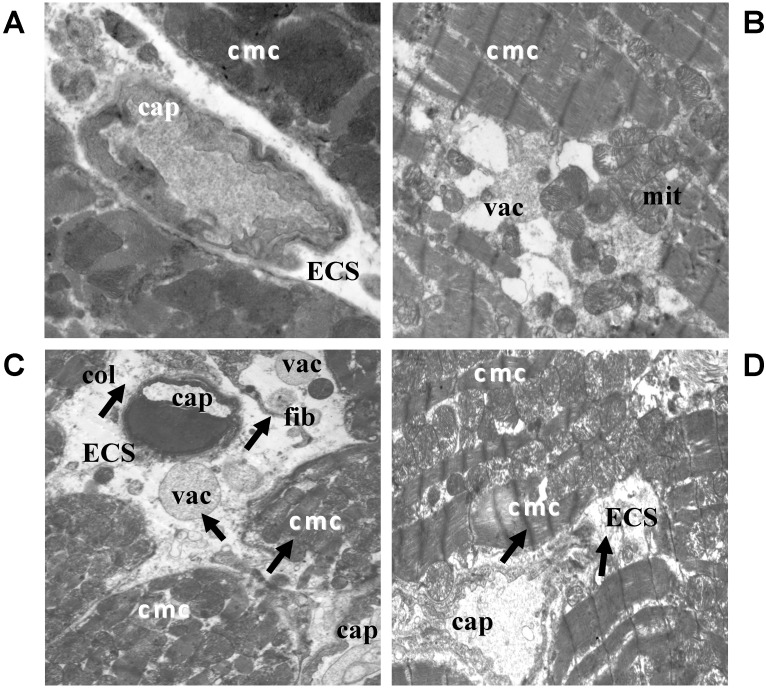
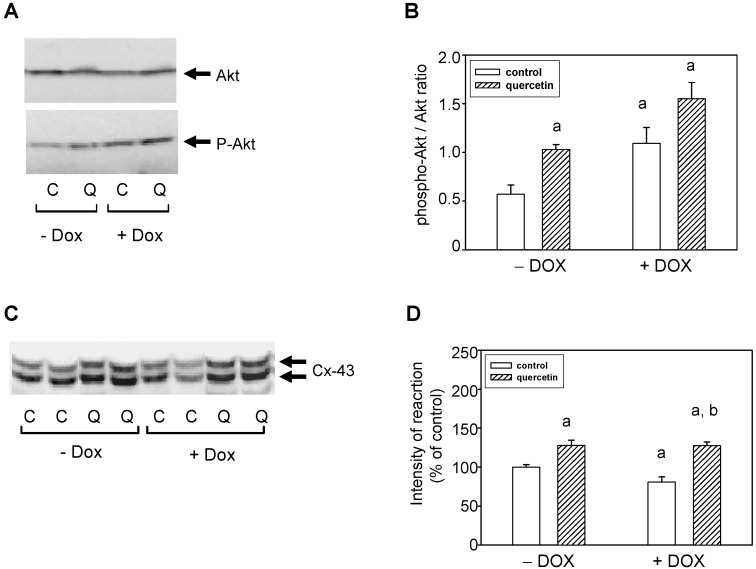
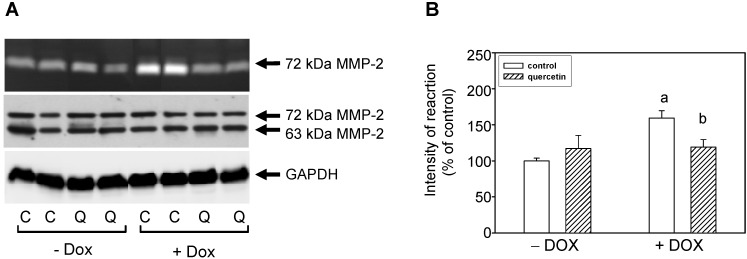
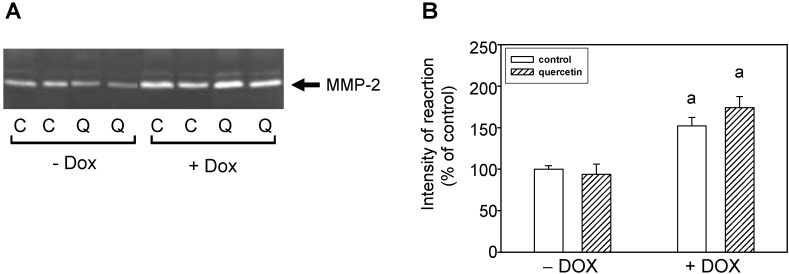
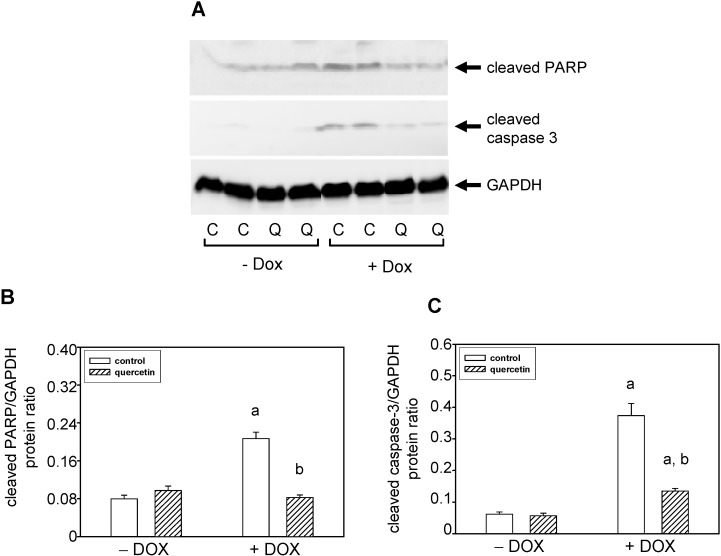
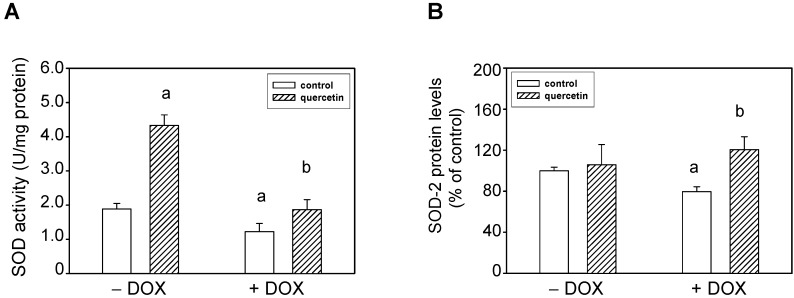
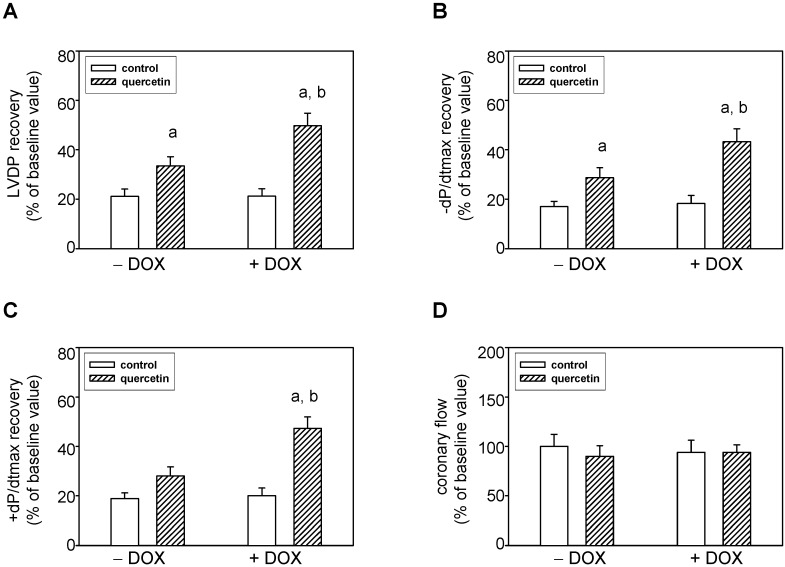
Quercetin (QCT) is flavonoid that possesses various biological functions including anti-oxidative and radical-scavenging activities. Moreover, QCT exerts some preventive actions in treatment of cardiovascular diseases. The aim of present study was to explore effects of prolonged administration of QCT on changes induced by repeated application of doxorubicin (DOX) in rat hearts. We focused on the ultrastructure of myocardium, matrix metalloproteinases (MMPs), biometric parameters, and apoptosis induction. Our aim was also to examine effects of QCT on ischemic tolerance in hearts exposed to chronic effects of DOX, and to determine possible mechanisms underlying effects of QCT. Our results showed that QCT prevented several negative chronic effects of DOX: (I) reversed DOX-induced blood pressure increase; (II) mediated improvement of deleterious effects of DOX on ultrastructure of left ventricle; (III) prevented DOX-induced effects on tissue MMP-2 activation; and (iv) reversed effects of DOX on apoptosis induction and superoxide dismutase inhibition. Moreover, we showed that rat hearts exposed to effects of QCT were more resistant to ischemia/reperfusion injury. Effects of QCT on modulation of ischemic tolerance were linked to Akt kinase activation and connexin-43 up-regulation. Taken together, these results demonstrate that prolonged treatment with QCT prevented negative chronic effects of DOX on blood pressure, cellular damage, MMP-2 activation, and apoptosis induction. Moreover, QCT influenced myocardial responses to acute ischemic stress. These facts bring new insights into mechanisms of QCT action on rat hearts exposed to the chronic effects of DOX.
槲皮素(QCT)是一种具有多种生物学功能的黄酮类化合物,包括抗氧化和自由基清除活性。此外,QCT在心血管疾病治疗中发挥了一些预防作用。本研究的目的是探讨长期给予QCT对反复应用阿霉素(DOX)诱导的大鼠心脏变化的影响。我们重点关注心肌的超微结构、基质金属蛋白酶(MMPs)、生物测量参数和细胞凋亡诱导。我们的目的还包括研究QCT对暴露于DOX慢性影响的心脏缺血耐受性的作用,并确定QCT作用的潜在机制。我们的结果表明,QCT预防了DOX的几种负面慢性影响:(I)逆转DOX诱导的血压升高;(II)介导改善DOX对左心室超微结构的有害影响;(III)预防DOX对组织MMP-2激活的影响;以及(iv)逆转DOX对细胞凋亡诱导和超氧化物歧化酶抑制的作用。此外,我们表明,暴露于QCT作用下的大鼠心脏对缺血/再灌注损伤更具抵抗力。QCT对缺血耐受性调节的作用与Akt激酶激活和连接蛋白43上调有关。综上所述,这些结果表明,长期使用QCT可预防DOX对血压、细胞损伤、MMP-2激活和细胞凋亡诱导的负面慢性影响。此外,QCT影响心肌对急性缺血应激的反应。这些事实为QCT对暴露于DOX慢性影响的大鼠心脏的作用机制带来了新的见解。