Giardina Charles, Nakanishi Masako, Khan Awaad, Kuratnik Anton, Xu Wanli, Brenner Bruce, Rosenberg Daniel W
Department of Molecular and Cell Biology, University of Connecticut, Storrs, Connecticut.
Center for Molecular Medicine, University of Connecticut Health Center, Farmington, Connecticut.
Cancer Prev Res (Phila). 2015 May;8(5):387-99. doi: 10.1158/1940-6207.CAPR-14-0371. Epub 2015 Apr 14.
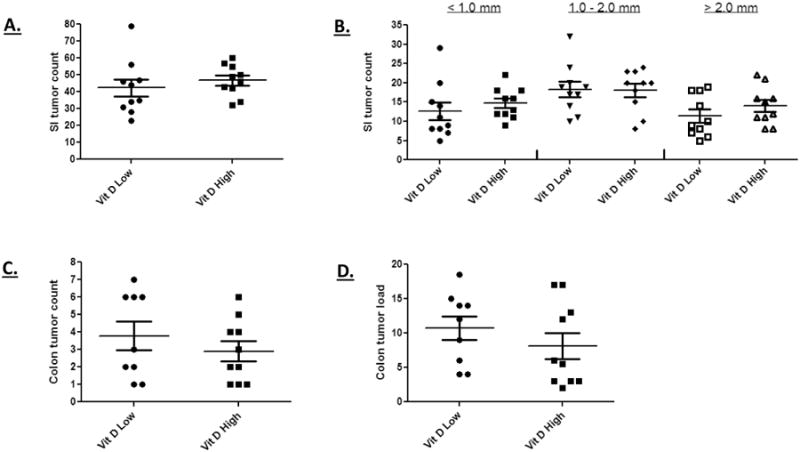
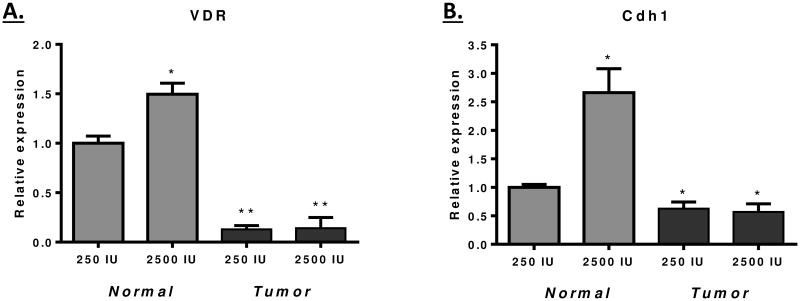
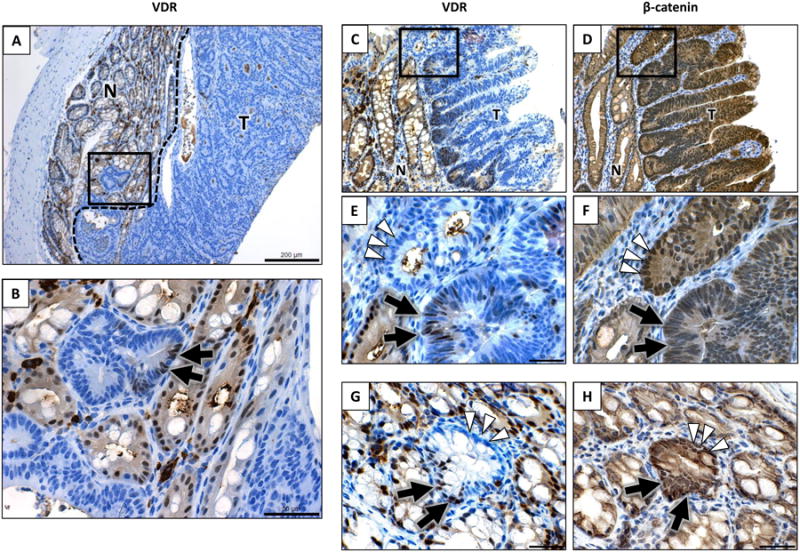
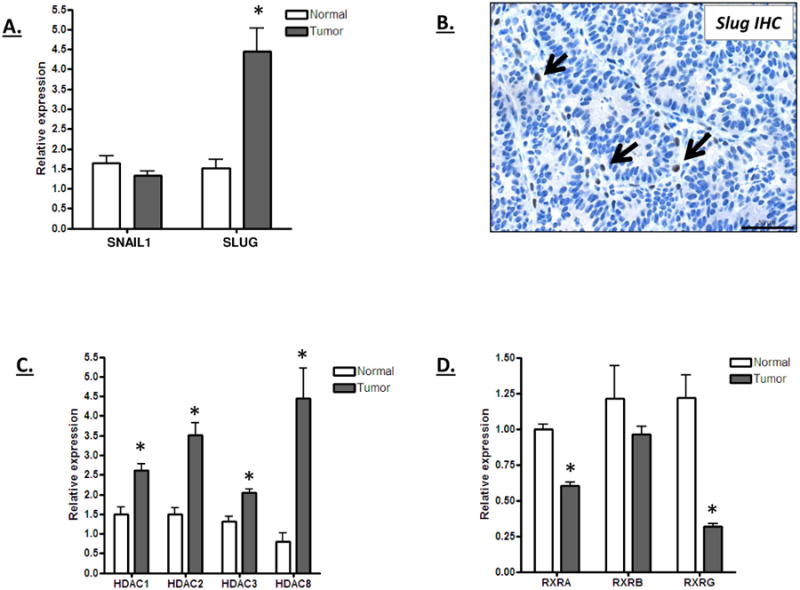
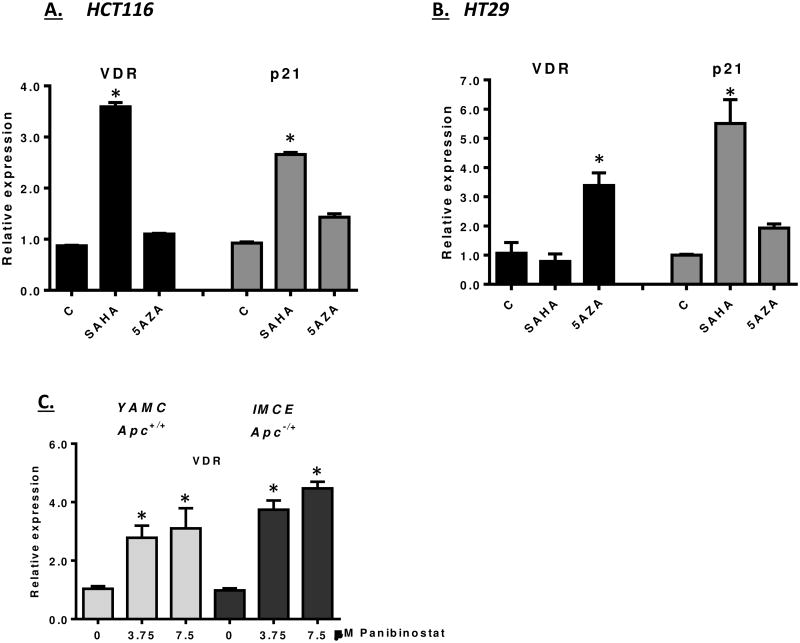
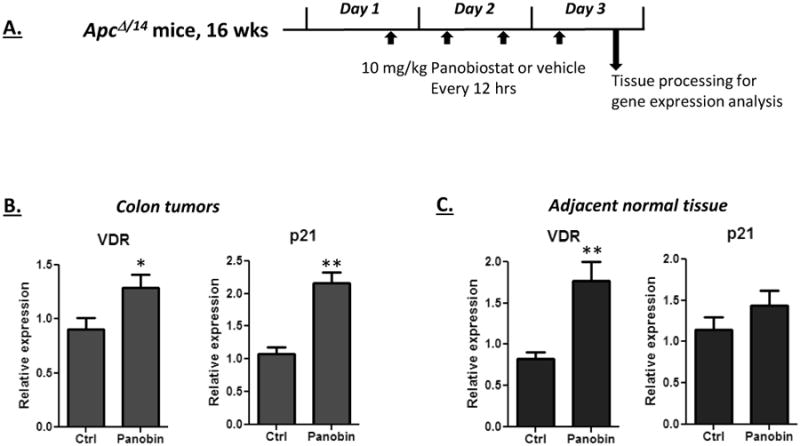
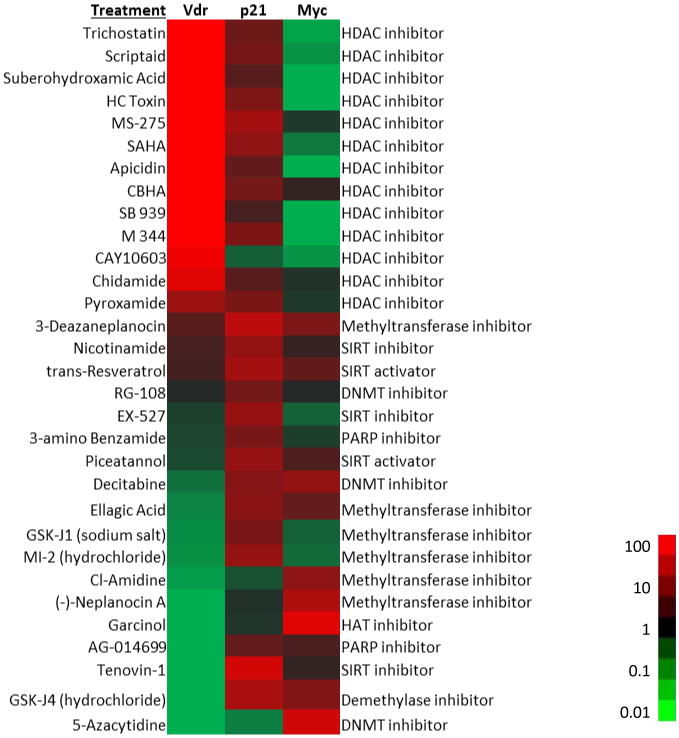
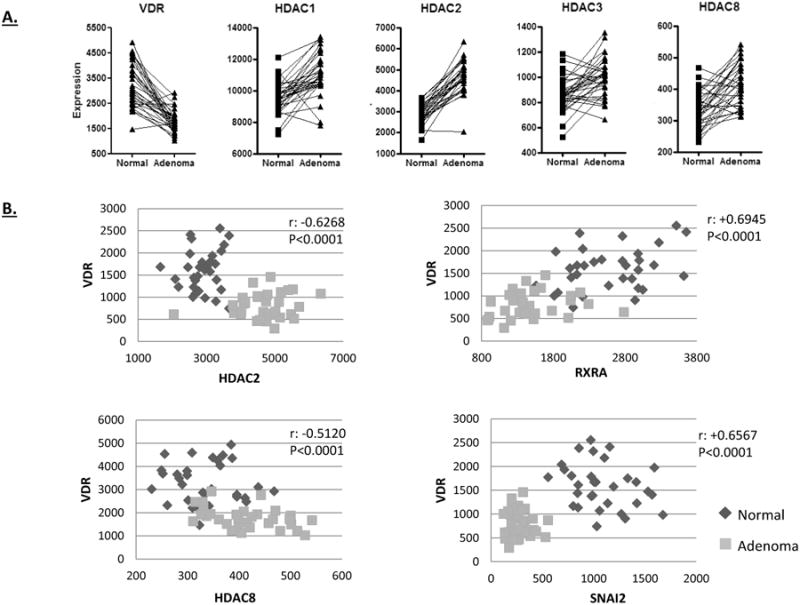
One variable that may affect the ability of vitamin D to reduce colon cancer risk is the expression of its high-affinity receptor, VDR. Here, we show that vitamin D does not reduce tumor formation in Apc(Δ14/+) mice and that VDR expression is lost in the majority of the colon tumor cells. The extent of VDR loss corresponded inversely to the level of β-catenin nuclear localization and could be observed in early lesions composed of just a few crypts. Analysis of reported VDR regulators showed that the repressing class I histone deacetylases (HDAC) were significantly elevated in the tumors (up to 4-fold), whereas the VDR-activating retinoid X receptors (RXR) were downregulated (∼50%). Expression of the Slug repressor was also increased, but was found primarily in stromal cells. Analysis of epigenetically active compounds on colon cell lines and intestinal organoids showed that HDAC inhibitors were particularly adept at stimulating VDR expression. Treatment of tumor-bearing Apc(Δ14/+) mice with the HDAC inhibitor panobinostat increased VDR expression in the tumors and normal mucosa. The RXR agonist bexarotene failed to activate VDR expression, indicating that RXR ligands were not limiting. Analysis of human microarray data indicated that VDR mRNA is frequently downregulated in colon adenomas, which correlated positively with RXRA expression and inversely with HDAC 2 and 8 expression. Human adenomas showed variable VDR protein expression levels, both between and within individual lesions. Determining the mechanisms of VDR regulation in colon neoplasms may significantly enhance our ability to use vitamin D as a cancer prevention agent.
一个可能影响维生素D降低结肠癌风险能力的变量是其高亲和力受体VDR的表达。在此,我们表明维生素D并不能减少Apc(Δ14/+)小鼠的肿瘤形成,并且在大多数结肠肿瘤细胞中VDR表达缺失。VDR缺失的程度与β-连环蛋白核定位水平呈负相关,并且在仅由少数隐窝组成的早期病变中即可观察到。对已报道的VDR调节因子的分析表明,抑制性I类组蛋白去乙酰化酶(HDAC)在肿瘤中显著升高(高达4倍),而激活VDR的视黄酸X受体(RXR)则下调(约50%)。Slug抑制因子的表达也增加,但主要在基质细胞中发现。对结肠细胞系和肠类器官上的表观遗传活性化合物的分析表明,HDAC抑制剂特别擅长刺激VDR表达。用HDAC抑制剂帕比司他治疗荷瘤Apc(Δ14/+)小鼠可增加肿瘤和正常黏膜中VDR的表达。RXR激动剂贝沙罗汀未能激活VDR表达,表明RXR配体并不缺乏。对人类微阵列数据的分析表明,VDR mRNA在结肠腺瘤中经常下调,这与RXRA表达呈正相关,与HDAC 2和8表达呈负相关。人类腺瘤在个体病变之间和病变内部的VDR蛋白表达水平各不相同。确定结肠肿瘤中VDR调节的机制可能会显著提高我们将维生素D用作癌症预防剂的能力。