Han Chao, Zhou Yubing, An Qi, Li Feng, Li Duolu, Zhang Xiaojian, Yu Zujing, Zheng Lili, Duan Zhenfeng, Kan Quancheng
Department of Clinical Pharmacology, The First Affiliated Hospital of Zhengzhou University, Zhengzhou, 450052, People's Republic of China.
Department of Infectious Diseases, The First Affiliated Hospital of Zhengzhou University, Zhengzhou, People's Republic of China.
Tumour Biol. 2015 Sep;36(9):6715-23. doi: 10.1007/s13277-015-3358-6. Epub 2015 Apr 1.
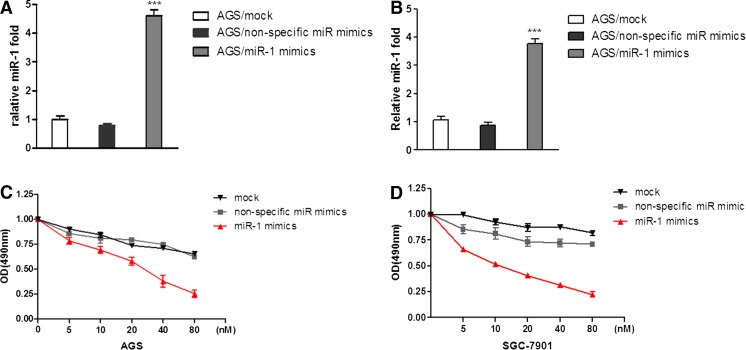
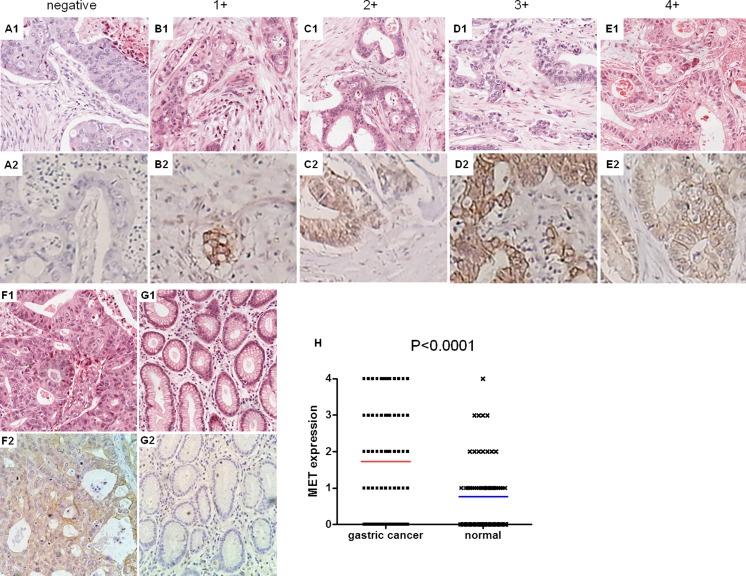
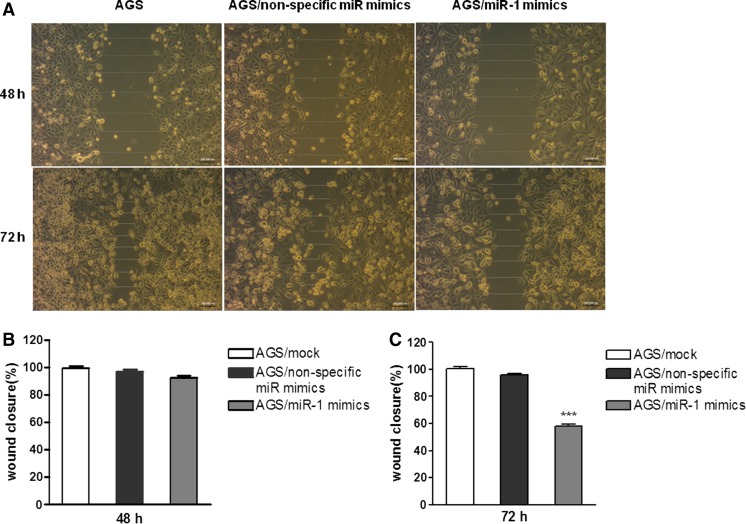
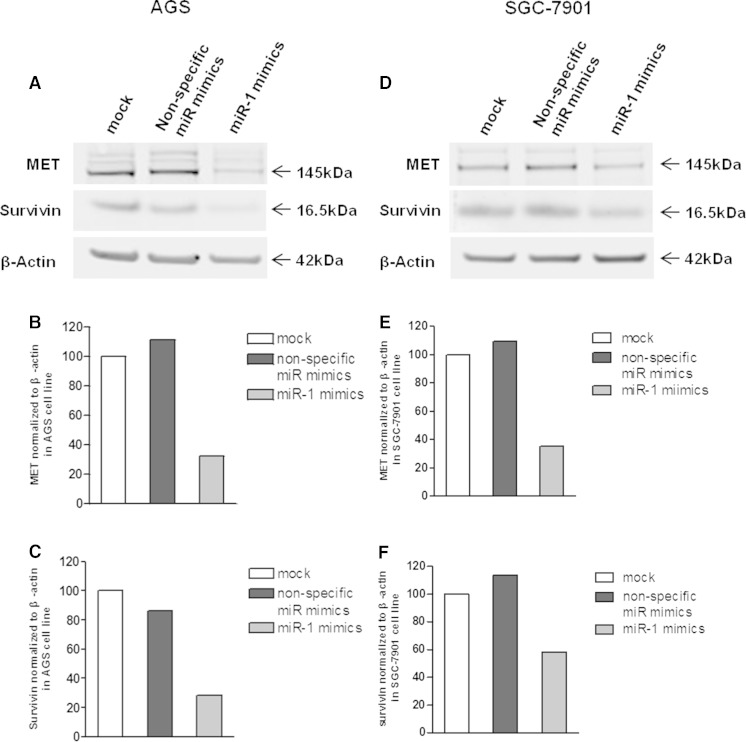
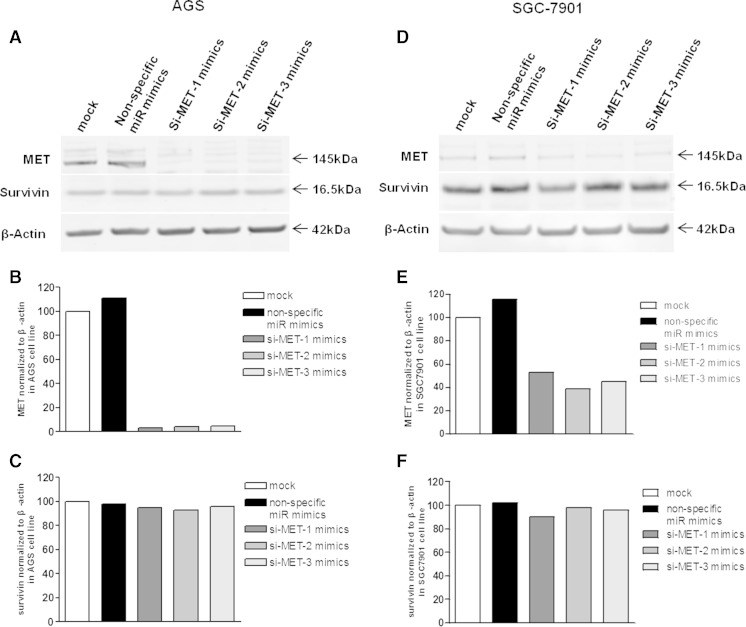
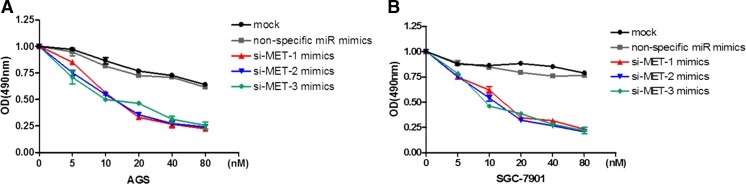
MicroRNAs (miRs) are short endogenous non-coding RNAs that act as posttranscriptional regulatory factors of gene expression. Downregulation of miR-1 has been reported in gastric cancer; however, the mechanisms underlying its functions via target genes in gastric cancer remain largely unknown. The purpose of this study was to investigate the mechanism by which miR-1 inhibits gastric cancer cell proliferation and migration. The effects of miR-1 on gastric cancer cell proliferation and migration were determined by MTT and wound-healing assays. Cell protein expression of the miR-1 target gene MET was analyzed by Western blotting. Finally, MET expression was evaluated by immunohistochemistry in a stomach tumor tissue microarray (TMA). Ectopic expression of miR-1 inhibited proliferation and migration in both AGS and SGC-7901 gastric cancer cell lines. miR-1 directly targets the MET gene and downregulates its expression. MET siRNA also inhibited proliferation and migration in both cell lines. Immunohistochemistry revealed significantly higher MET expression levels in gastric cancer tissues compared with matched adjacent non-cancer tissues. These findings indicate that the miR-1/MET pathway is a potential therapeutic target due to its crucial role in gastric cancer cell proliferation and migration.
微小RNA(miR)是短链内源性非编码RNA,作为基因表达的转录后调控因子发挥作用。已有报道称胃癌中miR-1表达下调;然而,其通过胃癌靶基因发挥功能的机制仍 largely 未知。本研究的目的是探讨miR-1抑制胃癌细胞增殖和迁移的机制。通过MTT和伤口愈合试验确定miR-1对胃癌细胞增殖和迁移的影响。通过蛋白质印迹法分析miR-1靶基因MET的细胞蛋白表达。最后,在胃肿瘤组织芯片(TMA)中通过免疫组织化学评估MET表达。miR-1的异位表达抑制了AGS和SGC-7901胃癌细胞系的增殖和迁移。miR-1直接靶向MET基因并下调其表达。MET siRNA也抑制了这两种细胞系的增殖和迁移。免疫组织化学显示,与匹配的相邻非癌组织相比,胃癌组织中MET表达水平显著更高。这些发现表明,miR-1/MET途径因其在胃癌细胞增殖和迁移中的关键作用而成为一个潜在的治疗靶点。