Liu Wei, Liu Jianjun, Yin Dongxue, Zhao Xiaowen
College of Forestry, Northwest A & F University, Yangling, China.
PLoS One. 2015 Apr 15;10(4):e0122981. doi: 10.1371/journal.pone.0122981. eCollection 2015.
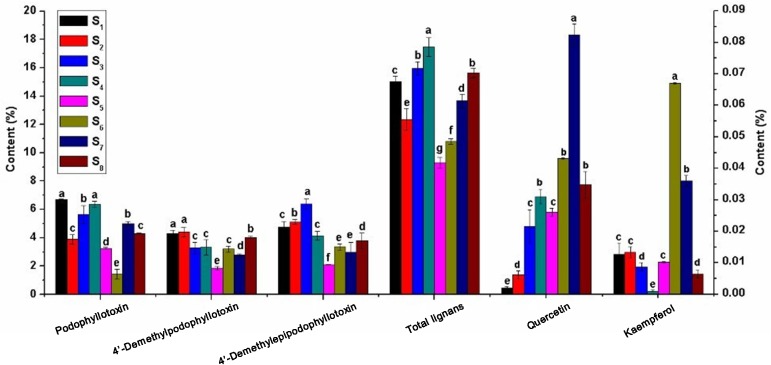
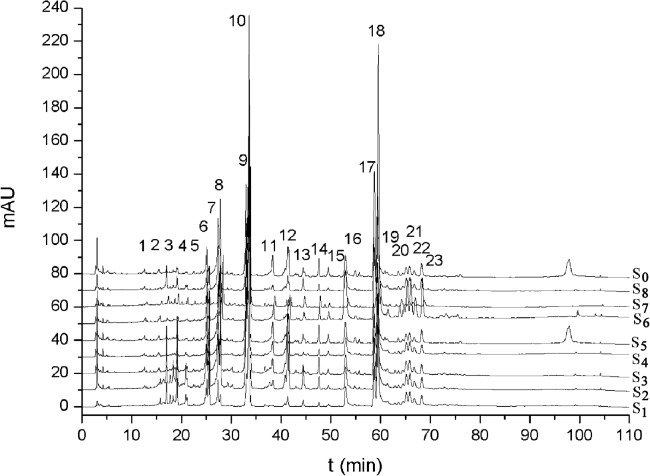
The quality of traditional Chinese herbal medicine, which plays a very important role in the health system of China, is determined by the active substances produced by the plants. The type, content, and proportion of these substances may vary depending on ecological factors in areas where the plants are grown. Sinopodophyllum hexandrum (Royle) T.S. Ying, an endangered plant species with great medical value, was investigated in eight production locations representative of its natural geographical distribution range in China. The correlation between the contents of the active ingredients extracted from the roots and rhizomes of S. hexandrum and the ecological factors were evaluated step-by-step using a series of computational biology methodologies. The results showed that ecological factors had significant effects on the contents but not on the types of the active ingredients in eight production locations. The primary ecological factors influencing the active substances included the annual average precipitation, July mean temperature, frost-free period, sunshine duration, soil pH, soil organic matter, and rapidly available potassium in the soil. The annual average precipitation was the most important determinant factor and was significantly and negatively correlated with the active ingredient contents (P < 0.001). In contrast, organic matter was the most important limiting factor and was significantly and positively correlated with the active substances. These ecological factors caused 98.13% of the total geographical variation of the active ingredient contents. The climate factors contributed more to the active ingredient contents than did the soil factors. It was concluded that from the view of the contents of the secondary metabolites and ecological factors of each growing location, in Jingyuan, Ningxia Province, and Yongdeng, Gansu Province, conditions were favorable to the production of podophyllotoxin and lignans, whereas in Shangri-La, Yunnan Province, and Nyingchi, Tibet, conditions were favorable to the production of quercetin and kaempferol.
中药在中国卫生体系中发挥着非常重要的作用,其质量由植物产生的活性物质决定。这些物质的种类、含量和比例可能因植物生长地区的生态因素而有所不同。桃儿七是一种具有重要药用价值的濒危植物,在中国其天然地理分布范围内选取了八个产地进行调查。采用一系列计算生物学方法逐步评估了桃儿七根状茎中提取的活性成分含量与生态因素之间的相关性。结果表明,生态因素对八个产地活性成分的含量有显著影响,但对其种类没有影响。影响活性物质的主要生态因素包括年平均降水量、7月平均气温、无霜期、日照时长、土壤pH值、土壤有机质和土壤速效钾。年平均降水量是最重要的决定因素,与活性成分含量呈显著负相关(P < 0.001)。相比之下,有机质是最重要的限制因素,与活性物质呈显著正相关。这些生态因素导致活性成分含量的总地理变异的98.13%。气候因素对活性成分含量的贡献大于土壤因素。结论是,从各产地次生代谢产物含量和生态因素来看,宁夏靖远和甘肃永登的条件有利于鬼臼毒素和木脂素的产生,而云南香格里拉和西藏林芝的条件有利于槲皮素和山奈酚的产生。