Wilhelm-Buchstab Timo, Buchstab Barbara Myrthe, Leitzen Christina, Garbe Stephan, Müdder Thomas, Oberste-Beulmann Susanne, Sprinkart Alois Martin, Simon Birgit, Nelles Michael, Block Wolfgang, Schoroth Felix, Schild Hans Heinz, Schüller Heinrich
University of Bonn, Department of Radiology, Radiooncology, Sigmund-Freud-Straße 25, 53105, Bonn, Deutschland, Germany.
PLoS One. 2015 Apr 15;10(4):e0123440. doi: 10.1371/journal.pone.0123440. eCollection 2015.
We observed visual sensations (VSs) in patients undergoing intensity modulated radiotherapy (IMRT) of the brain without the beam passing through ocular structures. We analyzed this phenomenon especially with regards to reproducibility, and origin.
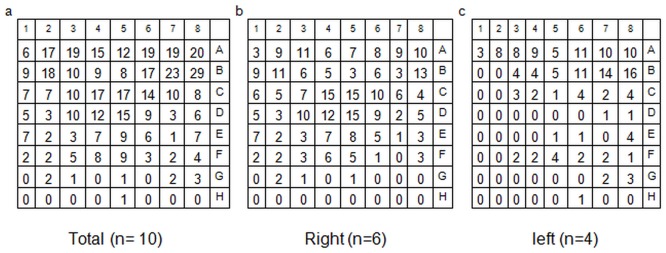
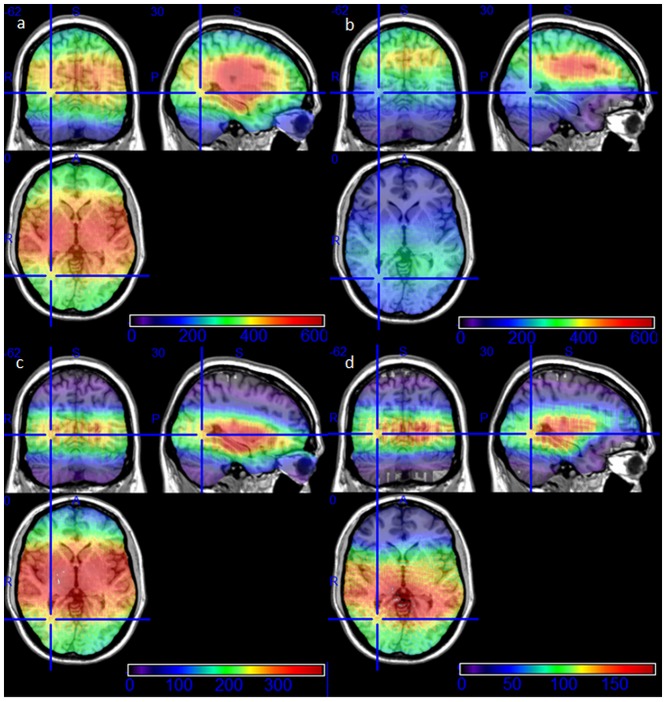
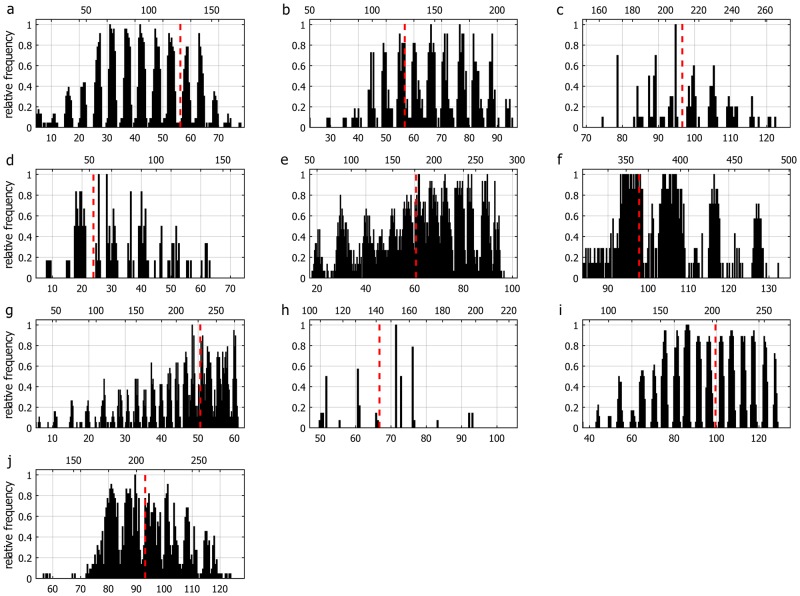
Analyzed were ten consecutive patients (aged 41-71 years) with glioblastoma multiforme who received pulsed IMRT (total dose 60Gy) with helical tomotherapy (TT). A megavolt-CT (MVCT) was performed daily before treatment. VSs were reported and recorded using a triggered event recorder. The frequency of VSs was calculated and VSs were correlated with beam direction and couch position. Subjective patient perception was plotted on an 8x8 visual field (VF) matrix. Distance to the orbital roof (OR) from the first beam causing a VS was calculated from the Dicom radiation therapy data and MVCT data. During 175 treatment sessions (average 17.5 per patient) 5959 VSs were recorded and analyzed. VSs occurred only during the treatment session not during the MVCTs. Plotting events over time revealed patient-specific patterns. The average cranio-caudad extension of VS-inducing area was 63.4mm (range 43.24-92.1mm). The maximum distance between the first VS and the OR was 56.1mm so that direct interaction with the retina is unlikely. Data on subjective visual perception showed that VSs occurred mainly in the upper right and left quadrants of the VF. Within the visual pathways the highest probability for origin of VSs was seen in the optic chiasm and the optic tract (22%).
There is clear evidence that interaction of photon irradiation with neuronal structures distant from the eye can lead to VSs.
我们在脑部接受调强放射治疗(IMRT)且射线未穿过眼部结构的患者中观察到了视觉感受(VSs)。我们特别针对这种现象的可重复性及起源进行了分析。
分析了10例连续的多形性胶质母细胞瘤患者(年龄41 - 71岁),他们接受了螺旋断层放疗(TT)的脉冲IMRT(总剂量60Gy)。治疗前每日进行兆伏级CT(MVCT)。使用触发事件记录器报告并记录VSs。计算VSs的频率,并将VSs与射线方向和治疗床位置相关联。将患者的主观感受绘制在8×8视野(VF)矩阵上。根据Dicom放射治疗数据和MVCT数据计算引起VS的第一束射线到眶顶(OR)的距离。在175个治疗疗程(平均每位患者17.5个疗程)中,记录并分析了5959次VSs。VSs仅在治疗疗程期间出现,而不在MVCT期间出现。随着时间绘制事件显示出患者特定的模式。诱导VS区域的平均头尾延伸为63.4mm(范围43.24 - 92.1mm)。第一个VS与OR之间的最大距离为56.1mm,因此与视网膜直接相互作用的可能性不大。关于主观视觉感受的数据表明,VSs主要发生在VF的右上象限和左上象限。在视觉通路中,VSs起源的最高概率出现在视交叉和视束(22%)。
有明确证据表明光子辐射与远离眼睛的神经元结构相互作用可导致VSs。