Kazakov Teymur, Yang Feng, Ramanathan Harish N, Kohlway Andrew, Diamond Michael S, Lindenbach Brett D
Department of Microbial Pathogenesis, Yale University School of Medicine, New Haven, Connecticut, United States of America.
Department of Molecular Biophysics and Biochemistry, Yale University, New Haven, Connecticut, United States of America.
PLoS Pathog. 2015 Apr 13;11(4):e1004817. doi: 10.1371/journal.ppat.1004817. eCollection 2015 Apr.
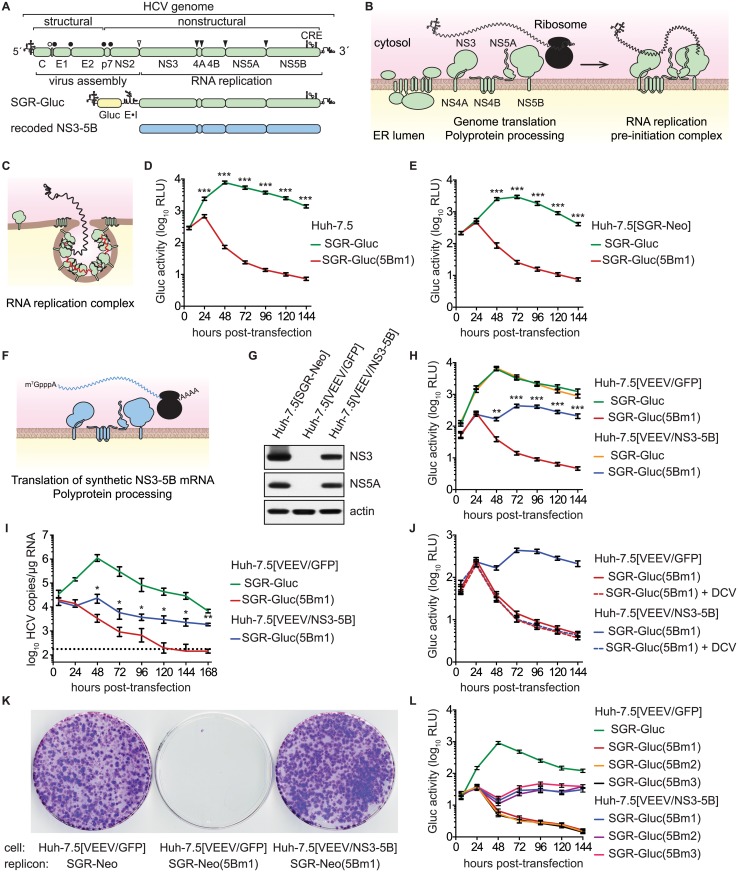
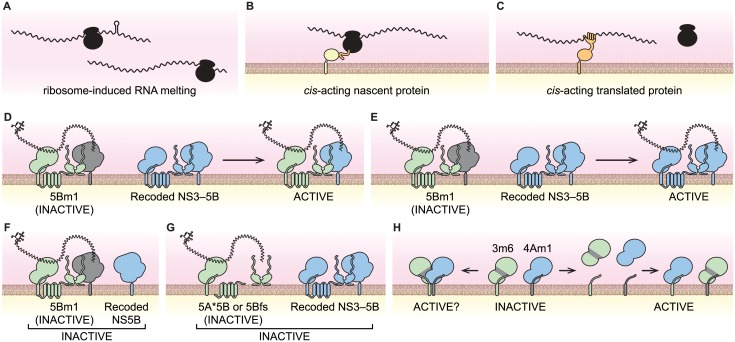
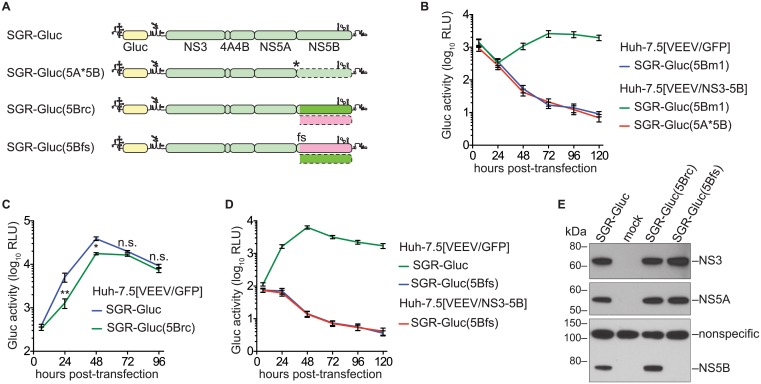
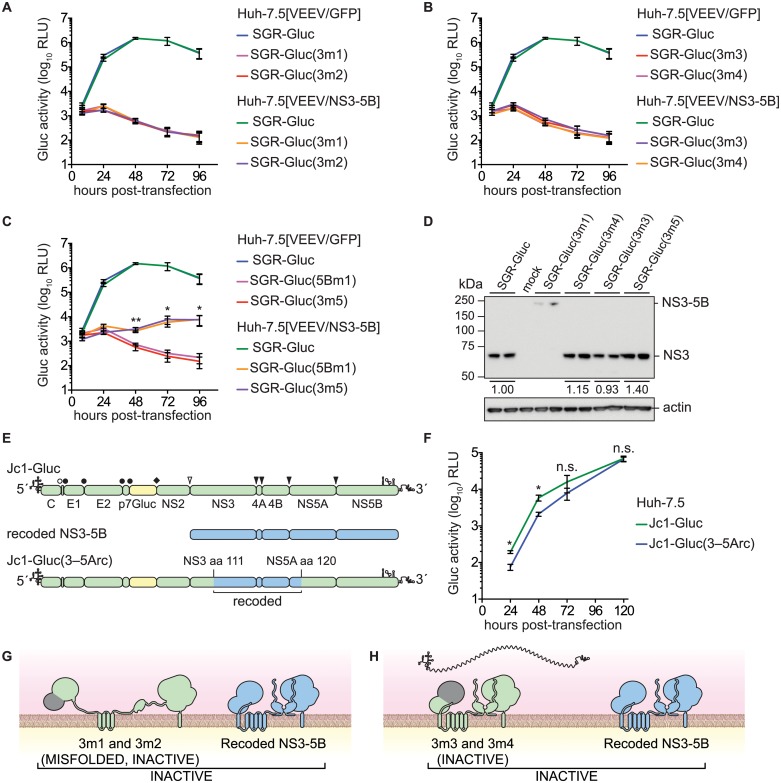
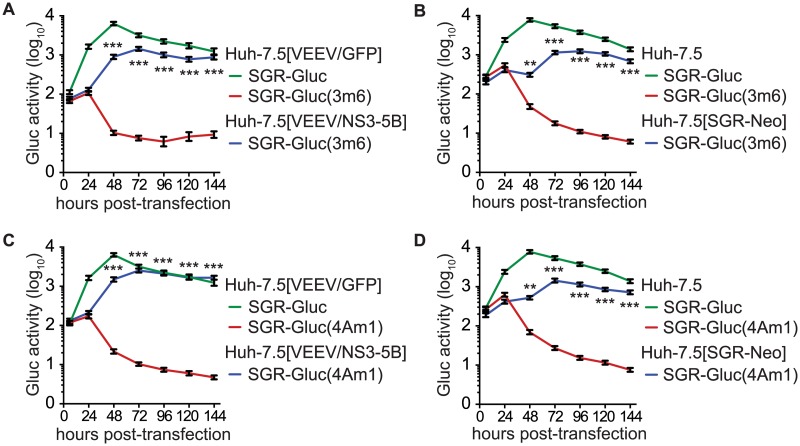
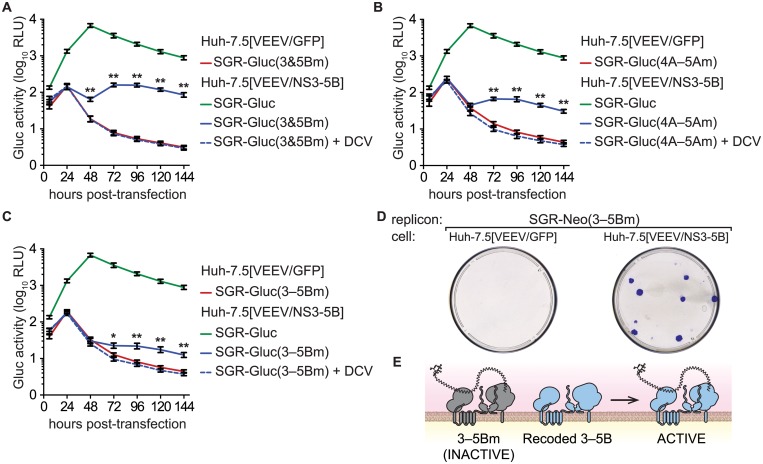
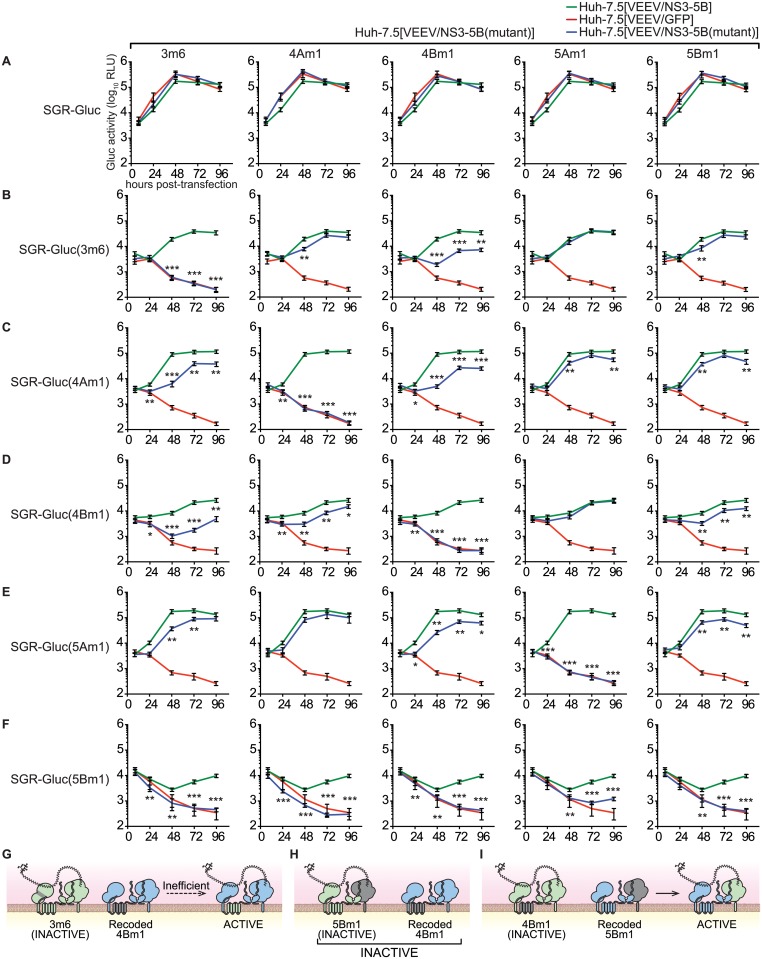
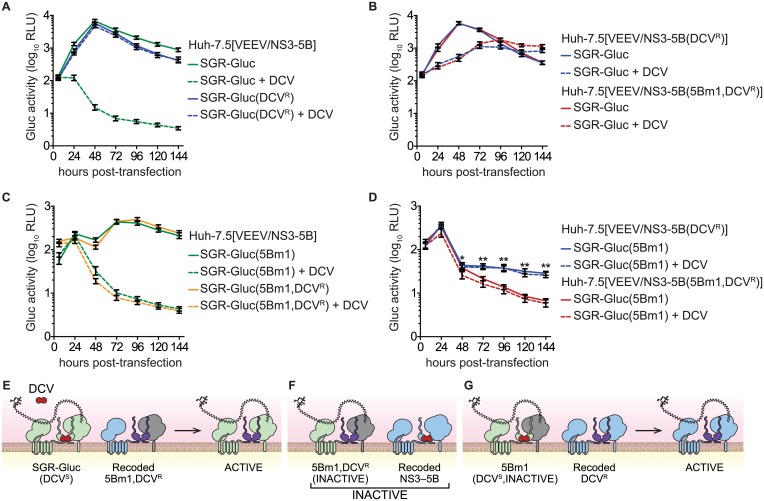
Many positive-strand RNA viruses encode genes that can function in trans, whereas other genes are required in cis for genome replication. The mechanisms underlying trans- and cis-preferences are not fully understood. Here, we evaluate this concept for hepatitis C virus (HCV), an important cause of chronic liver disease and member of the Flaviviridae family. HCV encodes five nonstructural (NS) genes that are required for RNA replication. To date, only two of these genes, NS4B and NS5A, have been trans-complemented, leading to suggestions that other replicase genes work only in cis. We describe a new quantitative system to measure the cis- and trans-requirements for HCV NS gene function in RNA replication and identify several lethal mutations in the NS3, NS4A, NS4B, NS5A, and NS5B genes that can be complemented in trans, alone or in combination, by expressing the NS3-5B polyprotein from a synthetic mRNA. Although NS5B RNA binding and polymerase activities can be supplied in trans, NS5B protein expression was required in cis, indicating that NS5B has a cis-acting role in replicase assembly distinct from its known enzymatic activity. Furthermore, the RNA binding and NTPase activities of the NS3 helicase domain were required in cis, suggesting that these activities play an essential role in RNA template selection. A comprehensive complementation group analysis revealed functional linkages between NS3-4A and NS4B and between NS5B and the upstream NS3-5A genes. Finally, NS5B polymerase activity segregated with a daclatasvir-sensitive NS5A activity, which could explain the synergy of this antiviral compound with nucleoside analogs in patients. Together, these studies define several new aspects of HCV replicase structure-function, help to explain the potency of HCV-specific combination therapies, and provide an experimental framework for the study of cis- and trans-acting activities in positive-strand RNA virus replication more generally.
许多正链RNA病毒编码的基因可进行反式作用,而其他基因在顺式条件下对基因组复制是必需的。反式和顺式偏好的潜在机制尚未完全明了。在此,我们针对丙型肝炎病毒(HCV)评估这一概念,HCV是慢性肝病的重要病因,属于黄病毒科。HCV编码RNA复制所需的5个非结构(NS)基因。迄今为止,这些基因中只有NS4B和NS5A两个基因已实现反式互补,这表明其他复制酶基因仅在顺式条件下起作用。我们描述了一种新的定量系统,用于测量HCV NS基因在RNA复制中对顺式和反式的需求,并鉴定了NS3、NS4A、NS4B、NS5A和NS5B基因中的几个致死突变,这些突变可通过从合成mRNA表达NS3-5B多蛋白单独或联合进行反式互补。尽管NS5B的RNA结合和聚合酶活性可进行反式供应,但NS5B蛋白表达在顺式条件下是必需的,这表明NS5B在复制酶组装中具有不同于其已知酶活性的顺式作用。此外,NS3解旋酶结构域的RNA结合和NTPase活性在顺式条件下是必需的,这表明这些活性在RNA模板选择中起重要作用。全面的互补组分析揭示了NS3-4A与NS4B之间以及NS5B与上游NS3-5A基因之间的功能联系。最后,NS5B聚合酶活性与对达卡他韦敏感的NS5A活性相关,这可以解释这种抗病毒化合物与核苷类似物在患者中的协同作用。总之,这些研究定义了HCV复制酶结构功能的几个新方面,有助于解释HCV特异性联合疗法的效力,并为更广泛地研究正链RNA病毒复制中的顺式和反式作用活性提供了一个实验框架。