Huang Wei, Cash Nicole, Wen Li, Szatmary Peter, Mukherjee Rajarshi, Armstrong Jane, Chvanov Michael, Tepikin Alexei V, Murphy Michael P, Sutton Robert, Criddle David N
NIHR Liverpool Pancreas Biomedical Research Unit, Royal Liverpool University Hospital, UK ; Department of Cellular and Molecular Physiology, University of Liverpool, Liverpool L69 3BX, UK ; Department of Integrated Traditional Chinese and Western Medicine, Sichuan Provincial Pancreatitis Centre, West China Hospital, Sichuan University, China.
Department of Cellular and Molecular Physiology, University of Liverpool, Liverpool L69 3BX, UK.
Mediators Inflamm. 2015;2015:901780. doi: 10.1155/2015/901780. Epub 2015 Mar 23.
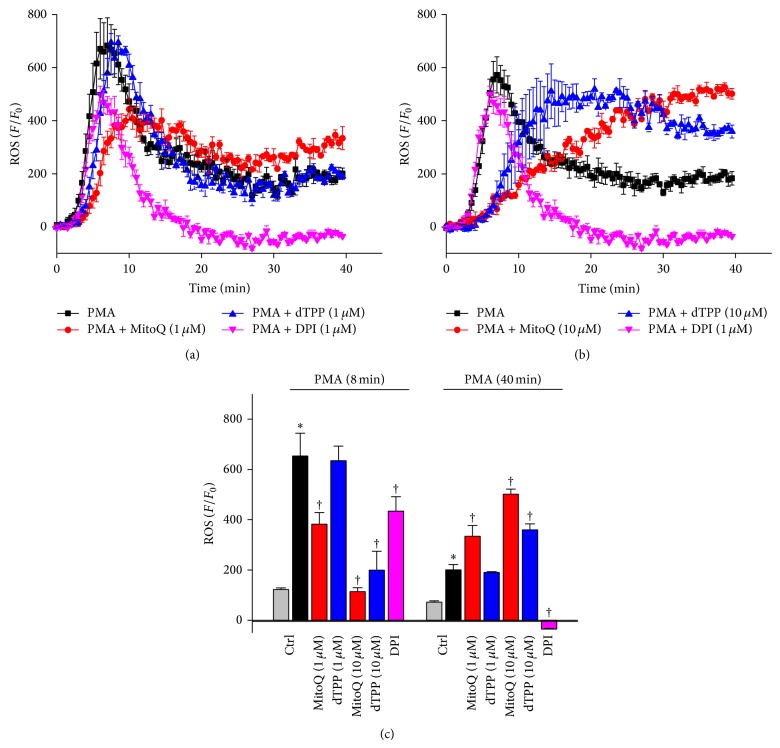
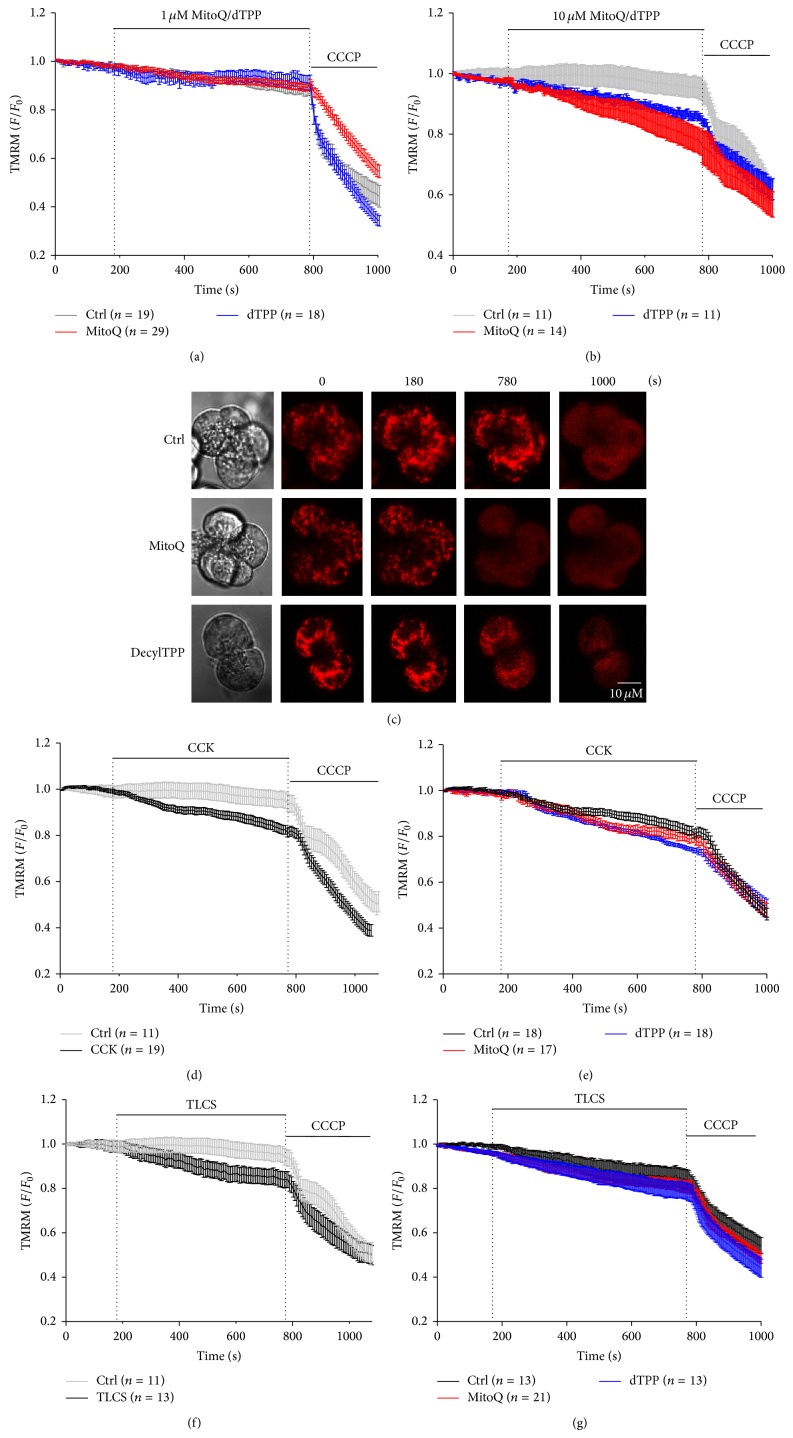
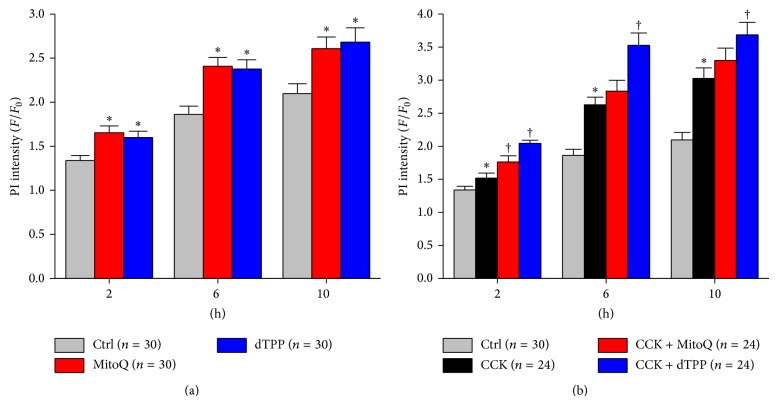
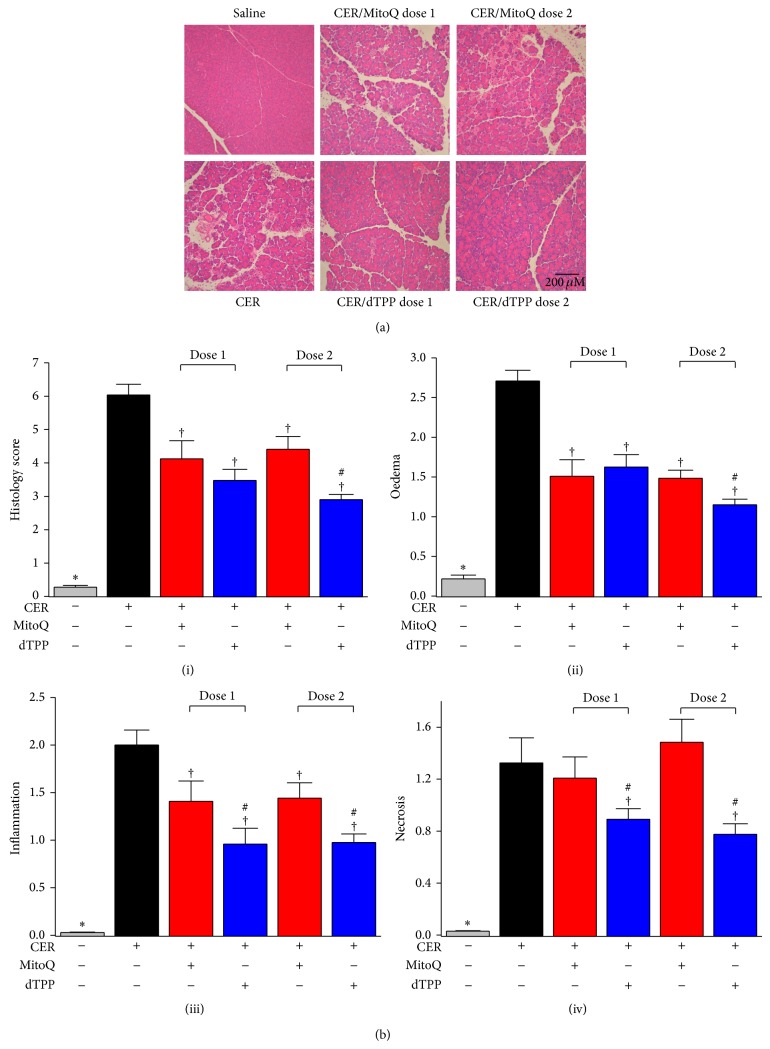
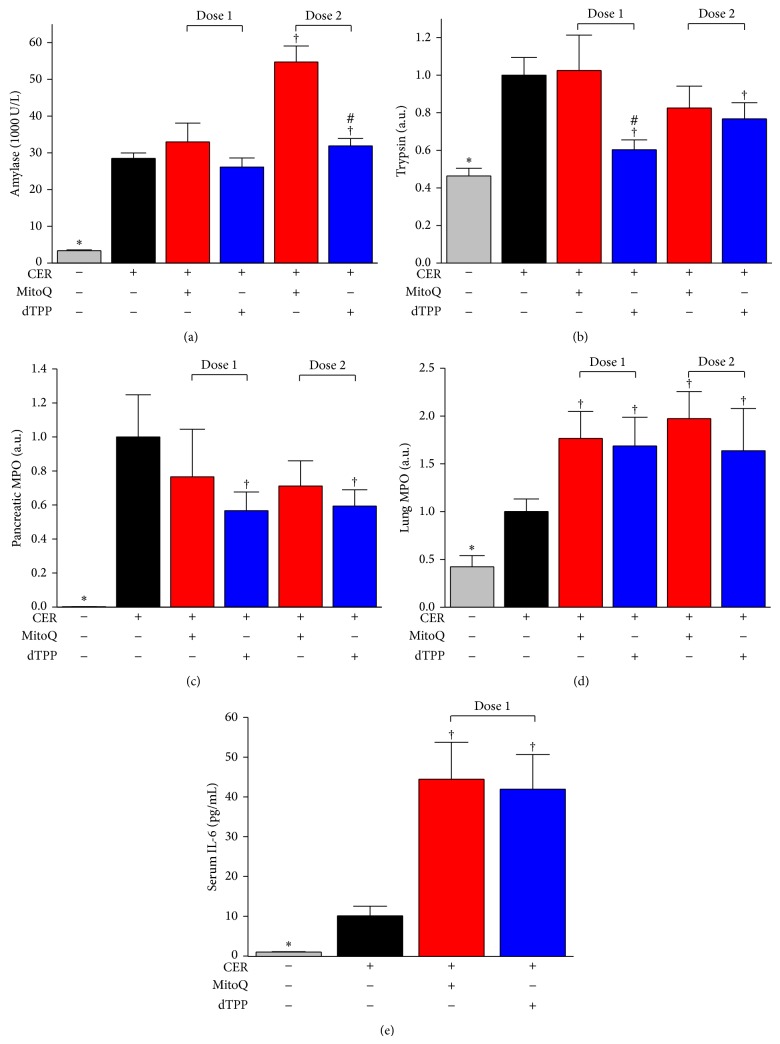
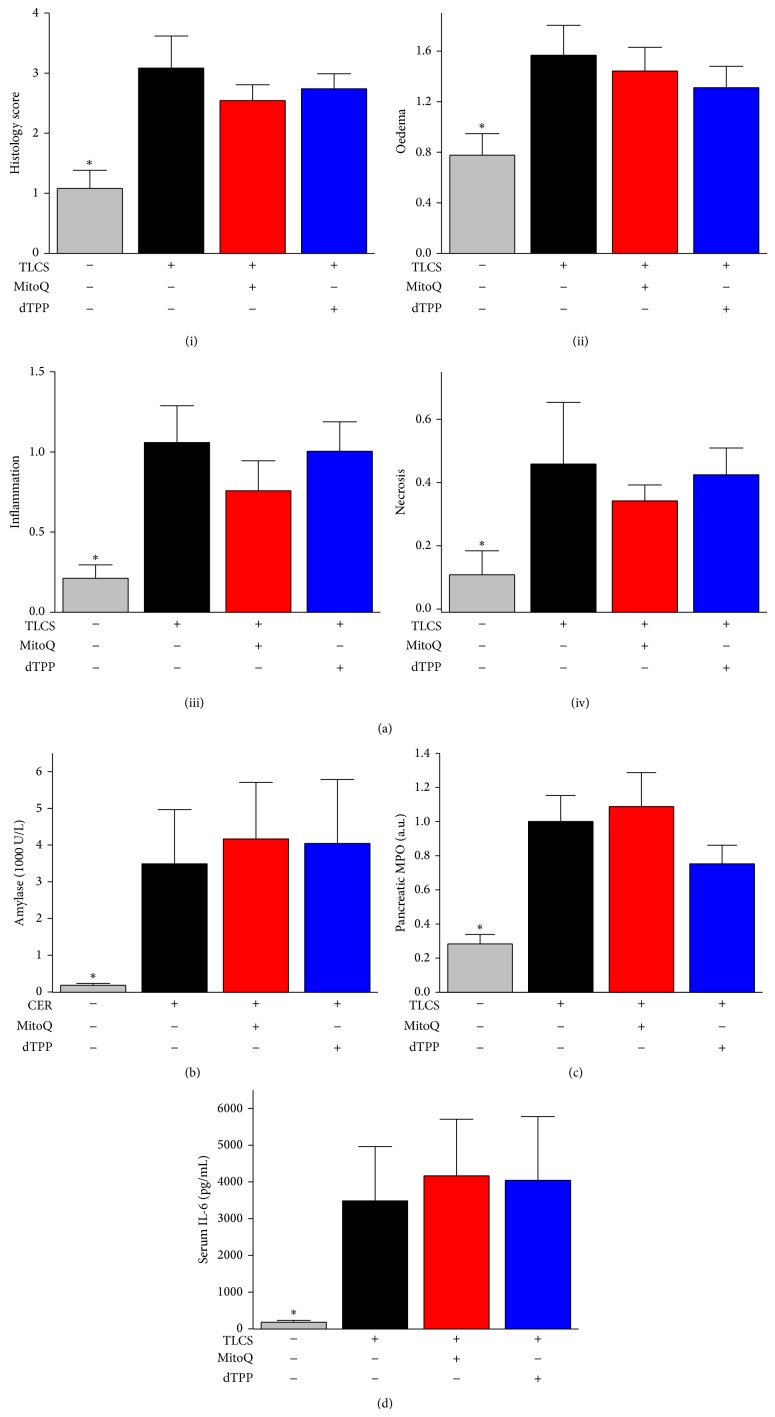
Although oxidative stress has been strongly implicated in the development of acute pancreatitis (AP), antioxidant therapy in patients has so far been discouraging. The aim of this study was to assess potential protective effects of a mitochondria-targeted antioxidant, MitoQ, in experimental AP using in vitro and in vivo approaches. MitoQ blocked H2O2-induced intracellular ROS responses in murine pancreatic acinar cells, an action not shared by the control analogue dTPP. MitoQ did not reduce mitochondrial depolarisation induced by either cholecystokinin (CCK) or bile acid TLCS, and at 10 µM caused depolarisation per se. Both MitoQ and dTPP increased basal and CCK-induced cell death in a plate-reader assay. In a TLCS-induced AP model MitoQ treatment was not protective. In AP induced by caerulein hyperstimulation (CER-AP), MitoQ exerted mixed effects. Thus, partial amelioration of histopathology scores was observed, actions shared by dTPP, but without reduction of the biochemical markers pancreatic trypsin or serum amylase. Interestingly, lung myeloperoxidase and interleukin-6 were concurrently increased by MitoQ in CER-AP. MitoQ caused biphasic effects on ROS production in isolated polymorphonuclear leukocytes, inhibiting an acute increase but elevating later levels. Our results suggest that MitoQ would be inappropriate for AP therapy, consistent with prior antioxidant evaluations in this disease.
尽管氧化应激与急性胰腺炎(AP)的发生密切相关,但迄今为止,针对患者的抗氧化治疗效果并不理想。本研究旨在采用体外和体内方法,评估线粒体靶向抗氧化剂MitoQ在实验性AP中的潜在保护作用。MitoQ可阻断过氧化氢诱导的小鼠胰腺腺泡细胞内活性氧反应,而对照类似物dTPP则无此作用。MitoQ不能降低胆囊收缩素(CCK)或胆汁酸TLCS诱导的线粒体去极化,且在10 μM时本身会导致去极化。在酶标仪检测中,MitoQ和dTPP均增加了基础状态和CCK诱导的细胞死亡。在TLCS诱导的AP模型中,MitoQ治疗无保护作用。在蛙皮素过度刺激诱导的AP(CER-AP)中,MitoQ产生了混合效应。因此,观察到组织病理学评分有部分改善,dTPP也有同样的作用,但胰腺胰蛋白酶或血清淀粉酶的生化标志物水平并未降低。有趣的是,在CER-AP中,MitoQ同时增加了肺髓过氧化物酶和白细胞介素-6。MitoQ对分离的多形核白细胞的活性氧产生有双相作用,抑制急性升高但随后升高水平。我们的结果表明,MitoQ不适用于AP治疗,这与此前该疾病的抗氧化评估结果一致。